About this artwork
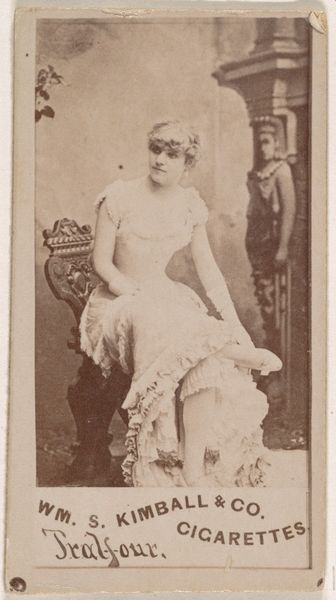
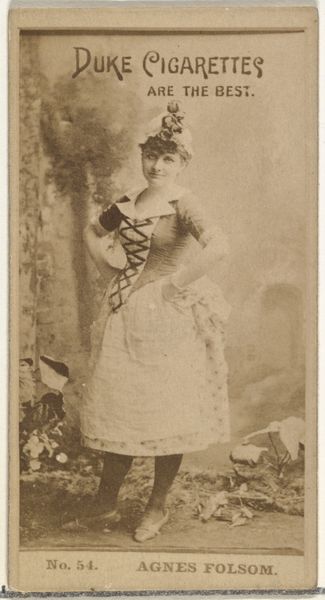
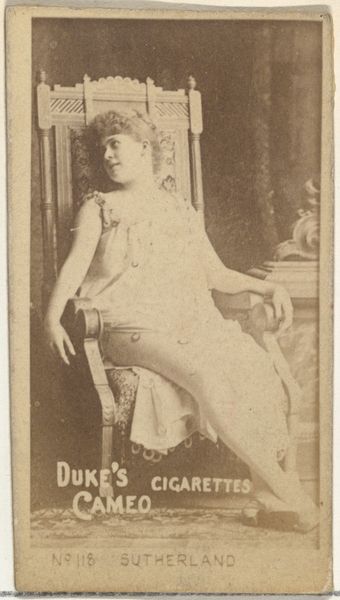
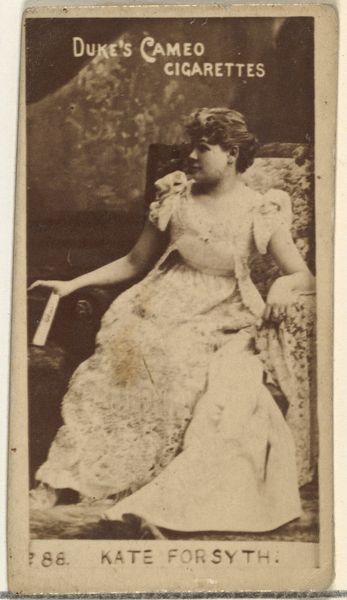
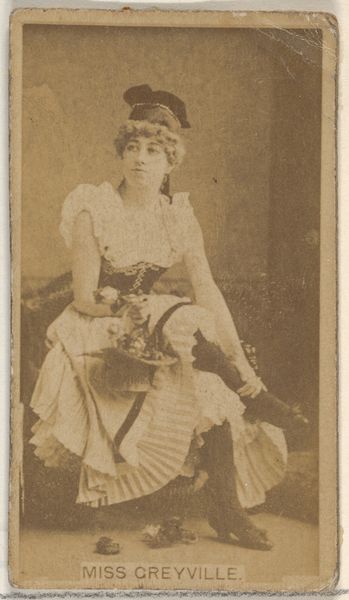
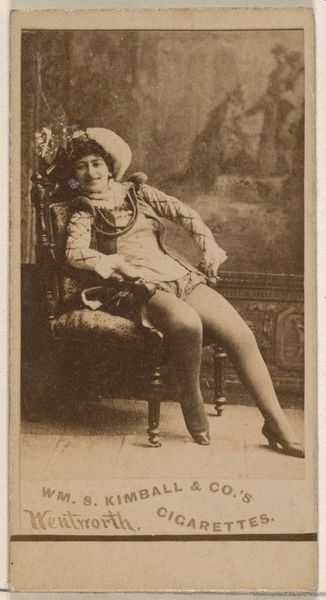
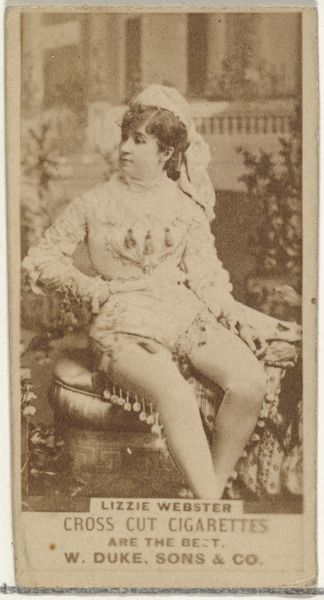
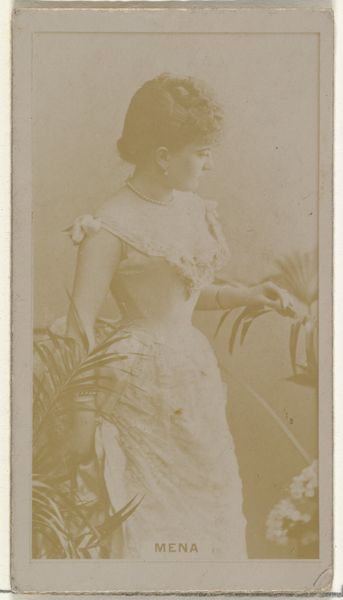
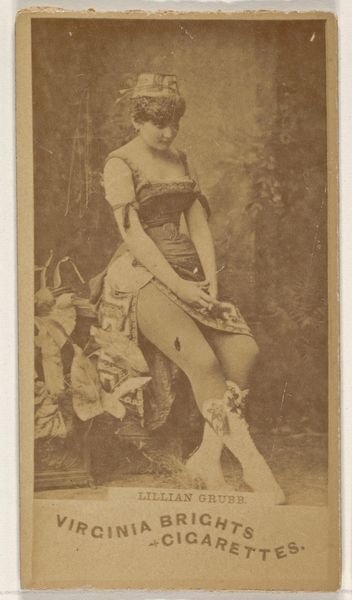
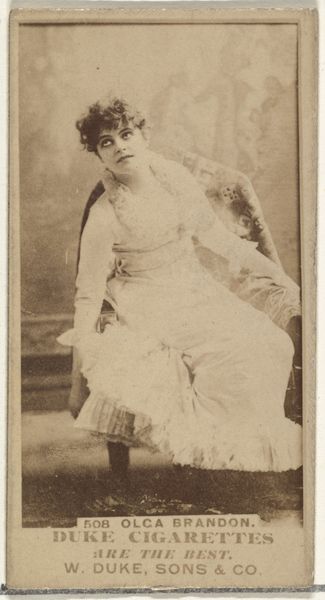
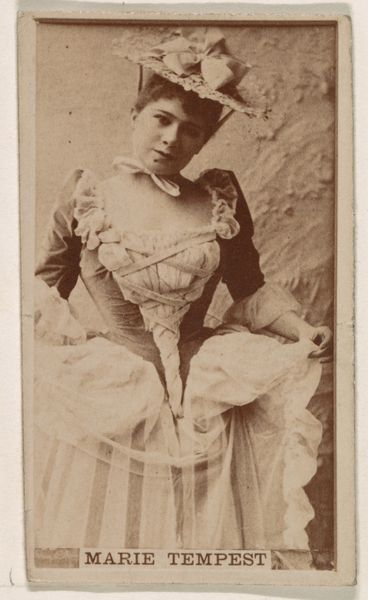
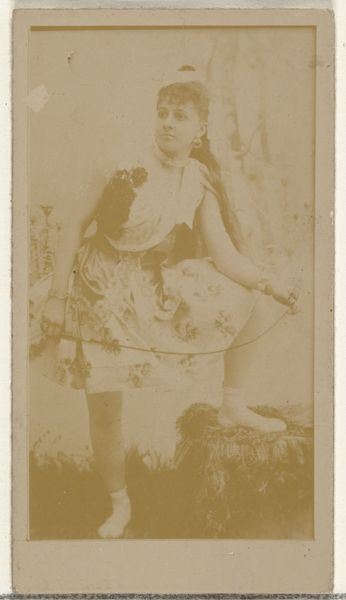
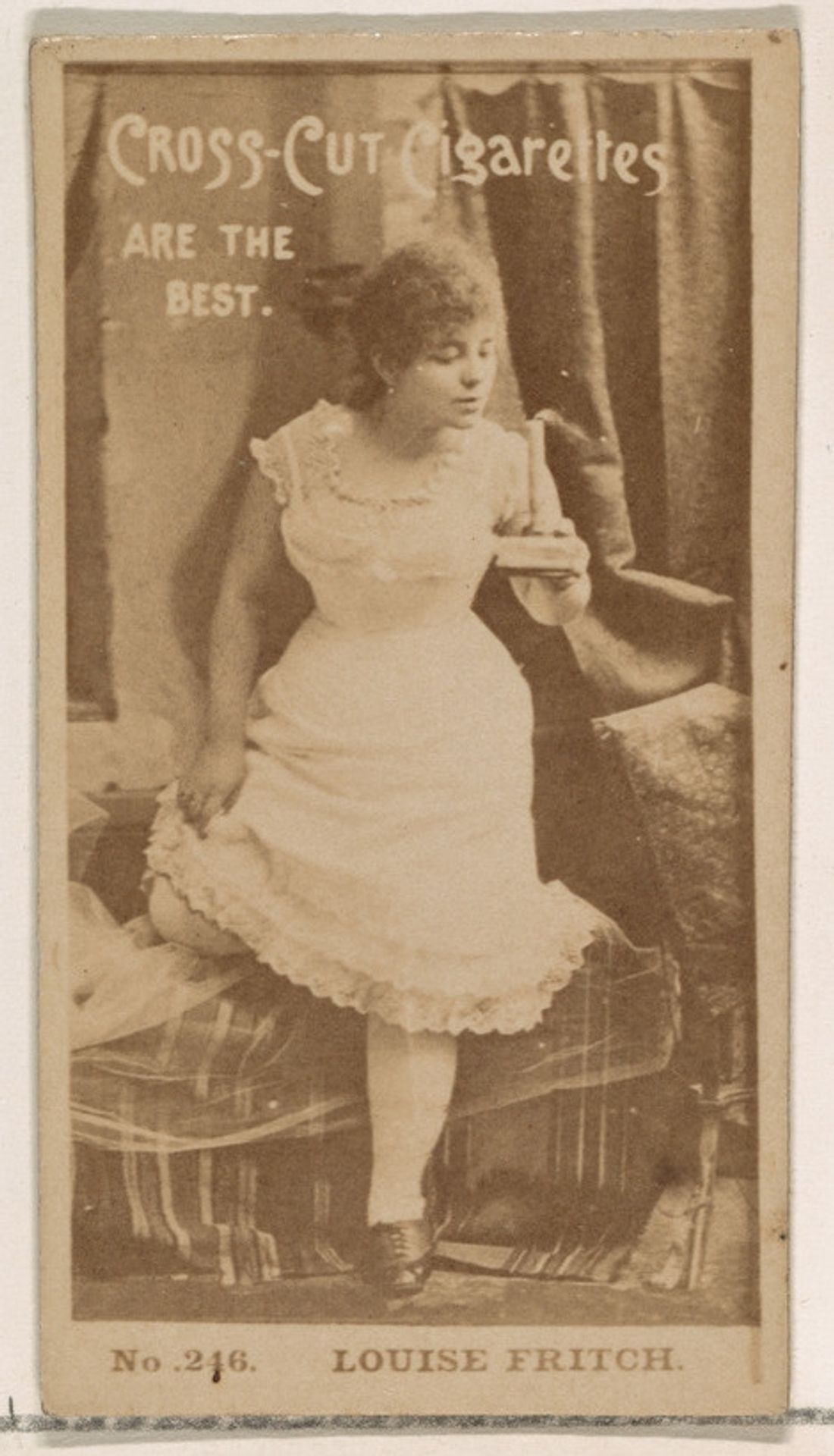
Card Number 246, Louise Fritch, was made by W. Duke, Sons & Co. around 1870-1920 from paper and ink using photomechanical processes. These cards were essentially advertisements printed in vast quantities. The relatively new technology of mass-produced photography allowed companies like Duke to create these promotional items and include them in cigarette packs. The image of Louise Fritch, like the others in the Actors and Actresses series, served a dual purpose: to catch the consumer's eye and to associate the product with glamour and celebrity. It’s a fascinating example of how cultural trends and consumerism intertwine, blurring the lines between commercial and artistic production. The very act of collecting these cards became a social phenomenon, tied to the rise of mass media and celebrity culture. Considering the context of industrial production, the card is a reminder of the amount of labor involved in creating and distributing such items, and how these humble objects can reflect larger economic and social structures.
Card Number 246, Louise Fritch, from the Actors and Actresses series (N145-2) issued by Duke Sons & Co. to promote Cross Cut Cigarettes
1880s

W. Duke, Sons & Co.
1870 - 1920
The Metropolitan Museum of Art
Metropolitan Museum of Art, New York, NYArtwork details
- Medium
- drawing, print, photography, gelatin-silver-print
- Dimensions
- Sheet: 2 5/8 × 1 7/16 in. (6.6 × 3.7 cm)
- Location
- Metropolitan Museum of Art, New York, NY
- Copyright
- Public Domain
Tags
portrait
drawing
photography
gelatin-silver-print
19th century
Comments
Be the first to share your thoughts about this work.
About this artwork
Card Number 246, Louise Fritch, was made by W. Duke, Sons & Co. around 1870-1920 from paper and ink using photomechanical processes. These cards were essentially advertisements printed in vast quantities. The relatively new technology of mass-produced photography allowed companies like Duke to create these promotional items and include them in cigarette packs. The image of Louise Fritch, like the others in the Actors and Actresses series, served a dual purpose: to catch the consumer's eye and to associate the product with glamour and celebrity. It’s a fascinating example of how cultural trends and consumerism intertwine, blurring the lines between commercial and artistic production. The very act of collecting these cards became a social phenomenon, tied to the rise of mass media and celebrity culture. Considering the context of industrial production, the card is a reminder of the amount of labor involved in creating and distributing such items, and how these humble objects can reflect larger economic and social structures.
Comments
Be the first to share your thoughts about this work.