About this artwork
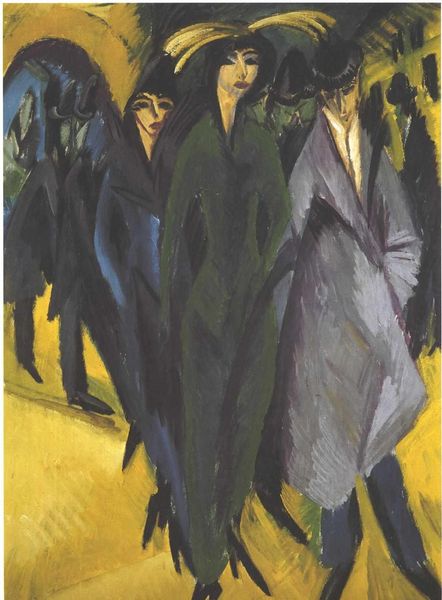
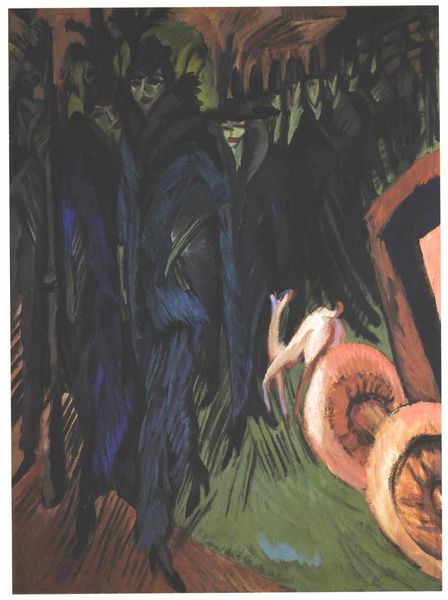
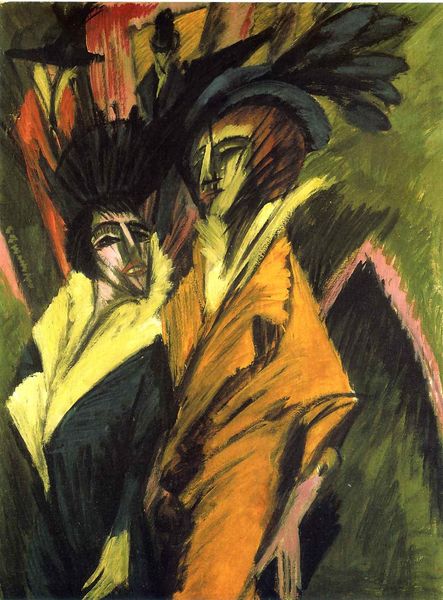
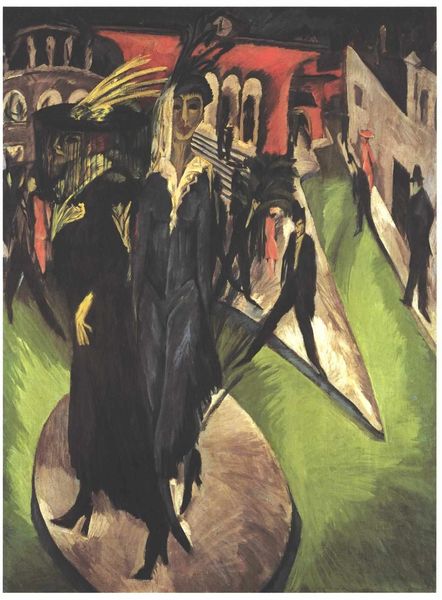
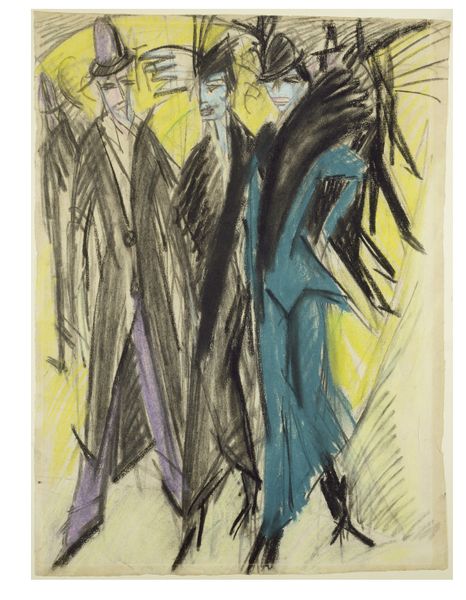
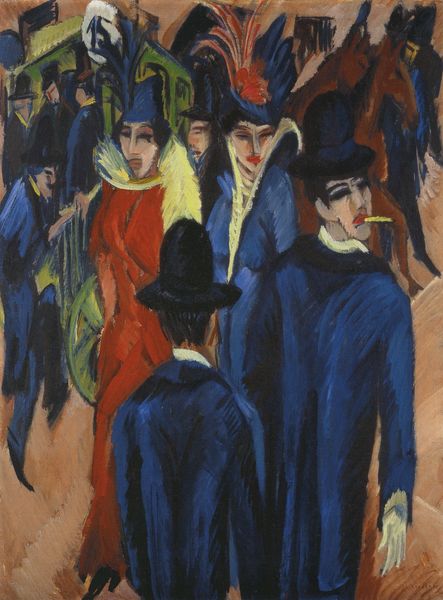
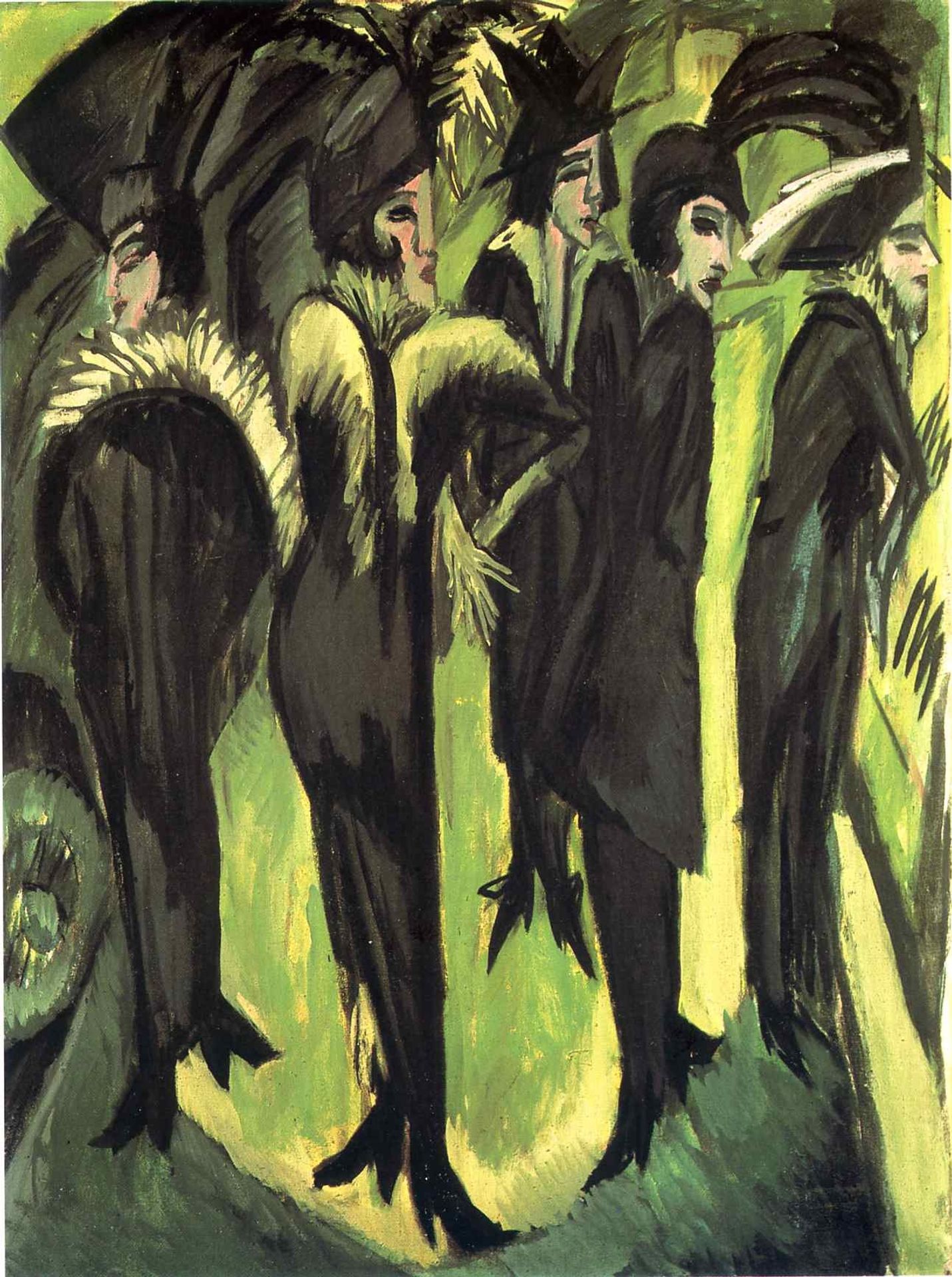
Ernst Ludwig Kirchner made this painting, ‘Five Women in the Street,’ with oil on canvas; it's a medium that invites experimentation and immediacy. The brushstrokes are visible, almost violent, revealing the process of creation, not concealing it. There's a real emphasis on texture and the physicality of the paint here. The strokes are raw, bold, and full of energy. Take a look at the way the paint is applied on the figures, particularly the sharp, angular lines defining their faces and clothing. It's not about smooth, polished surfaces; it’s about capturing a feeling, an impression, an edgy mood. The Fauves come to mind, especially Matisse, with their use of color as a form of expression rather than representation. However, Kirchner’s palette is moodier, almost discordant, far from the harmonious arrangements favored by Matisse. Ultimately, Kirchner reminds us that art is not about perfection but about the ongoing, imperfect, and always fascinating conversation between the artist, the medium, and the world.
Five Women in the Street
1913

Ernst Ludwig Kirchner
1880 - 1938Location
Museum Ludwig, Cologne, GermanyArtwork details
- Medium
- painting
- Dimensions
- 120 x 90 cm
- Location
- Museum Ludwig, Cologne, Germany
- Copyright
- Public domain
Tags
Comments
Share your thoughts
About this artwork
Ernst Ludwig Kirchner made this painting, ‘Five Women in the Street,’ with oil on canvas; it's a medium that invites experimentation and immediacy. The brushstrokes are visible, almost violent, revealing the process of creation, not concealing it. There's a real emphasis on texture and the physicality of the paint here. The strokes are raw, bold, and full of energy. Take a look at the way the paint is applied on the figures, particularly the sharp, angular lines defining their faces and clothing. It's not about smooth, polished surfaces; it’s about capturing a feeling, an impression, an edgy mood. The Fauves come to mind, especially Matisse, with their use of color as a form of expression rather than representation. However, Kirchner’s palette is moodier, almost discordant, far from the harmonious arrangements favored by Matisse. Ultimately, Kirchner reminds us that art is not about perfection but about the ongoing, imperfect, and always fascinating conversation between the artist, the medium, and the world.
Comments
Share your thoughts