About this artwork
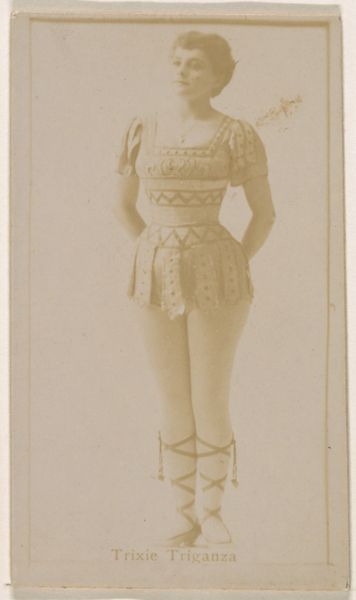
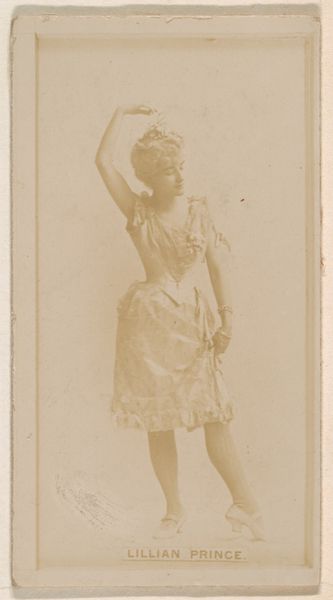
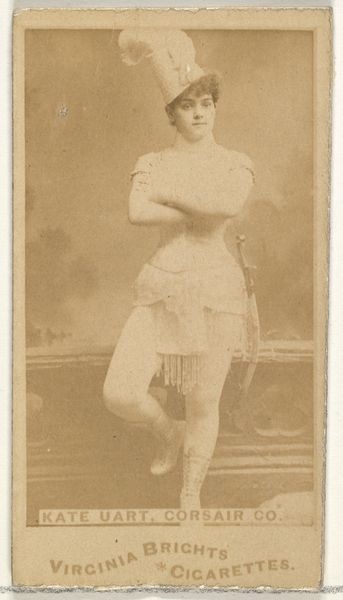
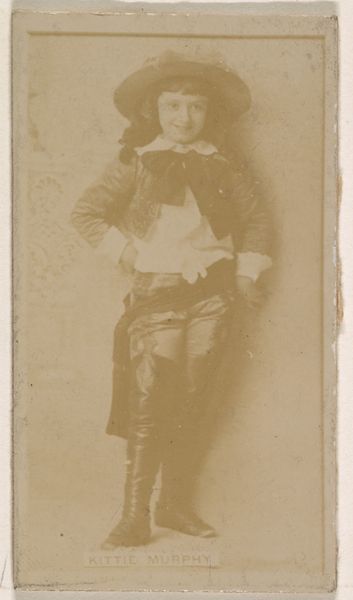
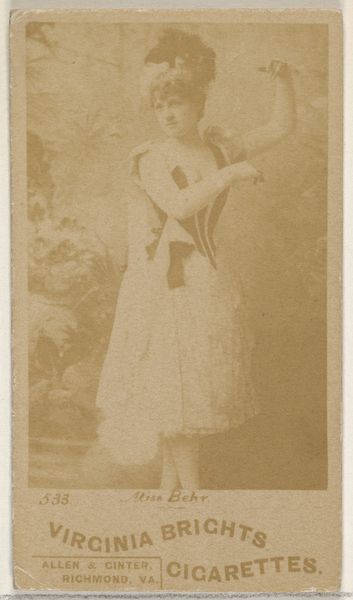
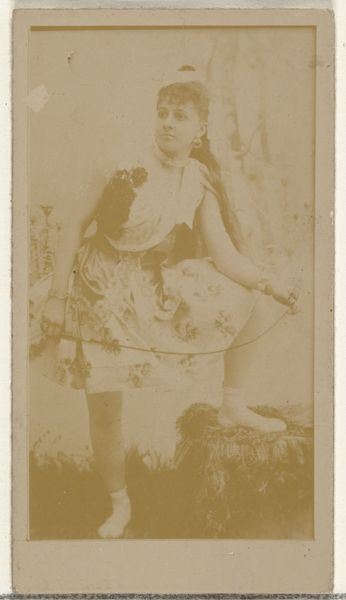
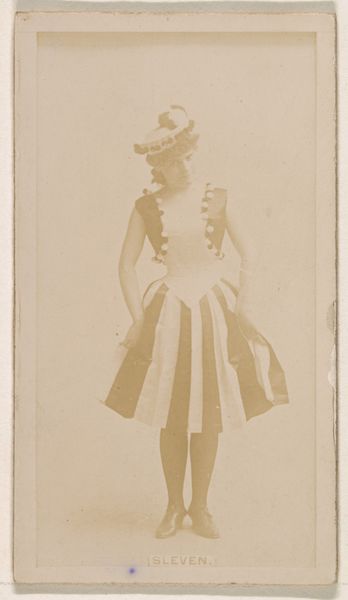
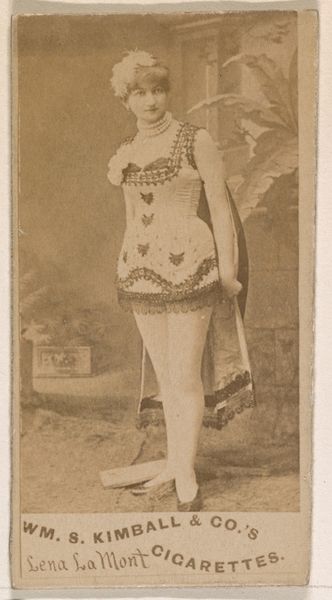
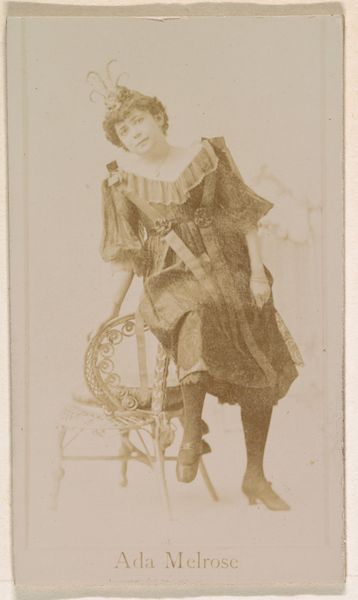
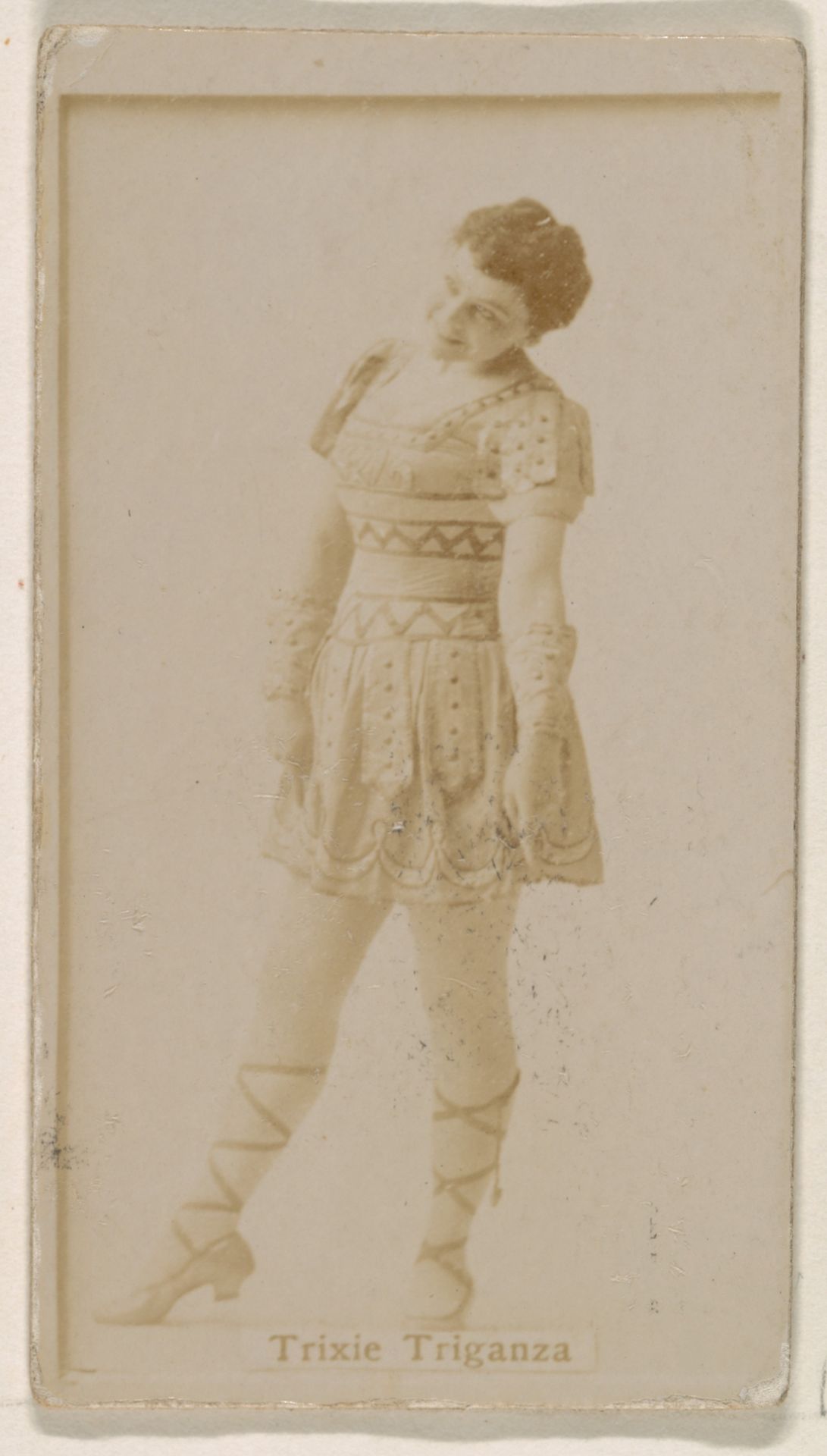
This is a promotional card for Sweet Caporal Cigarettes by Kinney Brothers, featuring Trixie Triganza, an actress, around the turn of the century. Triganza’s costume, a stylized tunic and laced footwear, evokes classical antiquity. Observe the zig-zag pattern adorning her garment: this motif, echoing the meander of ancient Greek art, speaks to the complex interplay between surface and depth. This symbol has migrated and evolved through various cultures, initially representing the twisting course of a river. As the river gives life and sustenance, so the meander evokes the cyclical rhythms of existence, the labyrinthine dance between order and chaos. The image, like a dream, draws upon deep, subconscious associations, reminding us that images are never truly new but rather a re-emergence of what has been. Like the ouroboros, the snake eating its own tail, these symbols reappear, reinvented through history, eternally feeding our cultural imagination.
Trixie Triganza, from the Actresses series (N245) issued by Kinney Brothers to promote Sweet Caporal Cigarettes
1890

Kinney Brothers Tobacco Company
1869 - 2011
The Metropolitan Museum of Art
Metropolitan Museum of Art, New York, NYArtwork details
- Medium
- drawing, print, photography
- Dimensions
- Sheet: 2 1/2 × 1 7/16 in. (6.4 × 3.7 cm)
- Location
- Metropolitan Museum of Art, New York, NY
- Copyright
- Public Domain
Tags
Comments
Share your thoughts
About this artwork
This is a promotional card for Sweet Caporal Cigarettes by Kinney Brothers, featuring Trixie Triganza, an actress, around the turn of the century. Triganza’s costume, a stylized tunic and laced footwear, evokes classical antiquity. Observe the zig-zag pattern adorning her garment: this motif, echoing the meander of ancient Greek art, speaks to the complex interplay between surface and depth. This symbol has migrated and evolved through various cultures, initially representing the twisting course of a river. As the river gives life and sustenance, so the meander evokes the cyclical rhythms of existence, the labyrinthine dance between order and chaos. The image, like a dream, draws upon deep, subconscious associations, reminding us that images are never truly new but rather a re-emergence of what has been. Like the ouroboros, the snake eating its own tail, these symbols reappear, reinvented through history, eternally feeding our cultural imagination.
Comments
Share your thoughts