1892
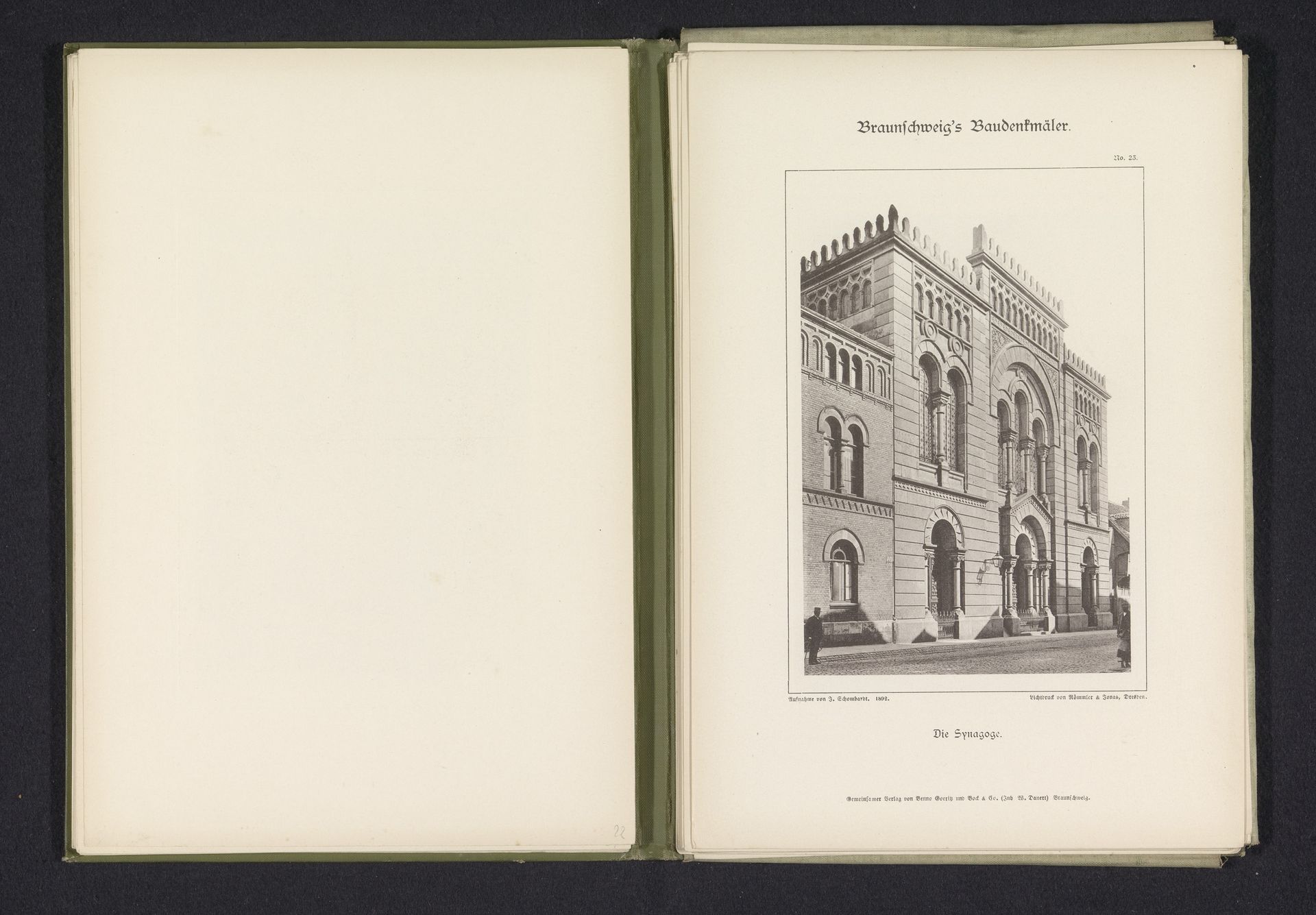
Exterieur van de Neue Synagoge te Braunschweig

Listen to curator's interpretation
Curatorial notes
This print by J. Schombardt captures the Neue Synagoge in Braunschweig, Germany, showcasing its Romanesque Revival architecture. The rounded arches that define the windows and entryways are not merely structural; they echo a reaching towards the heavens, a motif borrowed from ancient Roman triumphal arches and Christian basilicas, repurposed here to frame a sacred space for Jewish worship. These arches, symbols of triumph and divine connection, remind us of similar forms found across Europe, from the cathedral doors of Chartres to the Islamic architecture of Cordoba. The arch as a symbol transcends religious and cultural boundaries, embodying both passage and protection. It serves as a silent testament to the enduring human quest for meaning, a quest manifested in stone and light. It is not just a structural element but a profound emotional trigger, evoking feelings of reverence, awe, and a deep connection to historical and cultural continuity. This synogogue was destroyed in 1938 during the Kristallnacht pogrom. What remains is an image of what once was, a ruin in memory.