About this artwork
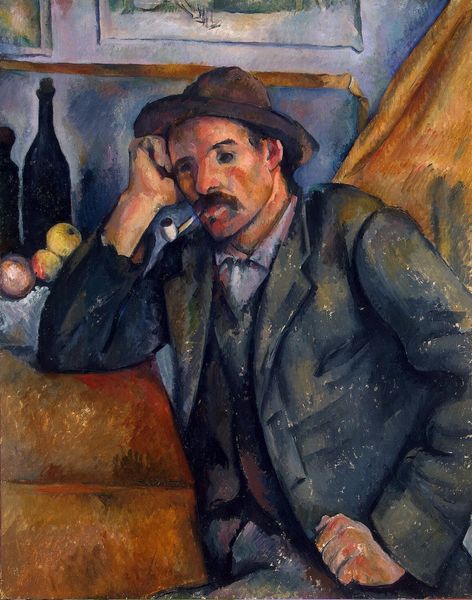
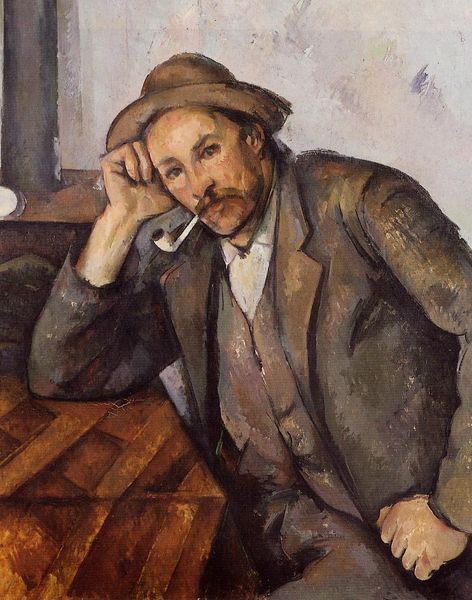
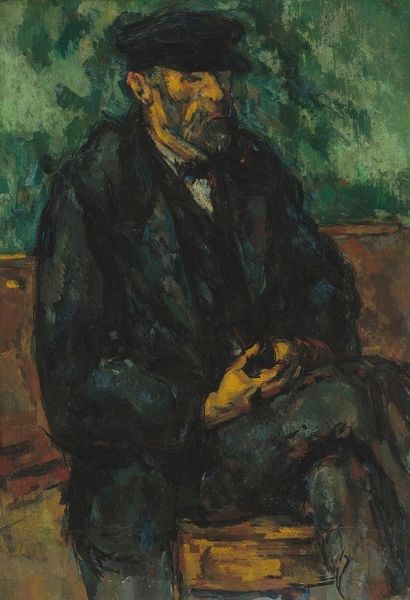
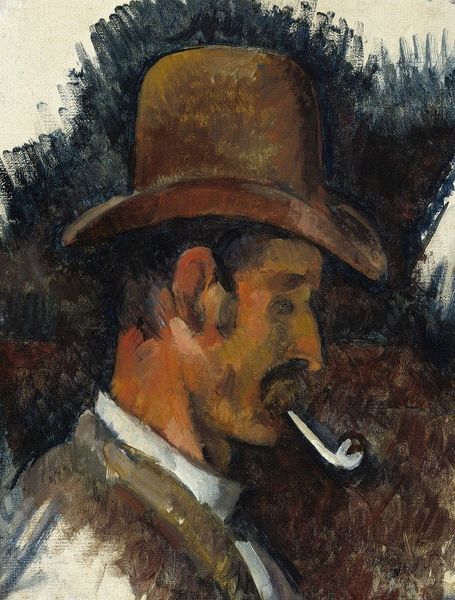
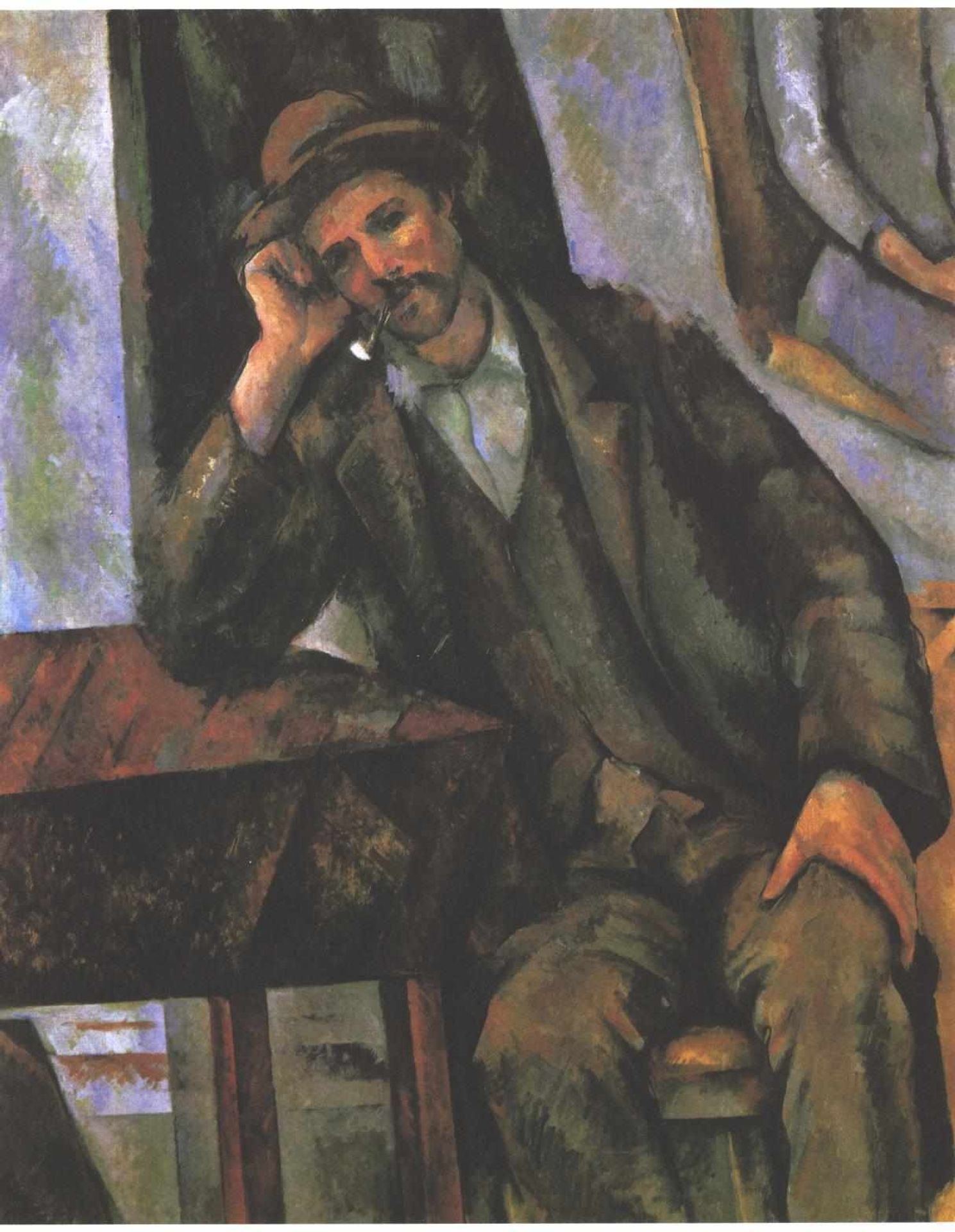
Paul Cézanne created this oil painting, Man Smoking a Pipe, sometime in the late 19th century. It’s a portrait, but also a study of working-class life in France, made during a time of rapid industrialization. Through the visual code of the man’s clothing, his hat and jacket, Cézanne highlights the sitter’s social standing. The man is pensive, perhaps tired. The pipe suggests a moment of personal reflection and the comfort people sought in tobacco at that time. France in this period was marked by dramatic social changes, and it is important to examine the political and economic structures that influenced artistic production. Cézanne's focus on ordinary people can be seen as a departure from academic art that prioritized historical or mythological subjects. To understand this work better, we can look at French social histories, period newspapers, and even advertisements for tobacco. Art doesn’t exist in a vacuum, and its meaning is always rooted in a specific social and institutional context.
Man Smoking a Pipe
1902


Artwork details
- Medium
- painting, oil-paint
- Dimensions
- 91 x 72 cm
- Location
- Pushkin Museum, Moscow, Russia
- Copyright
- Public domain
Tags
Comments
Share your thoughts
About this artwork
Paul Cézanne created this oil painting, Man Smoking a Pipe, sometime in the late 19th century. It’s a portrait, but also a study of working-class life in France, made during a time of rapid industrialization. Through the visual code of the man’s clothing, his hat and jacket, Cézanne highlights the sitter’s social standing. The man is pensive, perhaps tired. The pipe suggests a moment of personal reflection and the comfort people sought in tobacco at that time. France in this period was marked by dramatic social changes, and it is important to examine the political and economic structures that influenced artistic production. Cézanne's focus on ordinary people can be seen as a departure from academic art that prioritized historical or mythological subjects. To understand this work better, we can look at French social histories, period newspapers, and even advertisements for tobacco. Art doesn’t exist in a vacuum, and its meaning is always rooted in a specific social and institutional context.
Comments
Share your thoughts