1790 - 1795
Square Piano


Listen to curator's interpretation
Curatorial notes
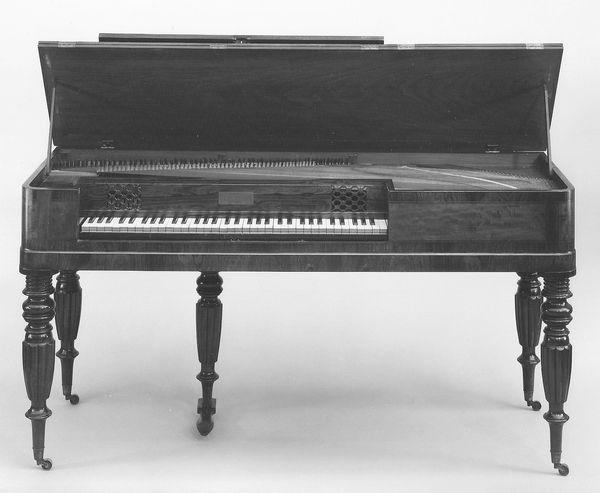
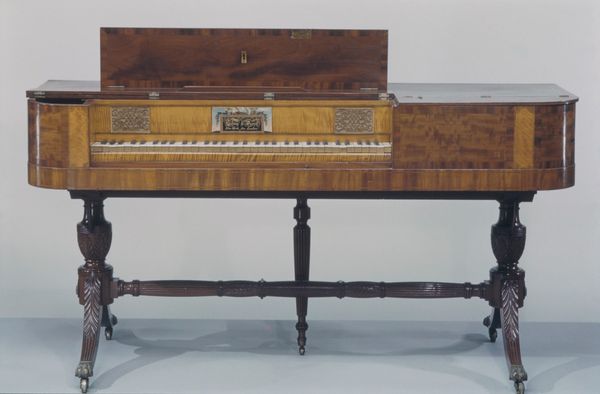
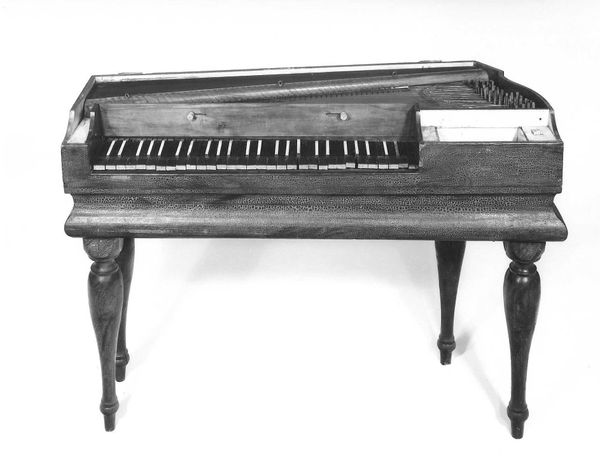
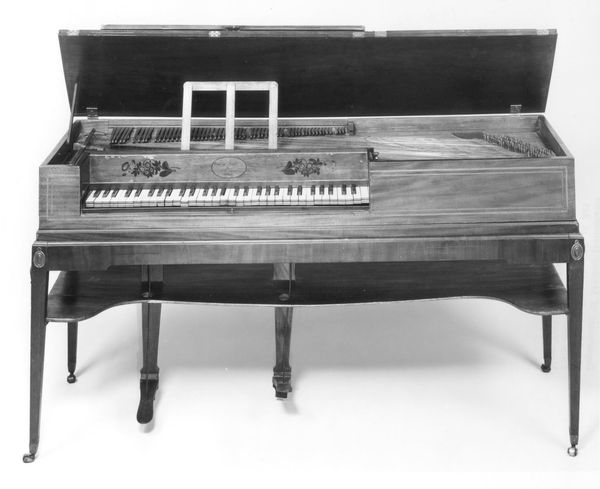
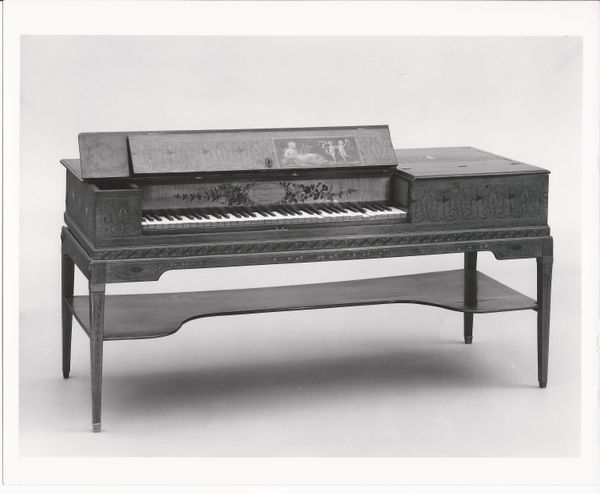
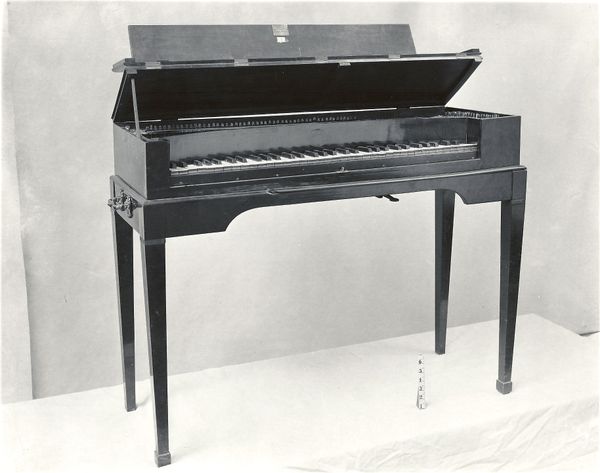
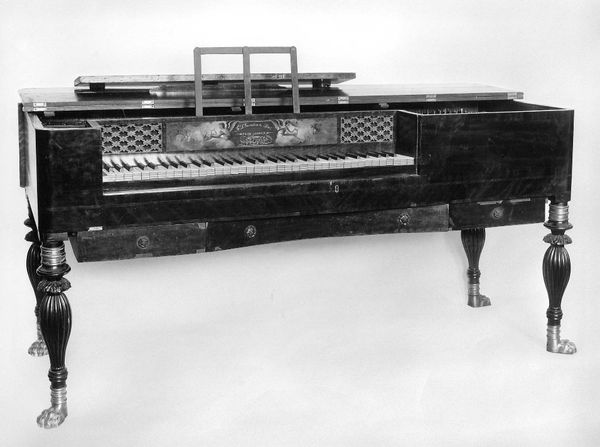
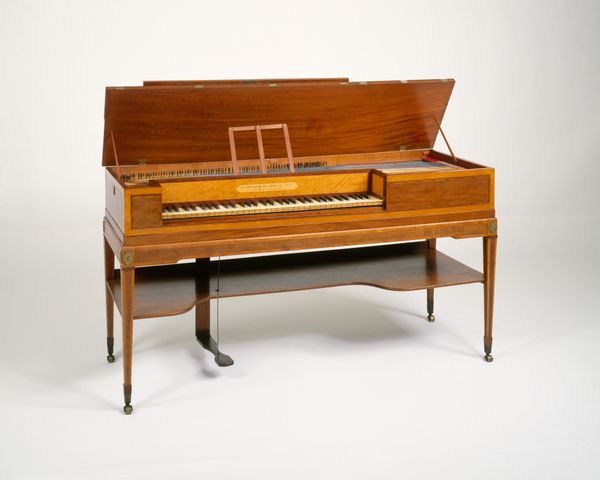
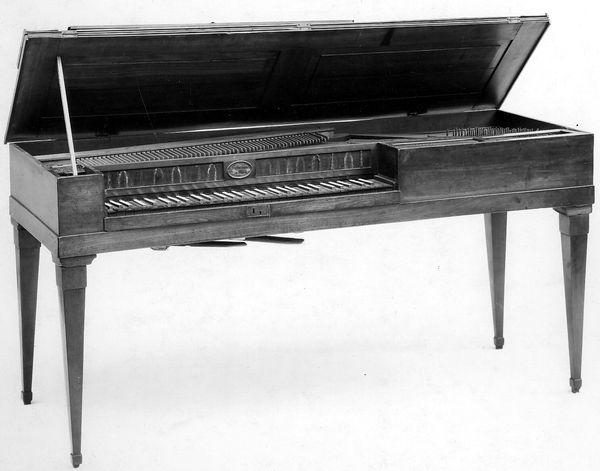
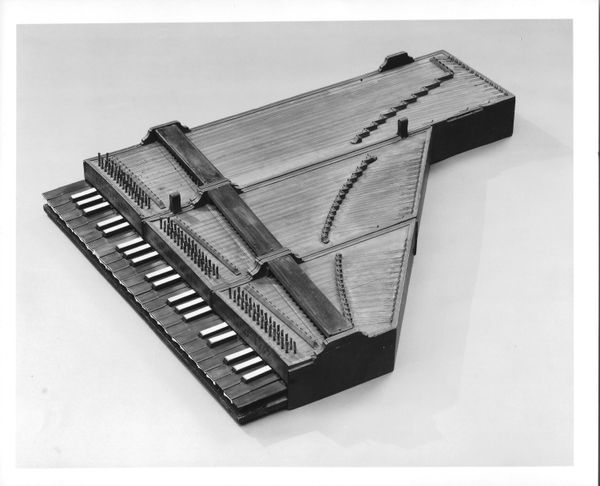
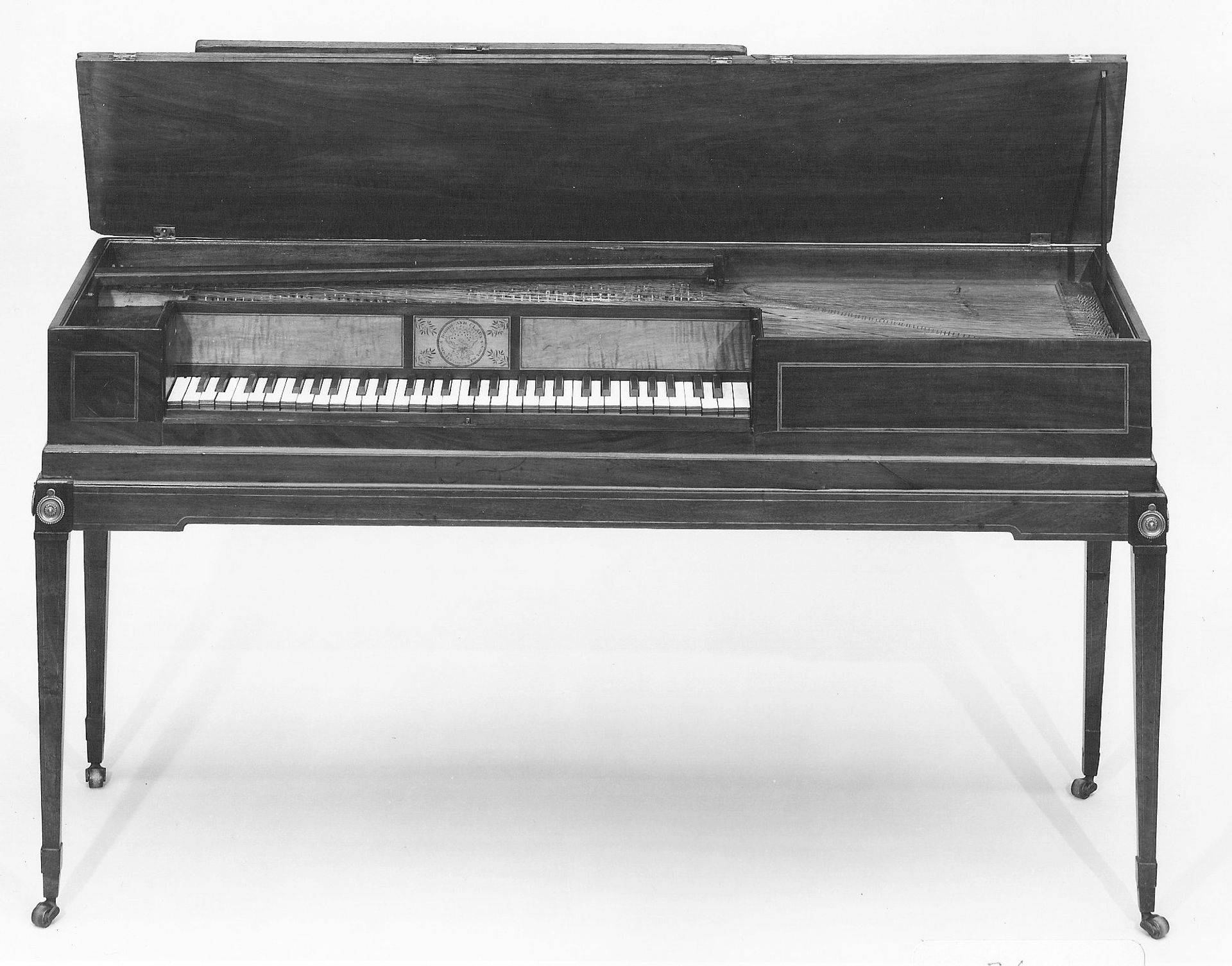
Editor: This photograph depicts a Square Piano made between 1790 and 1795 by Dodds & Claus. It is currently housed at the Metropolitan Museum of Art. The photo is monochromatic, which highlights the texture of the wood. What cultural meanings are embedded within this object? Curator: Consider the piano itself as a potent symbol of bourgeois domesticity and female accomplishment during that period. Musical instruments represented cultural capital. Note the elegant Neoclassical design, too – the straight lines, the restrained ornamentation. Editor: It seems rather formal, yet also intimate, intended for the home. Does its design tell us something more specific about that period? Curator: Absolutely. This piano appeared during a time when such artistic refinement was used as a demonstration of enlightenment values. It spoke of education and an engagement with a wider cultural world. Its very presence within the home signalled a certain aspirational identity. The circular designs might allude to wholeness or divinity. Editor: So, even a seemingly simple domestic object can carry multiple layers of meaning. Is it almost like a status symbol encoded within design and craft? Curator: Precisely. In much the same way heraldry denoted noble lineage, so too did objects in a middle-class home proclaim one’s worldliness and refined sensibilities. It invites us to listen beyond its sounds. Editor: This object now represents the culture that owned it. This really makes me think differently about how things tell their stories.