About this artwork
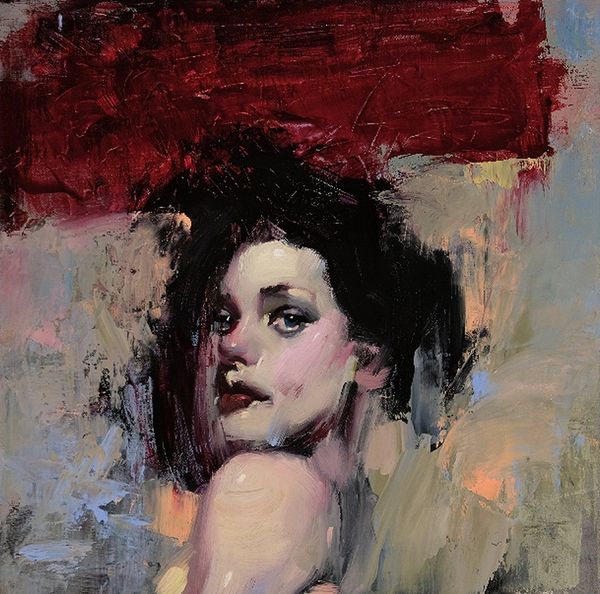
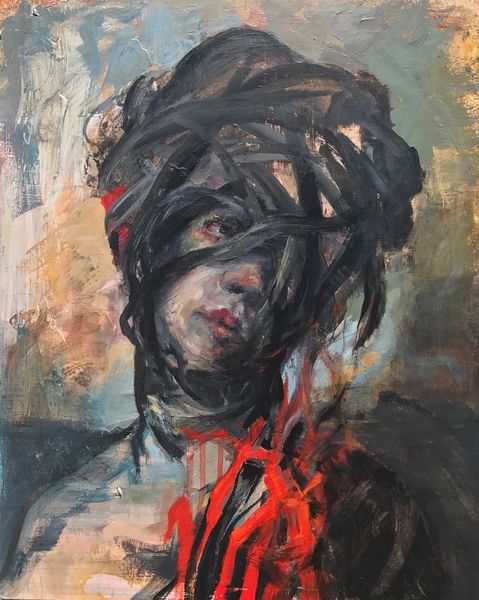
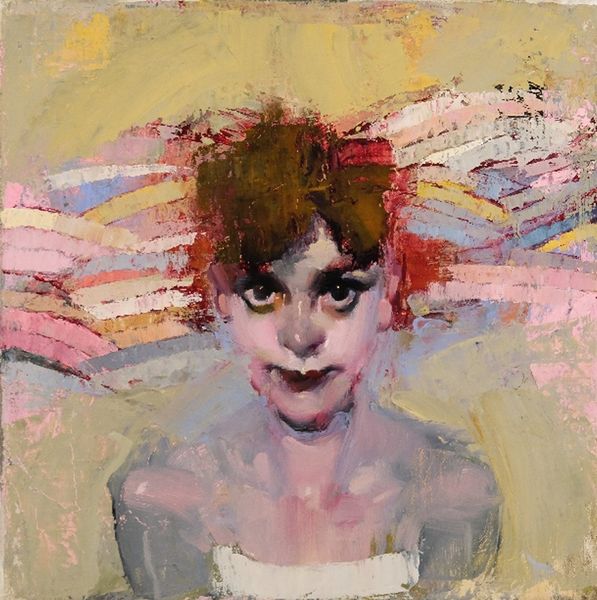
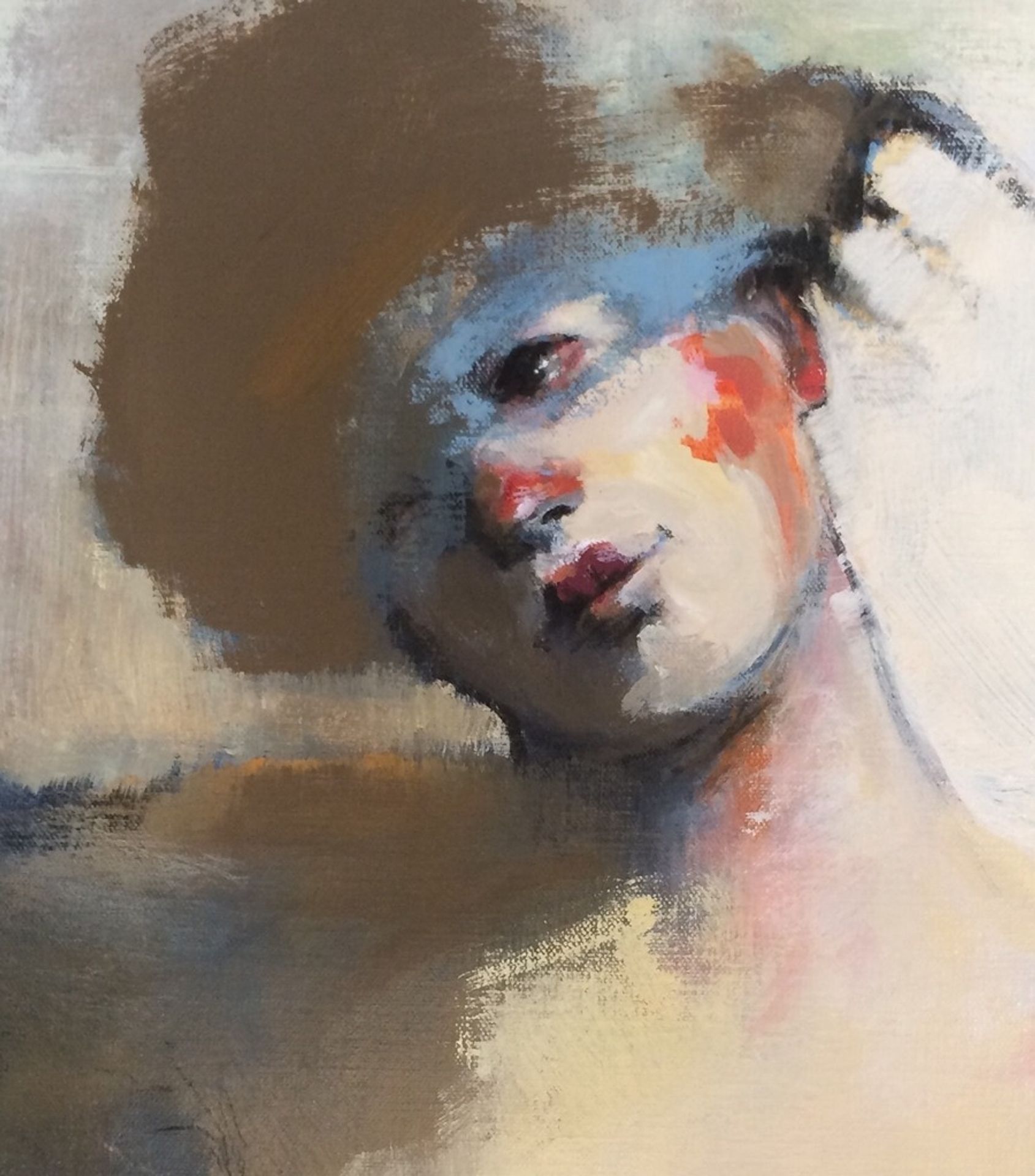
Editor: So, this painting is called "Disguise" by Cathrine Edlinger-Kunze, done with oil paint. I’m immediately struck by the heavy brushstrokes, the impasto. It feels unfinished, raw somehow. What strikes you most about the way it's made? Curator: The visible labor, definitely. We’re invited to consider the materiality of oil paint itself. This impasto technique foregrounds the means of production; it refuses the illusion of seamlessness, revealing the artistic process. Do you think the title is merely about a literal cover-up? Editor: Well, the title made me think about maybe the person is hiding somehow or maybe their emotion? Curator: Or perhaps consider "disguise" in relation to the art market itself. Who benefits from the art world’s established structures? This almost performative display of visible labor could be seen as a reaction to polished, commercially driven aesthetics. The work, like the art world is also "Disguised" by commercialism. What effect do you think that creates? Editor: That’s interesting… So the roughness is almost a commentary on how art gets commodified? I hadn’t thought about that. Curator: Precisely! This challenges the viewer to reflect on consumption. And even question who is really getting a view and how art historical canons can obscure. Is there something more being offered in the roughness of application and subject choice? Editor: This definitely gives me a lot to think about, especially considering how the materials themselves play into the overall message. It really changes my view of portraiture. Curator: Indeed. It moves the portrait beyond a simple representation to a commentary on the very act of creating and consuming art. It makes you think about what portraits normally communicate. Editor: I agree, I see it differently now and how it exists within social and economic forces of culture and labour.

Artwork details
- Medium
- painting, oil-paint, impasto
- Copyright
- Modern Artists: Artvee
Tags
Comments
Share your thoughts
About this artwork
Editor: So, this painting is called "Disguise" by Cathrine Edlinger-Kunze, done with oil paint. I’m immediately struck by the heavy brushstrokes, the impasto. It feels unfinished, raw somehow. What strikes you most about the way it's made? Curator: The visible labor, definitely. We’re invited to consider the materiality of oil paint itself. This impasto technique foregrounds the means of production; it refuses the illusion of seamlessness, revealing the artistic process. Do you think the title is merely about a literal cover-up? Editor: Well, the title made me think about maybe the person is hiding somehow or maybe their emotion? Curator: Or perhaps consider "disguise" in relation to the art market itself. Who benefits from the art world’s established structures? This almost performative display of visible labor could be seen as a reaction to polished, commercially driven aesthetics. The work, like the art world is also "Disguised" by commercialism. What effect do you think that creates? Editor: That’s interesting… So the roughness is almost a commentary on how art gets commodified? I hadn’t thought about that. Curator: Precisely! This challenges the viewer to reflect on consumption. And even question who is really getting a view and how art historical canons can obscure. Is there something more being offered in the roughness of application and subject choice? Editor: This definitely gives me a lot to think about, especially considering how the materials themselves play into the overall message. It really changes my view of portraiture. Curator: Indeed. It moves the portrait beyond a simple representation to a commentary on the very act of creating and consuming art. It makes you think about what portraits normally communicate. Editor: I agree, I see it differently now and how it exists within social and economic forces of culture and labour.
Comments
Share your thoughts