About this artwork
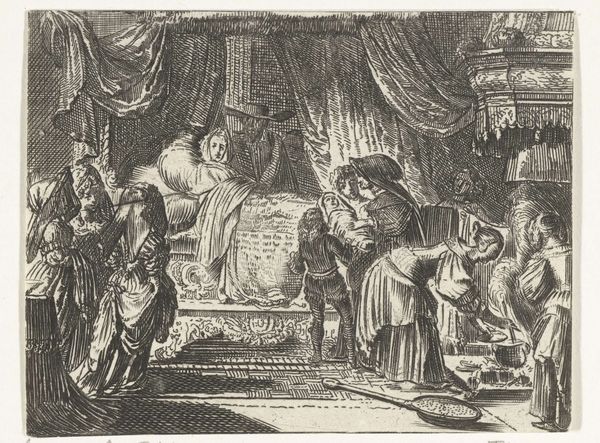
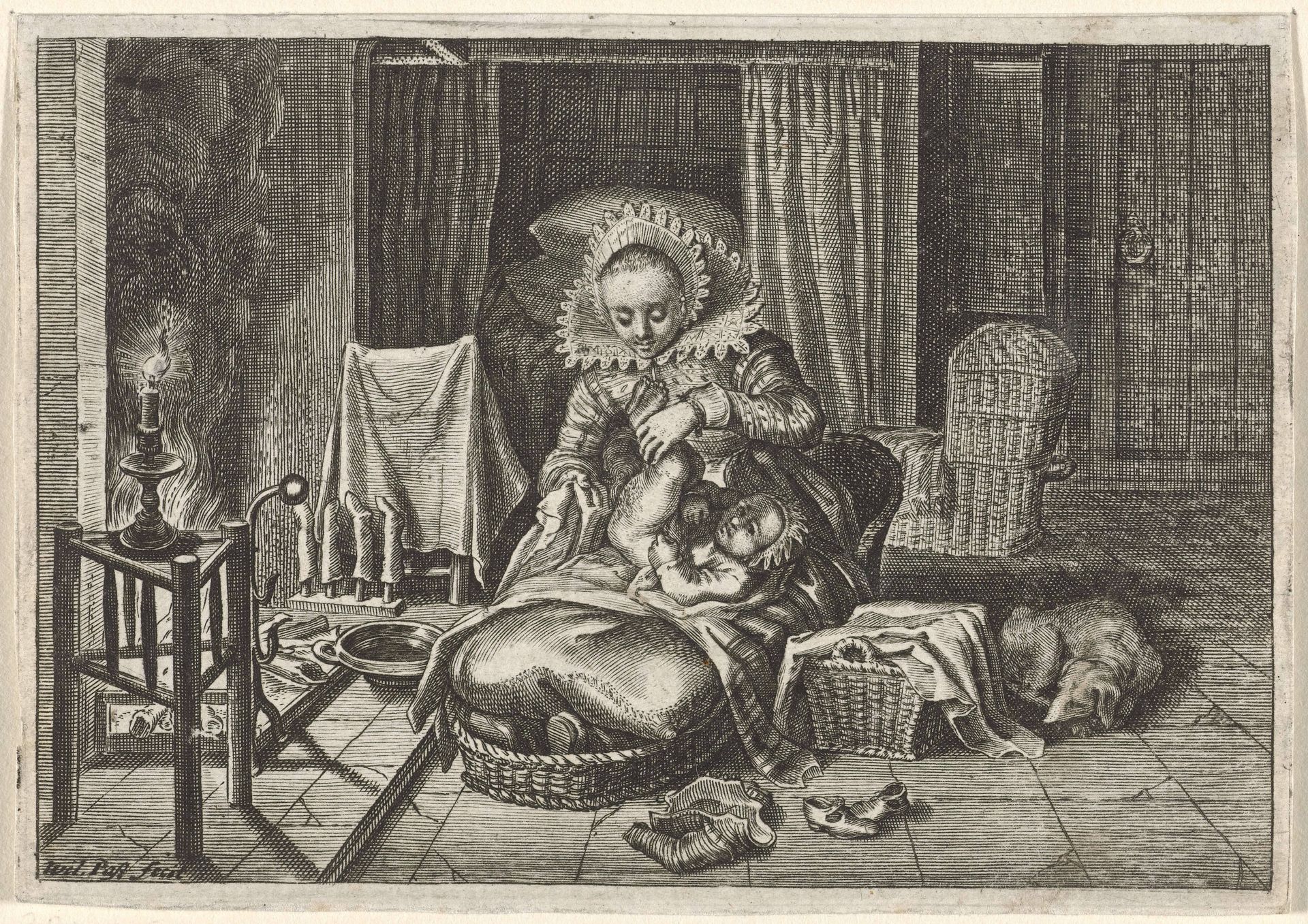
Willem de Passe created this engraving, “Vrouw verschoont een kind” or “Woman changing a child” in the early 17th century. During this era, the Dutch Republic was experiencing its Golden Age, marked by economic prosperity and cultural flourishing. This intimate domestic scene offers a glimpse into the daily lives of women and children. Motherhood, caretaking, and the home were central to women's identities in the 17th century. Here the focus is on the woman, who is portrayed as capable and diligent in her duties. Note the accoutrements of domesticity: the basket for the baby, the wash basin, the fire for warmth, and even a sleeping dog. However, this image also implicitly highlights the constraints placed on women, whose roles were largely confined to the domestic sphere. This engraving offers a tender portrayal of a mother's love and labor, while also prompting reflection on the social structures that defined women's lives.

Artwork details
- Medium
- print, engraving
- Dimensions
- height 77 mm, width 111 mm
- Copyright
- Rijks Museum: Open Domain
Tags
portrait
dutch-golden-age
genre-painting
engraving
Comments
No comments
About this artwork
Willem de Passe created this engraving, “Vrouw verschoont een kind” or “Woman changing a child” in the early 17th century. During this era, the Dutch Republic was experiencing its Golden Age, marked by economic prosperity and cultural flourishing. This intimate domestic scene offers a glimpse into the daily lives of women and children. Motherhood, caretaking, and the home were central to women's identities in the 17th century. Here the focus is on the woman, who is portrayed as capable and diligent in her duties. Note the accoutrements of domesticity: the basket for the baby, the wash basin, the fire for warmth, and even a sleeping dog. However, this image also implicitly highlights the constraints placed on women, whose roles were largely confined to the domestic sphere. This engraving offers a tender portrayal of a mother's love and labor, while also prompting reflection on the social structures that defined women's lives.
Comments
No comments