About this artwork
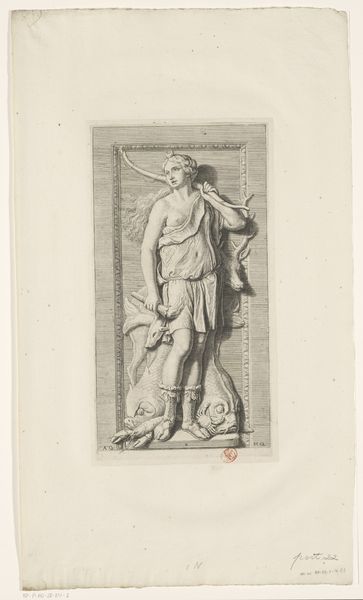
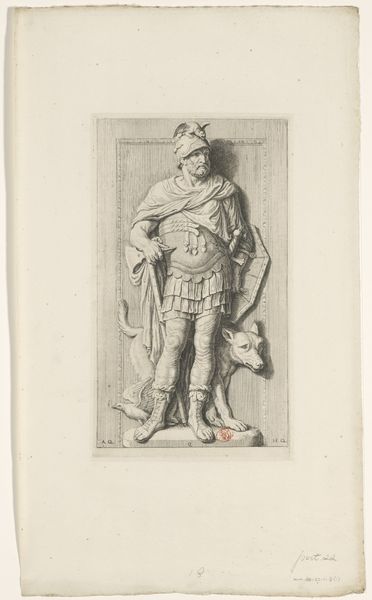
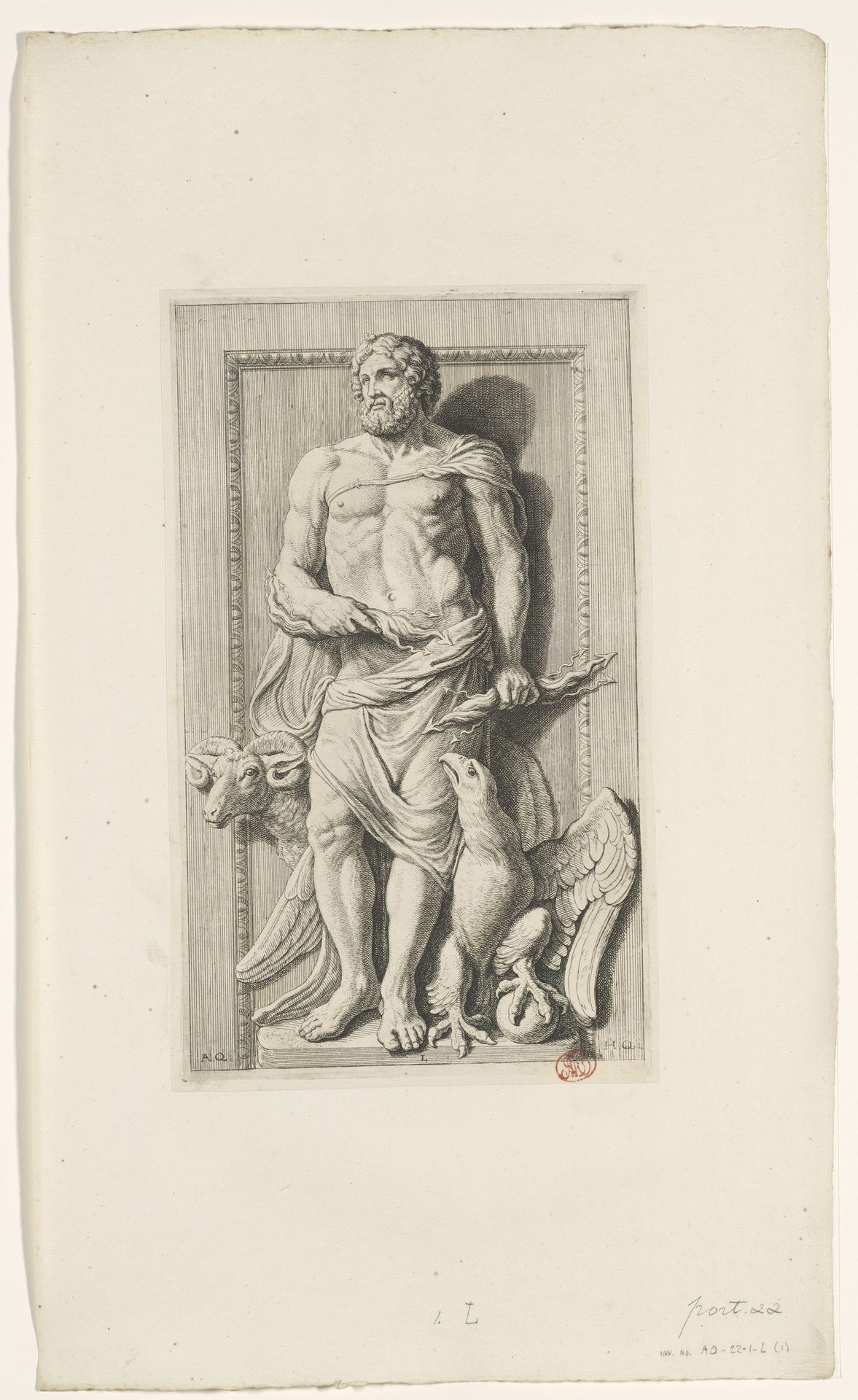
This print by Hubert Quellinus depicts an imposing image of Jupiter for the Town Hall of Amsterdam. It presents the god with his usual attributes: the eagle at his feet, a symbol of his power and dominion over the skies, and the ram, an animal associated with virility, force, and leadership. The eagle, here a proud symbol of Jupiter's might, has ancient roots stretching back to Mesopotamian iconography, later adopted by the Romans as an emblem of imperial authority. But consider its transformation: from a symbol of divine kingship to a national emblem, adorning flags and seals. One sees how the image of the eagle persists through centuries, adapting to new political and cultural landscapes, its primal impact undiminished. These symbols aren't just aesthetic choices, but powerful, recurring motifs that tap into our collective consciousness, stirring deep-seated emotions of awe, authority, and perhaps even fear. Such images speak to the enduring human need for symbols of power, order, and transcendence, constantly reshaped by the currents of history.
Beeld van Jupiter in de zuidelijke galerij van het Stadhuis op de Dam 1655

Hubert Quellinus
1619 - 1687Location
RijksmuseumArtwork details
- Medium
- drawing, print, engraving
- Dimensions
- height 326 mm, width 195 mm
- Location
- Rijksmuseum
- Copyright
- Rijks Museum: Open Domain
Tags
drawing
baroque
classical-realism
figuration
pencil drawing
history-painting
engraving
Comments
No comments
About this artwork
This print by Hubert Quellinus depicts an imposing image of Jupiter for the Town Hall of Amsterdam. It presents the god with his usual attributes: the eagle at his feet, a symbol of his power and dominion over the skies, and the ram, an animal associated with virility, force, and leadership. The eagle, here a proud symbol of Jupiter's might, has ancient roots stretching back to Mesopotamian iconography, later adopted by the Romans as an emblem of imperial authority. But consider its transformation: from a symbol of divine kingship to a national emblem, adorning flags and seals. One sees how the image of the eagle persists through centuries, adapting to new political and cultural landscapes, its primal impact undiminished. These symbols aren't just aesthetic choices, but powerful, recurring motifs that tap into our collective consciousness, stirring deep-seated emotions of awe, authority, and perhaps even fear. Such images speak to the enduring human need for symbols of power, order, and transcendence, constantly reshaped by the currents of history.
Comments
No comments