About this artwork
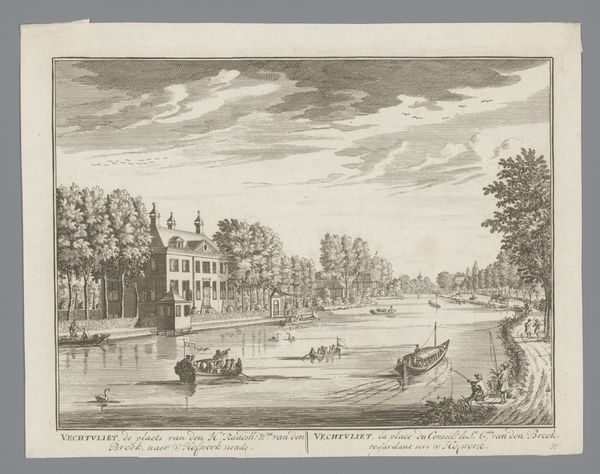
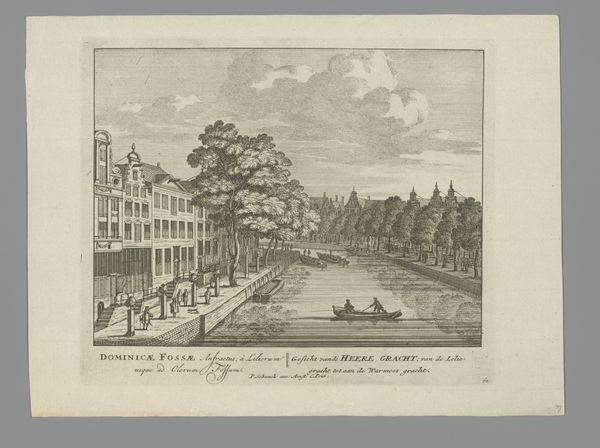
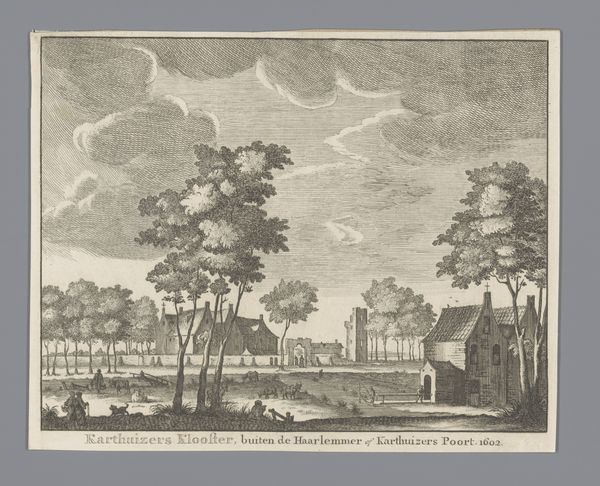
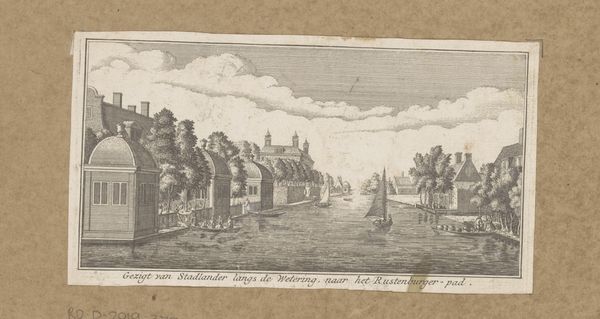
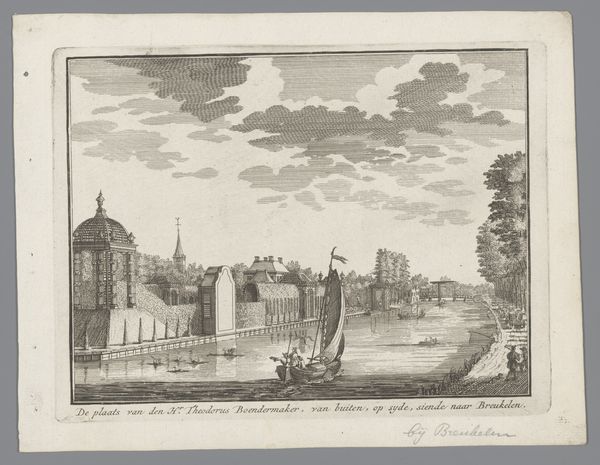
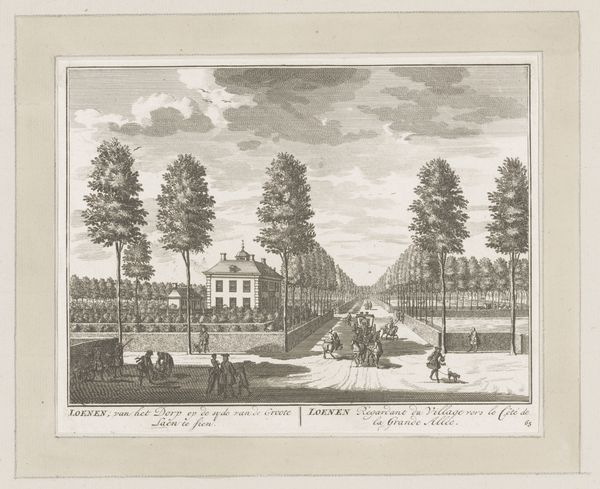
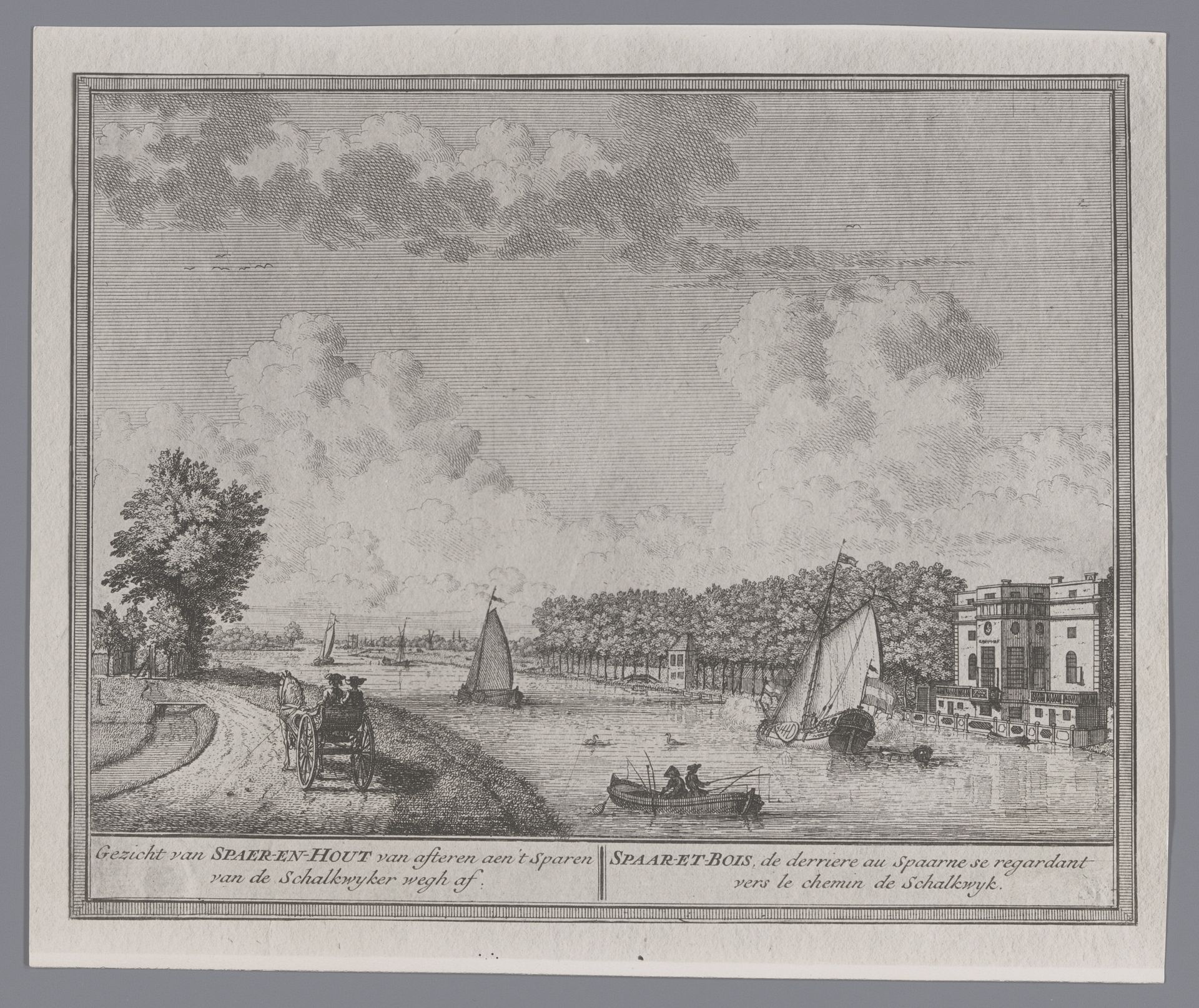
This is a reproduction of a print showing a view of Heemstede by Hendrik de Leth. The image offers a glimpse into the Dutch landscape, but it also tells us something about social class and access to leisure. Here, the land and waterways are neatly organized, with a road, a canal and houses all placed with careful precision. In the foreground, we see figures enjoying the space. There is a horse and carriage, and people relaxing on the water. These figures suggest a certain level of wealth and privilege required to enjoy this kind of leisurely pursuit. The original print was likely created for an elite audience, who enjoyed these views as part of their daily lives, or perhaps as a reminder of the tranquility of country life. This image offers a somewhat romanticized view, obscuring the labor and social structures that enable this vision of harmony. While beautiful, it prompts us to consider whose stories are told, and whose are left out.
Fotoreproductie van een prent van een gezicht op Heemstede door Hendrik de Leth
1900 - 1930

Anonymous
@anonymousLocation
RijksmuseumArtwork details
- Dimensions
- height 163 mm, width 201 mm
- Location
- Rijksmuseum
- Copyright
- Rijks Museum: Open Domain
Comments
Be the first to share your thoughts about this work.
About this artwork
This is a reproduction of a print showing a view of Heemstede by Hendrik de Leth. The image offers a glimpse into the Dutch landscape, but it also tells us something about social class and access to leisure. Here, the land and waterways are neatly organized, with a road, a canal and houses all placed with careful precision. In the foreground, we see figures enjoying the space. There is a horse and carriage, and people relaxing on the water. These figures suggest a certain level of wealth and privilege required to enjoy this kind of leisurely pursuit. The original print was likely created for an elite audience, who enjoyed these views as part of their daily lives, or perhaps as a reminder of the tranquility of country life. This image offers a somewhat romanticized view, obscuring the labor and social structures that enable this vision of harmony. While beautiful, it prompts us to consider whose stories are told, and whose are left out.
Comments
Be the first to share your thoughts about this work.