About this artwork
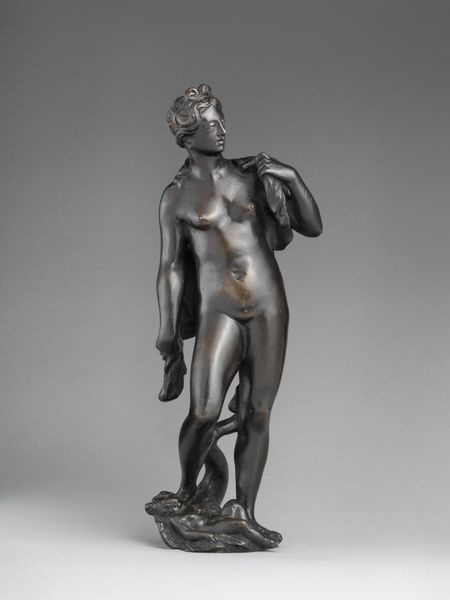
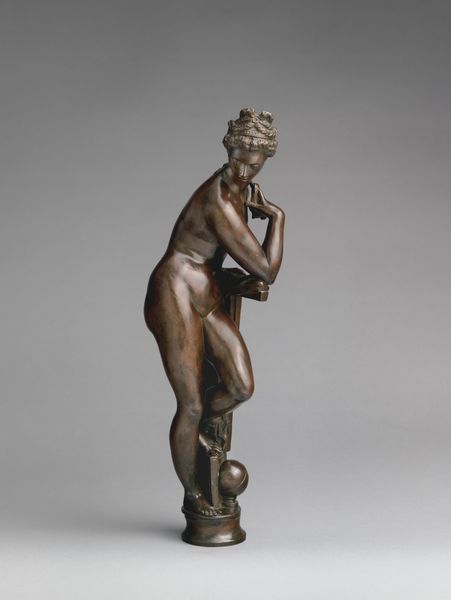
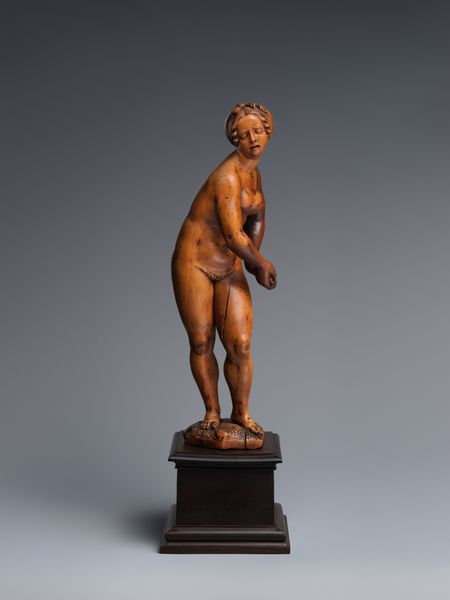
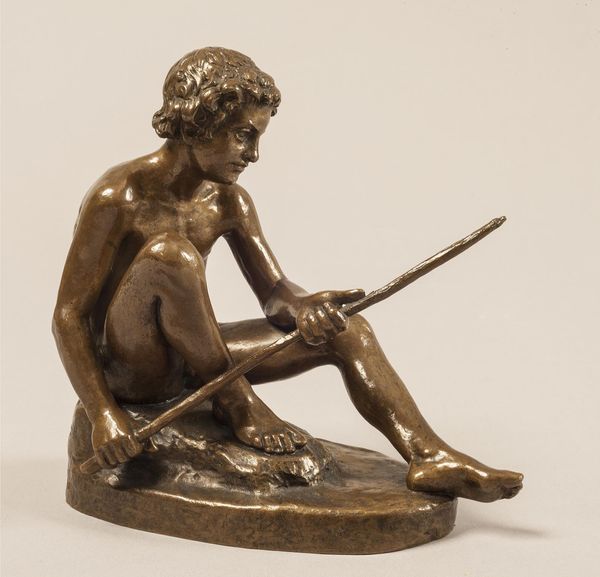
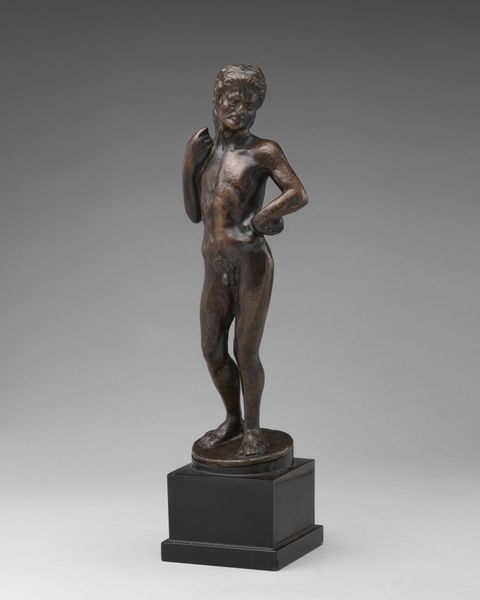
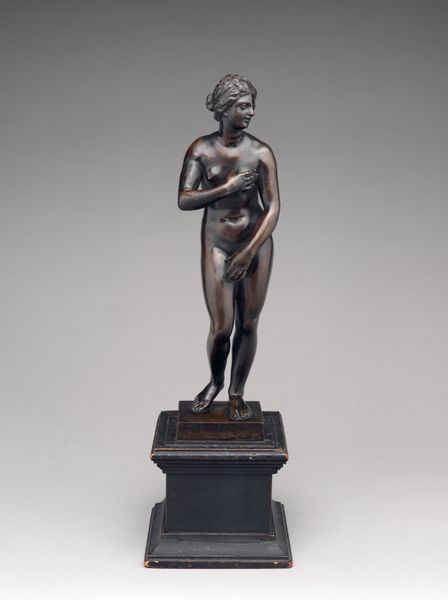
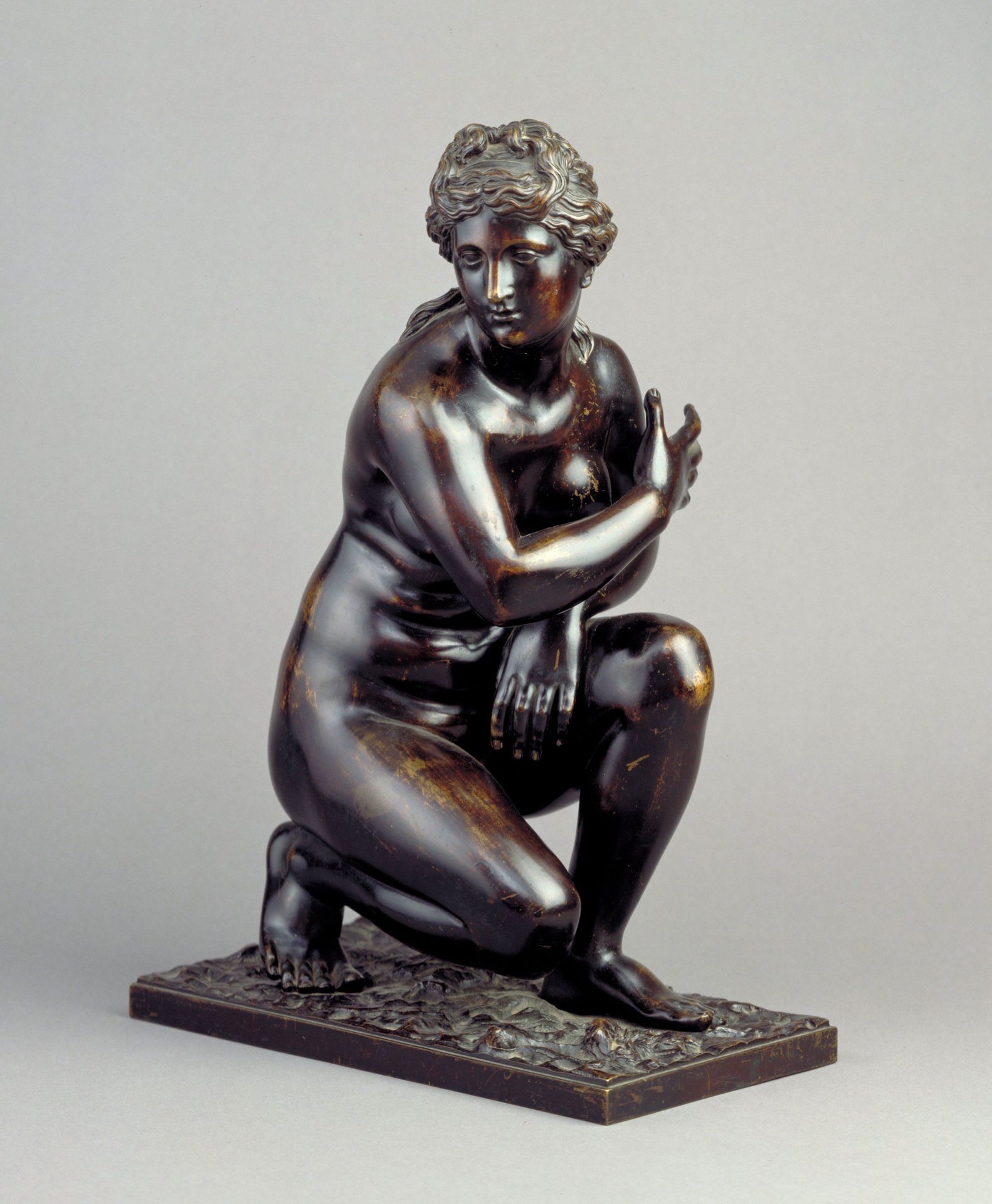
Curator: Right now, we’re standing in front of a bronze sculpture titled "Crouching Venus," which experts believe dates back to the 17th century. You can find it in the Minneapolis Institute of Art. Editor: Immediately, I sense this beautiful tension – a kind of shyness or hesitancy, rendered in weighty, solid bronze. The dark patina really adds to that somber, reflective mood. She's pulling inward. Curator: Absolutely. The pose is actually derived from classical antiquity, echoing ancient depictions of Aphrodite surprised while bathing. It's interesting how the artists of the Baroque era reinterpret these classical forms. Editor: What is the psychology behind this image? Venus is almost fetal, turned away, hugging herself for comfort. What secrets could a statue possibly possess? Is it modesty, vulnerability, maybe a bit of shame? It makes you wonder what she's seen, doesn't it? Curator: It certainly invites contemplation on the complexities of beauty and the female form through cultural symbolism, reflecting an emotional paradox in which exposure intersects with intimate revelation and protection. Editor: In a funny way, seeing this heavy bronze—this very terrestrial thing—trying to embody such an ethereal concept is kind of touching. Even a goddess has her moments, you know? Curator: Indeed. Perhaps her act of hiding makes the sculpture very revealing of shared vulnerable human emotion. These timeless mythic figures transcend the centuries to reflect back a cultural memory that persists today. Editor: A bit haunting, a bit thought-provoking, it's far more captivating than what a simple glance might suggest. Now, if she could only speak. Curator: Indeed! And perhaps it is exactly that unknowable element which gives "Crouching Venus" her staying power to this day.
Crouching Venus
c. 17th century


Artwork details
- Medium
- bronze, sculpture
- Dimensions
- 15 1/4 x 10 1/2 x 5 5/8 in. (38.74 x 26.67 x 14.29 cm)
- Location
- Minneapolis Institute of Art
- Copyright
- Public Domain
Tags
Comments
Share your thoughts
About this artwork
Curator: Right now, we’re standing in front of a bronze sculpture titled "Crouching Venus," which experts believe dates back to the 17th century. You can find it in the Minneapolis Institute of Art. Editor: Immediately, I sense this beautiful tension – a kind of shyness or hesitancy, rendered in weighty, solid bronze. The dark patina really adds to that somber, reflective mood. She's pulling inward. Curator: Absolutely. The pose is actually derived from classical antiquity, echoing ancient depictions of Aphrodite surprised while bathing. It's interesting how the artists of the Baroque era reinterpret these classical forms. Editor: What is the psychology behind this image? Venus is almost fetal, turned away, hugging herself for comfort. What secrets could a statue possibly possess? Is it modesty, vulnerability, maybe a bit of shame? It makes you wonder what she's seen, doesn't it? Curator: It certainly invites contemplation on the complexities of beauty and the female form through cultural symbolism, reflecting an emotional paradox in which exposure intersects with intimate revelation and protection. Editor: In a funny way, seeing this heavy bronze—this very terrestrial thing—trying to embody such an ethereal concept is kind of touching. Even a goddess has her moments, you know? Curator: Indeed. Perhaps her act of hiding makes the sculpture very revealing of shared vulnerable human emotion. These timeless mythic figures transcend the centuries to reflect back a cultural memory that persists today. Editor: A bit haunting, a bit thought-provoking, it's far more captivating than what a simple glance might suggest. Now, if she could only speak. Curator: Indeed! And perhaps it is exactly that unknowable element which gives "Crouching Venus" her staying power to this day.
Comments
Share your thoughts