About this artwork
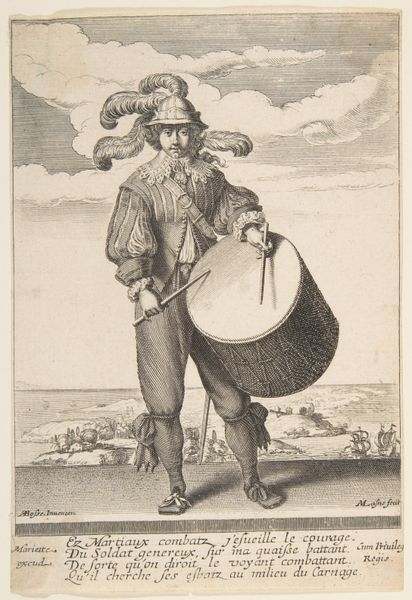
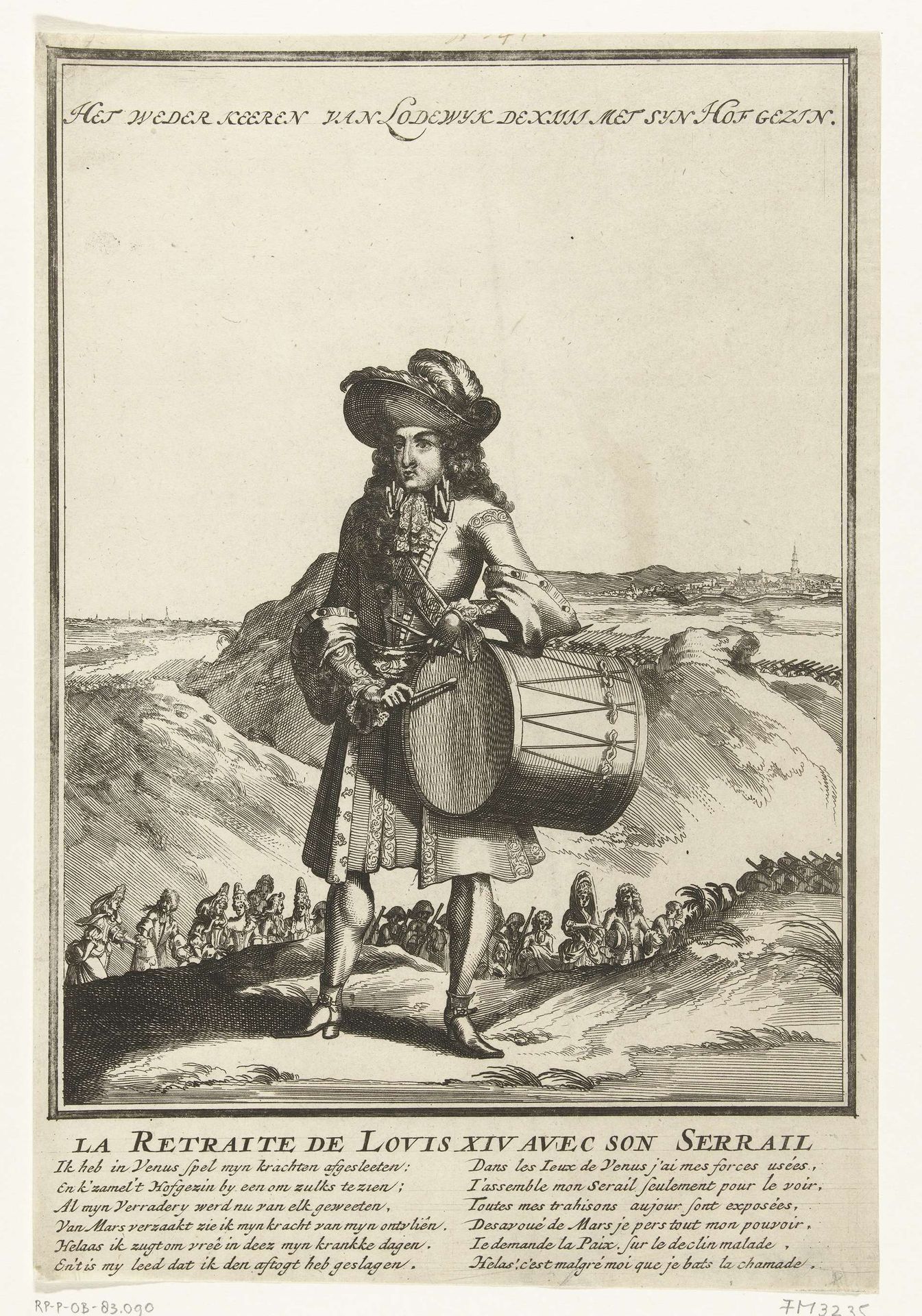
This engraving, made in the Netherlands around the turn of the 18th century, depicts Louis XIV with his harem. The image and text combine to form a political cartoon. It connects to a wider context of the cultural and political tensions between the Dutch Republic and France during this period. The image presents Louis XIV as a drummer, leading a line of women away from a city, presumably one he has failed to conquer. The text, in both Dutch and French, suggests themes of weakness, defeat, and reliance on pleasure. Culturally, the image draws on stereotypes and prejudices about the French court, particularly its perceived decadence and sexual licentiousness. Historically, the print reflects the Dutch Republic’s resistance against Louis XIV’s expansionist policies. It critiques Louis XIV’s image of absolute power, undermining his authority through satire. To fully understand this image, we can consult historical documents, political pamphlets, and visual archives from the period. The meaning of this print is contingent on its specific socio-political context.
Aftocht van Lodewijk XIV met zijn harem, ca. 1701-1713
1701 - 1713

Anonymous
@anonymousLocation
RijksmuseumArtwork details
- Medium
- engraving
- Dimensions
- height 293 mm, width 197 mm
- Location
- Rijksmuseum
- Copyright
- Rijks Museum: Open Domain
Tags
baroque
caricature
old engraving style
caricature
history-painting
engraving
Comments
Be the first to share your thoughts about this work.
About this artwork
This engraving, made in the Netherlands around the turn of the 18th century, depicts Louis XIV with his harem. The image and text combine to form a political cartoon. It connects to a wider context of the cultural and political tensions between the Dutch Republic and France during this period. The image presents Louis XIV as a drummer, leading a line of women away from a city, presumably one he has failed to conquer. The text, in both Dutch and French, suggests themes of weakness, defeat, and reliance on pleasure. Culturally, the image draws on stereotypes and prejudices about the French court, particularly its perceived decadence and sexual licentiousness. Historically, the print reflects the Dutch Republic’s resistance against Louis XIV’s expansionist policies. It critiques Louis XIV’s image of absolute power, undermining his authority through satire. To fully understand this image, we can consult historical documents, political pamphlets, and visual archives from the period. The meaning of this print is contingent on its specific socio-political context.
Comments
Be the first to share your thoughts about this work.