About this artwork
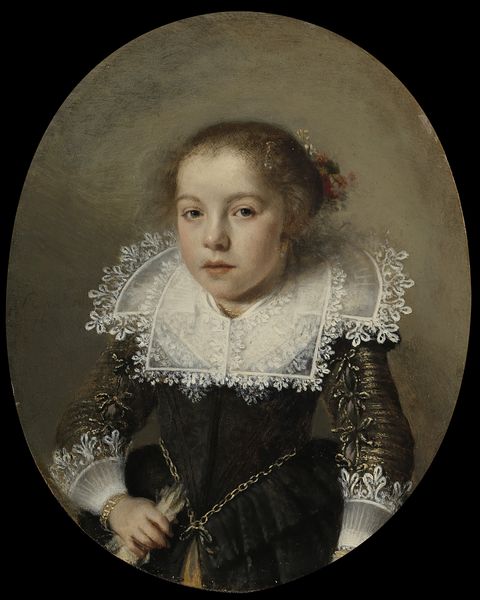
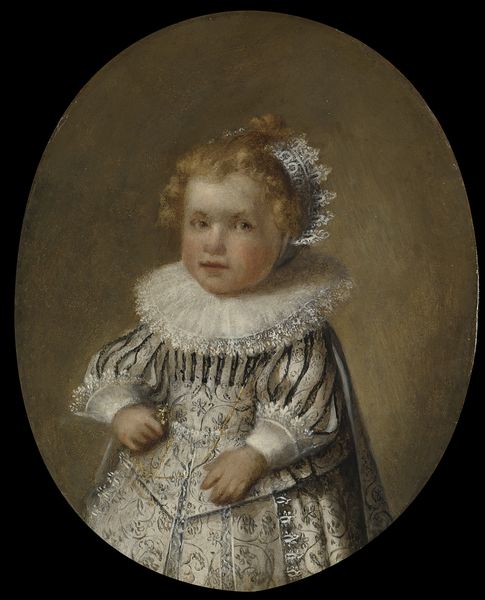
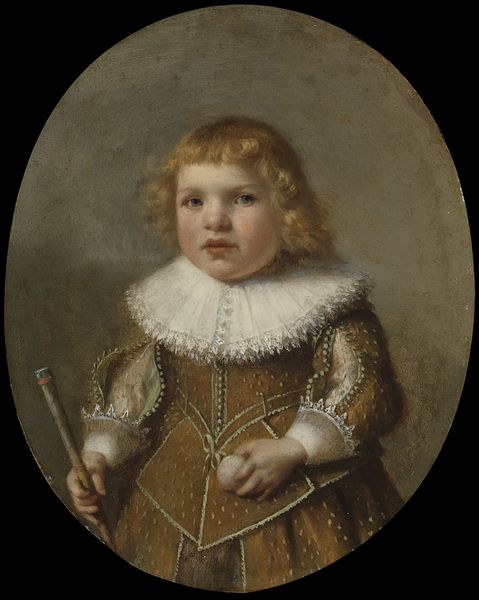
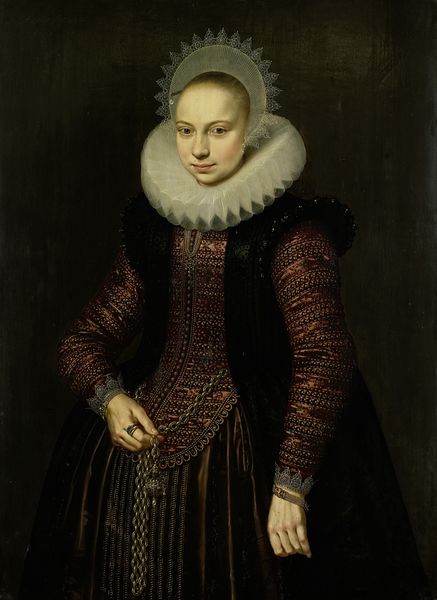
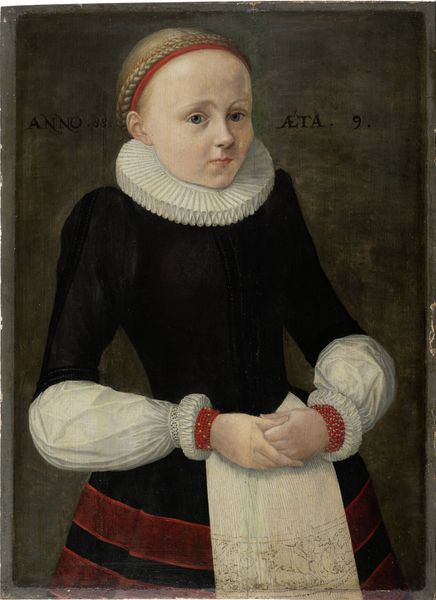
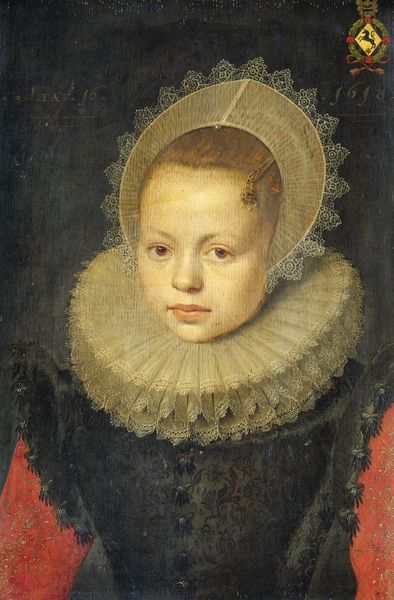
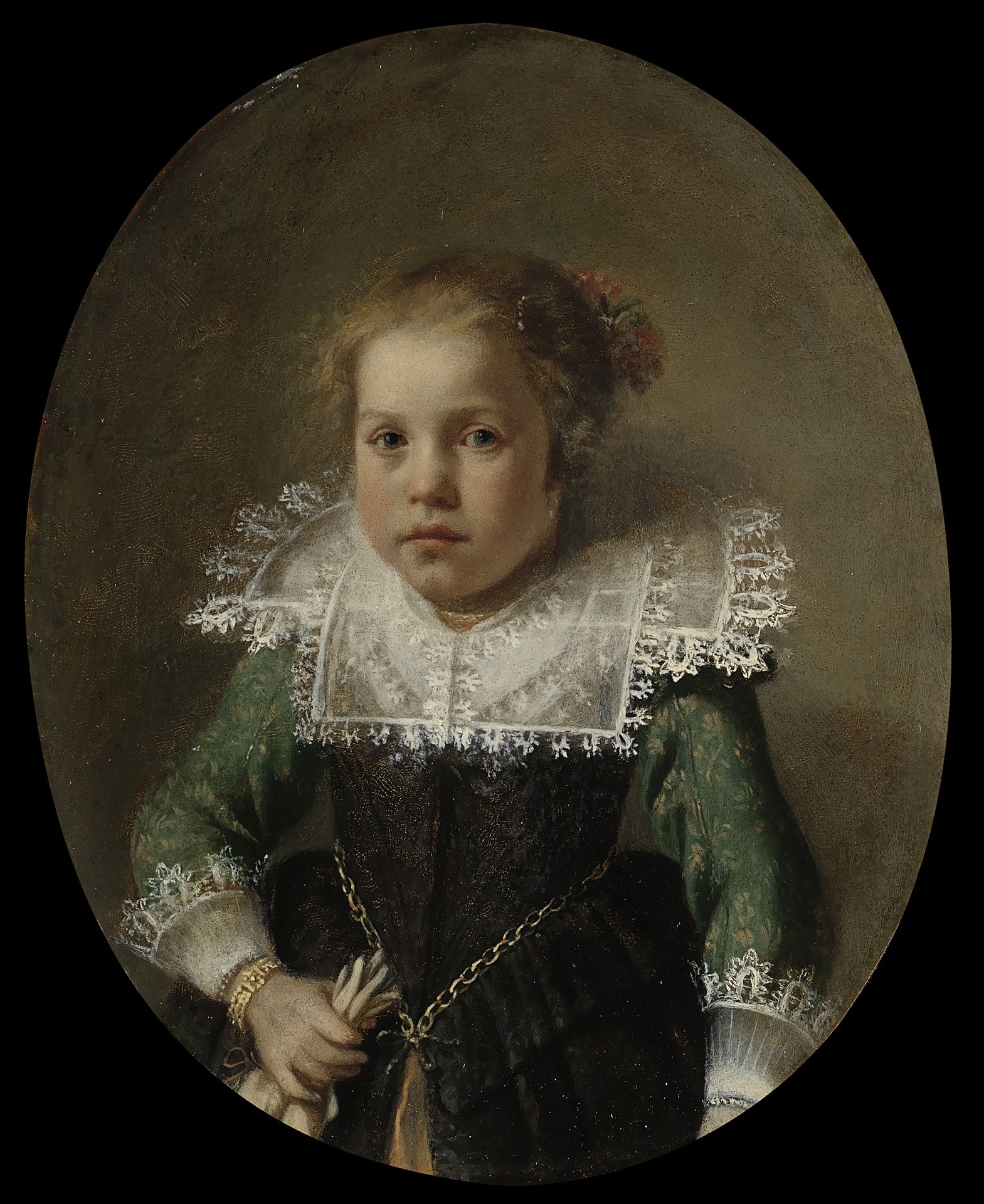
Editor: So, this is *Portrait of Maria Cornelisdr van Esch*, an oil painting from 1632. What strikes me immediately is how serious this little girl looks. It’s a far cry from the cherubic images we often associate with childhood. What do you make of it? Curator: It’s a poignant image, isn’t it? Looking at Maria through a contemporary lens, we can’t ignore the implications of representing a child with such formality and gravity. In Dutch Golden Age portraiture, particularly among the elite, such portraits served a purpose. How do you think it intersects with social and economic power structures? Editor: Well, the fine lace, the jewelry – it all speaks of wealth, of course. Almost like a miniature adult, performing her family’s status. Curator: Precisely. It's not just a depiction; it's a construction of identity rooted in privilege. The artist is carefully crafting an image, reflecting not only Maria's likeness but her position within a patriarchal, class-based society. We should consider how gender and age intersect to define Maria’s role. What future is already mapped out for her? Editor: It makes you wonder about her lived experience. Was this portrait a way of silencing her, molding her into a passive representation of her family's ambition? Curator: That’s an insightful question. And while we cannot know for sure Maria's inner life, acknowledging the power dynamics embedded in this seemingly simple portrait allows us to challenge conventional readings and foster a more critical dialogue with the past. The work reflects on status. Editor: Thinking about the broader implications makes the portrait so much more complex and meaningful. I appreciate your perspective! Curator: And I value your openness to challenging the historical narrative. This exchange helps make connections between art history and the important social questions of today.

Artwork details
- Medium
- painting, oil-paint
- Dimensions
- support height 15.9 cm, support width 12.8 cm
- Location
- Rijksmuseum
- Copyright
- Rijks Museum: Open Domain
Tags
portrait
character portrait
baroque
portrait image
dutch-golden-age
painting
oil-paint
portrait reference
portrait head and shoulder
mid-section and head portrait
genre-painting
Comments
No comments
About this artwork
Editor: So, this is *Portrait of Maria Cornelisdr van Esch*, an oil painting from 1632. What strikes me immediately is how serious this little girl looks. It’s a far cry from the cherubic images we often associate with childhood. What do you make of it? Curator: It’s a poignant image, isn’t it? Looking at Maria through a contemporary lens, we can’t ignore the implications of representing a child with such formality and gravity. In Dutch Golden Age portraiture, particularly among the elite, such portraits served a purpose. How do you think it intersects with social and economic power structures? Editor: Well, the fine lace, the jewelry – it all speaks of wealth, of course. Almost like a miniature adult, performing her family’s status. Curator: Precisely. It's not just a depiction; it's a construction of identity rooted in privilege. The artist is carefully crafting an image, reflecting not only Maria's likeness but her position within a patriarchal, class-based society. We should consider how gender and age intersect to define Maria’s role. What future is already mapped out for her? Editor: It makes you wonder about her lived experience. Was this portrait a way of silencing her, molding her into a passive representation of her family's ambition? Curator: That’s an insightful question. And while we cannot know for sure Maria's inner life, acknowledging the power dynamics embedded in this seemingly simple portrait allows us to challenge conventional readings and foster a more critical dialogue with the past. The work reflects on status. Editor: Thinking about the broader implications makes the portrait so much more complex and meaningful. I appreciate your perspective! Curator: And I value your openness to challenging the historical narrative. This exchange helps make connections between art history and the important social questions of today.
Comments
No comments