About this artwork
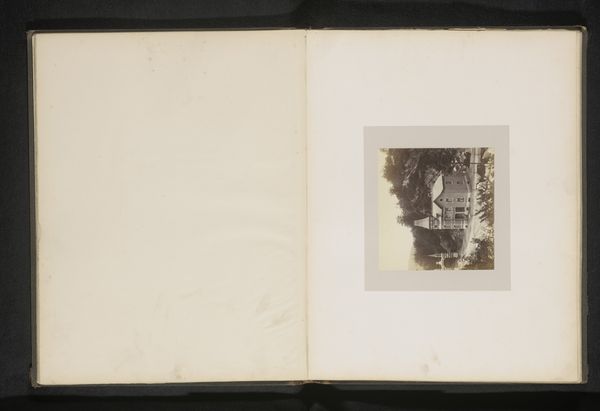
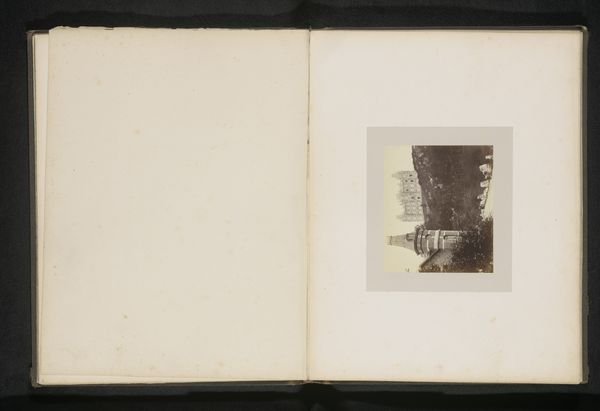
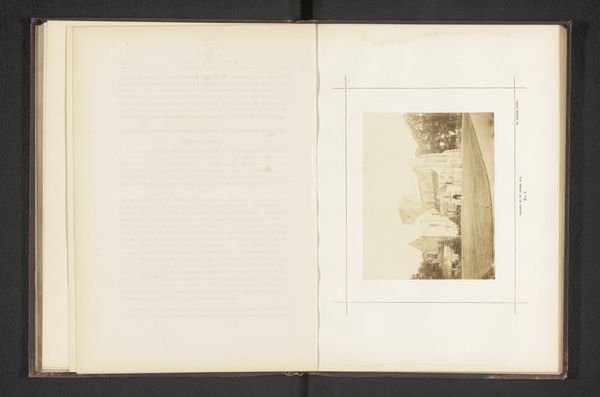
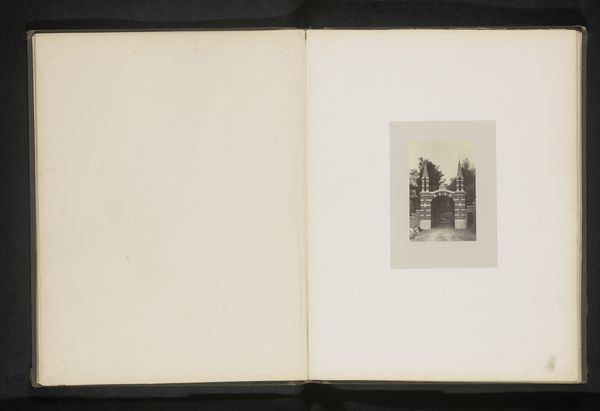
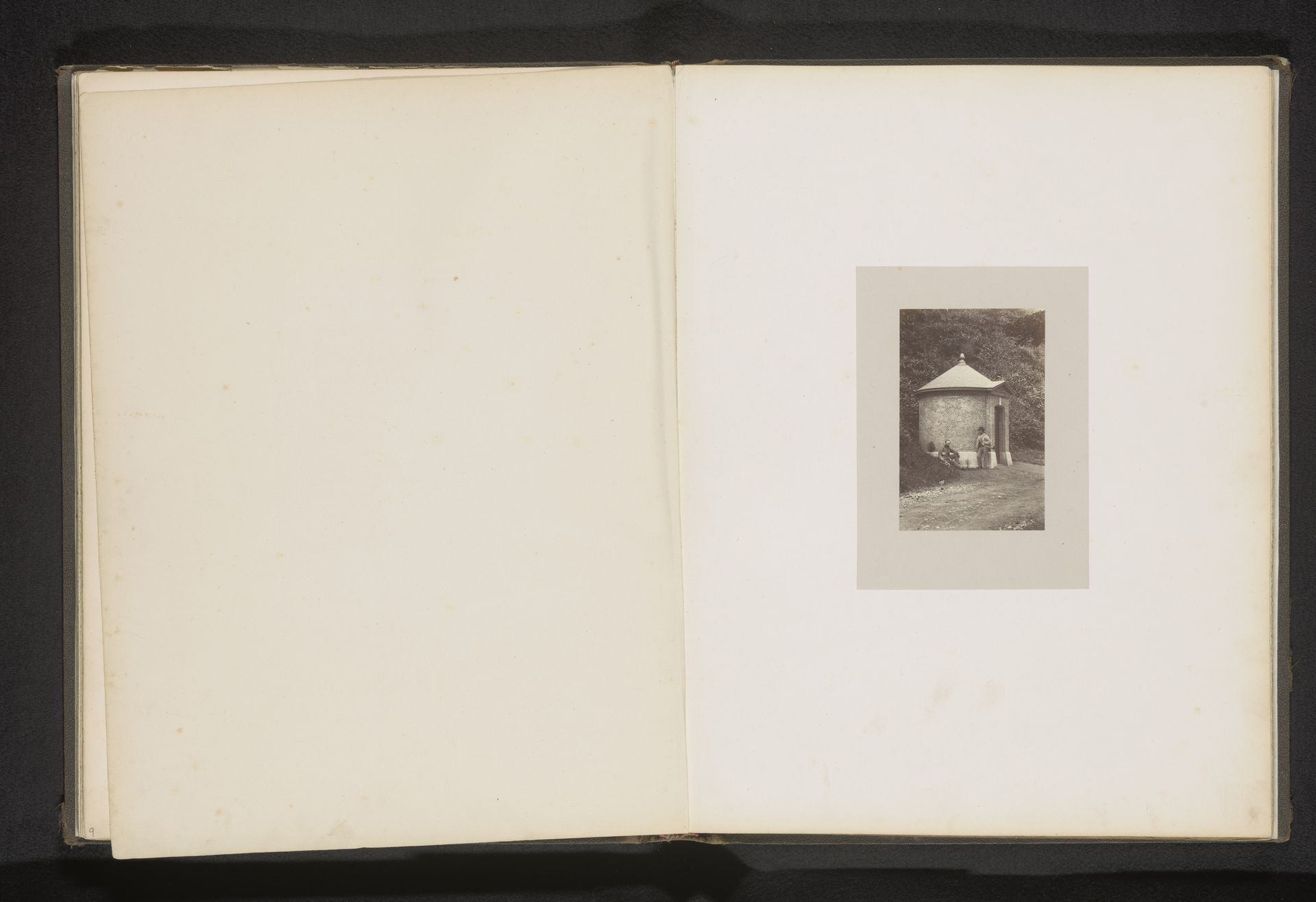
This photograph, "Gezicht op een gebouw op de buitenplaats van Château de Marlagne te Wépion", of unknown date, was captured by Ghémar Frères. Immediately, the centered composition draws our eye to the small pavilion, a structure that stands as a testament to geometric clarity amidst the organic chaos of nature. The limited tonal range emphasizes form and texture, highlighting the contrast between the smooth walls of the building and the rough foliage surrounding it. This contrast introduces a dialogue between the constructed and the natural, a theme central to landscape photography. The figures positioned near the pavilion provide a sense of scale, but also invite a semiotic reading. They are cultural markers, silently suggesting narratives of leisure and human presence within an ordered landscape. How does the structure, with its simple shape, play with perspective and our understanding of space? It reflects a broader discourse on how we perceive and interact with the environment around us. The photograph acts as both an aesthetic object and a cultural document.
Gezicht op een gebouw op de buitenplaats van Château de Marlagne te Wépion
before 1867

Ghémar Frères
@ghemarfreresLocation
RijksmuseumArtwork details
- Medium
- print, photography, site-specific, gelatin-silver-print, albumen-print
- Dimensions
- height 100 mm, width 66 mm
- Location
- Rijksmuseum
- Copyright
- Rijks Museum: Open Domain
Tags
Comments
Share your thoughts
About this artwork
This photograph, "Gezicht op een gebouw op de buitenplaats van Château de Marlagne te Wépion", of unknown date, was captured by Ghémar Frères. Immediately, the centered composition draws our eye to the small pavilion, a structure that stands as a testament to geometric clarity amidst the organic chaos of nature. The limited tonal range emphasizes form and texture, highlighting the contrast between the smooth walls of the building and the rough foliage surrounding it. This contrast introduces a dialogue between the constructed and the natural, a theme central to landscape photography. The figures positioned near the pavilion provide a sense of scale, but also invite a semiotic reading. They are cultural markers, silently suggesting narratives of leisure and human presence within an ordered landscape. How does the structure, with its simple shape, play with perspective and our understanding of space? It reflects a broader discourse on how we perceive and interact with the environment around us. The photograph acts as both an aesthetic object and a cultural document.
Comments
Share your thoughts