About this artwork
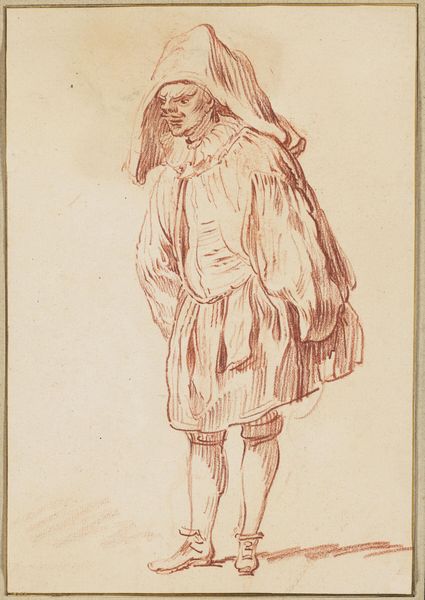
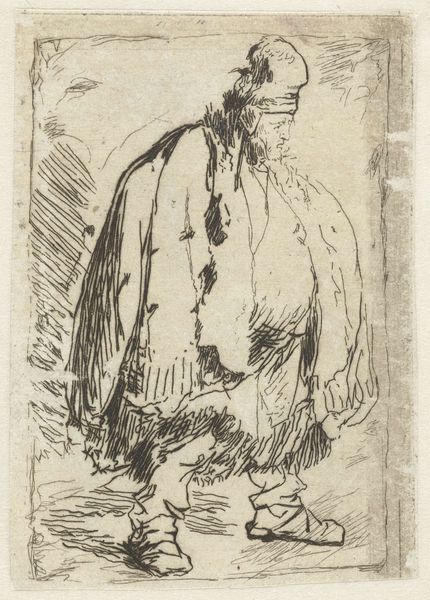
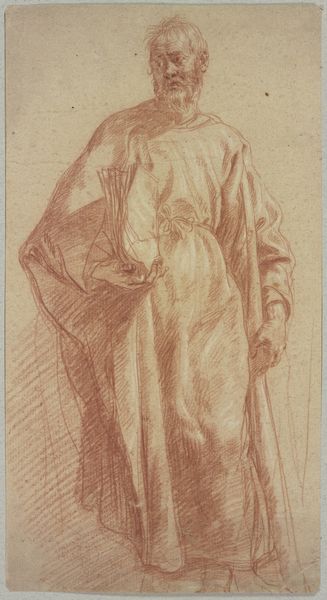
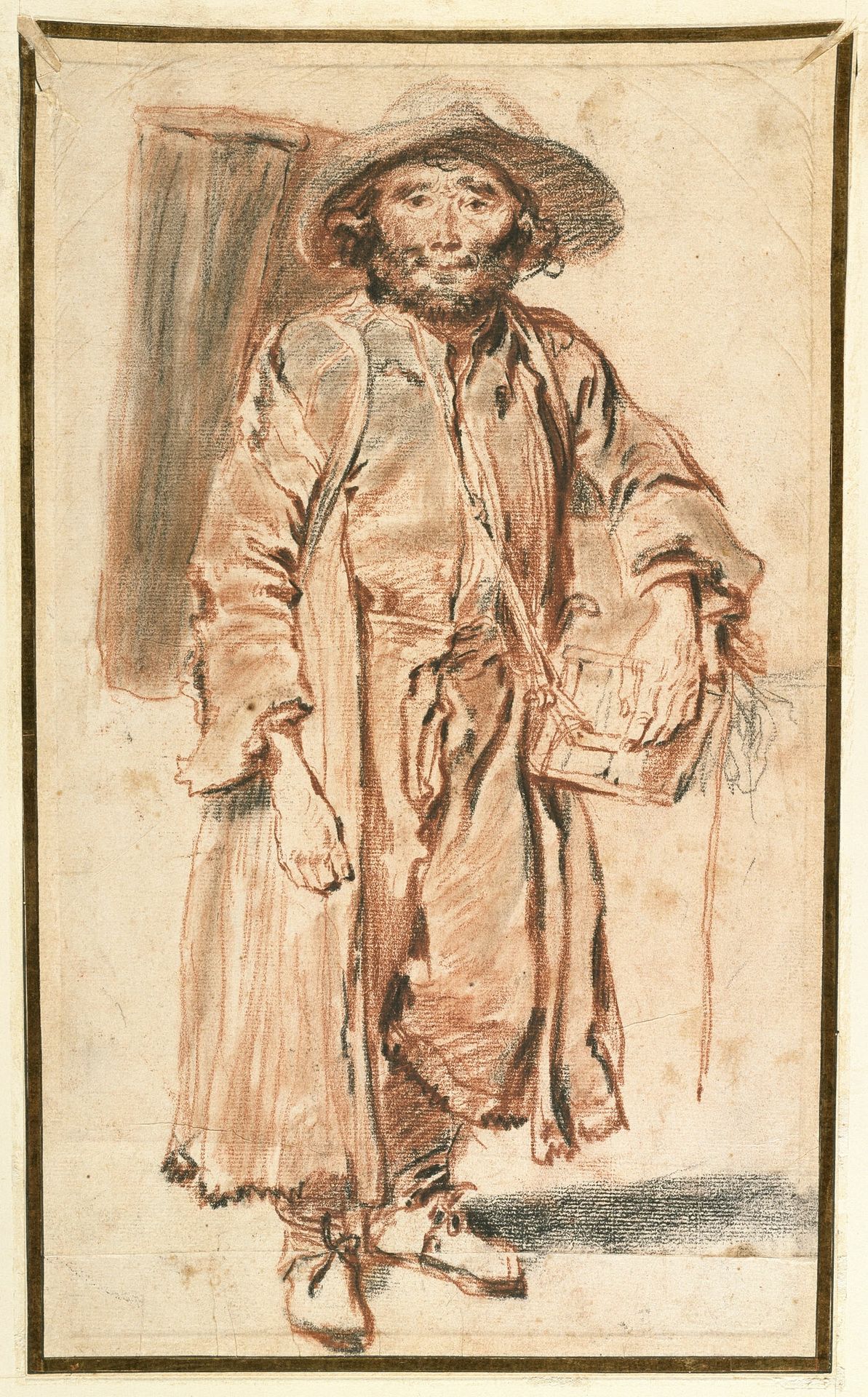
Jean-Antoine Watteau sketched this Savoyard in sanguine and black chalk. The Savoyard, often a wandering entertainer from the Savoy region, emerges as a symbol of transience and hardship. He is the archetypal vagrant. The Savoyard's image echoes the ancient motif of the wanderer, a figure found in various guises across cultures. Think of the medieval pilgrim, or even the wandering Jew, forever displaced. These figures carry the weight of history, embodying collective anxieties about displacement. The hat, large and worn, and the cloak, once perhaps finer, conceal and protect. These motifs appear in depictions of travelling players throughout the Renaissance, figures of amusement but also of mistrust. The Savoyard evokes a sense of melancholy, a reflection on the transient nature of existence. It is a powerful visual metaphor engaging our subconscious, reminding us of the cyclical nature of human experience, forever caught between security and uncertainty, familiarity and the unknown.
The Old Savoyard c. 1715


Artwork details
- Medium
- drawing, paper, chalk, charcoal, black-chalk
- Dimensions
- 359 × 221 mm
- Location
- The Art Institute of Chicago
- Copyright
- Public Domain
Tags
portrait
drawing
narrative-art
baroque
charcoal drawing
figuration
paper
oil painting
chalk
portrait drawing
charcoal
academic-art
black-chalk
Comments
No comments
About this artwork
Jean-Antoine Watteau sketched this Savoyard in sanguine and black chalk. The Savoyard, often a wandering entertainer from the Savoy region, emerges as a symbol of transience and hardship. He is the archetypal vagrant. The Savoyard's image echoes the ancient motif of the wanderer, a figure found in various guises across cultures. Think of the medieval pilgrim, or even the wandering Jew, forever displaced. These figures carry the weight of history, embodying collective anxieties about displacement. The hat, large and worn, and the cloak, once perhaps finer, conceal and protect. These motifs appear in depictions of travelling players throughout the Renaissance, figures of amusement but also of mistrust. The Savoyard evokes a sense of melancholy, a reflection on the transient nature of existence. It is a powerful visual metaphor engaging our subconscious, reminding us of the cyclical nature of human experience, forever caught between security and uncertainty, familiarity and the unknown.
Comments
No comments