About this artwork
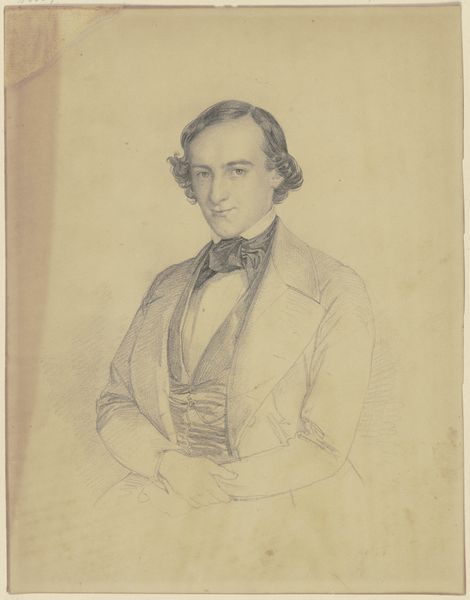
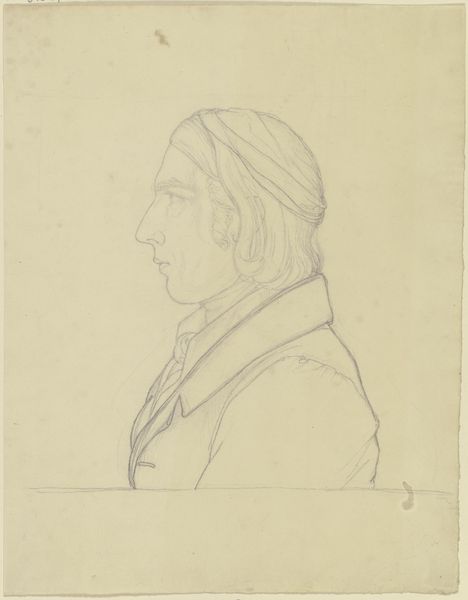
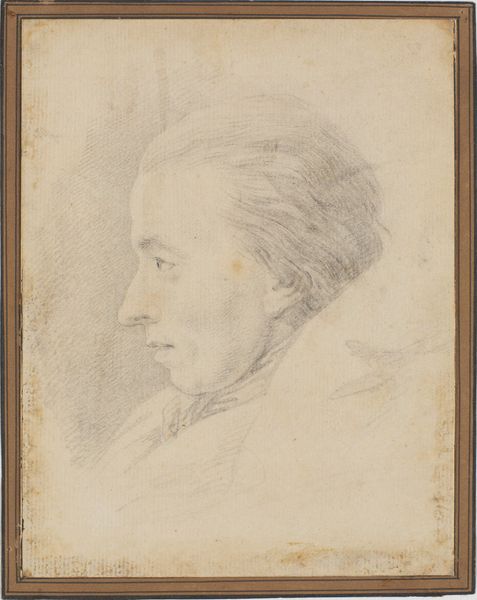
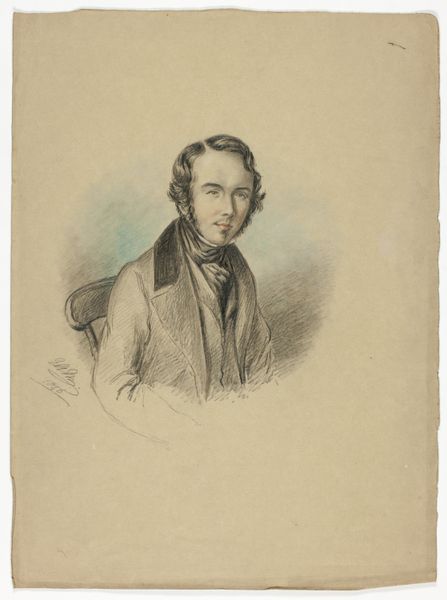
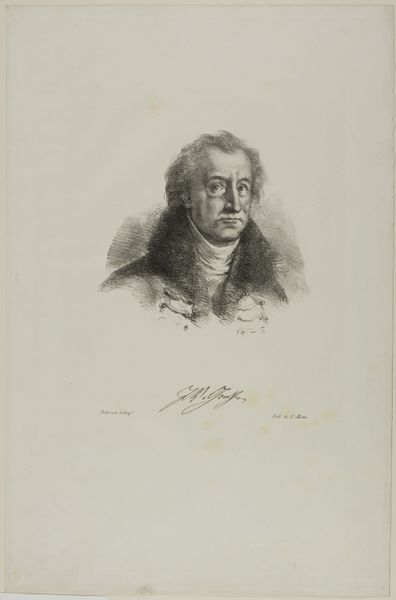
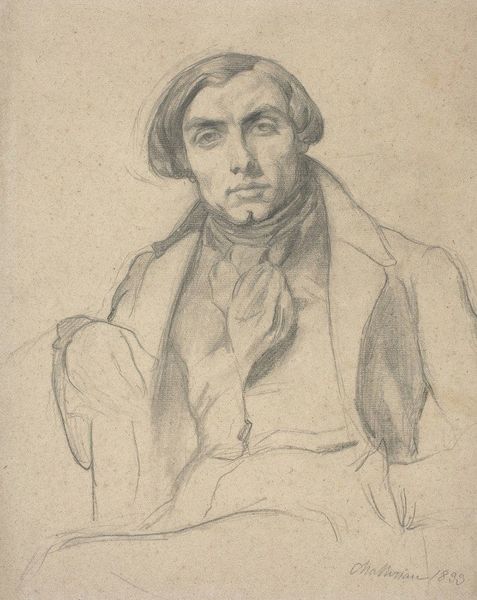
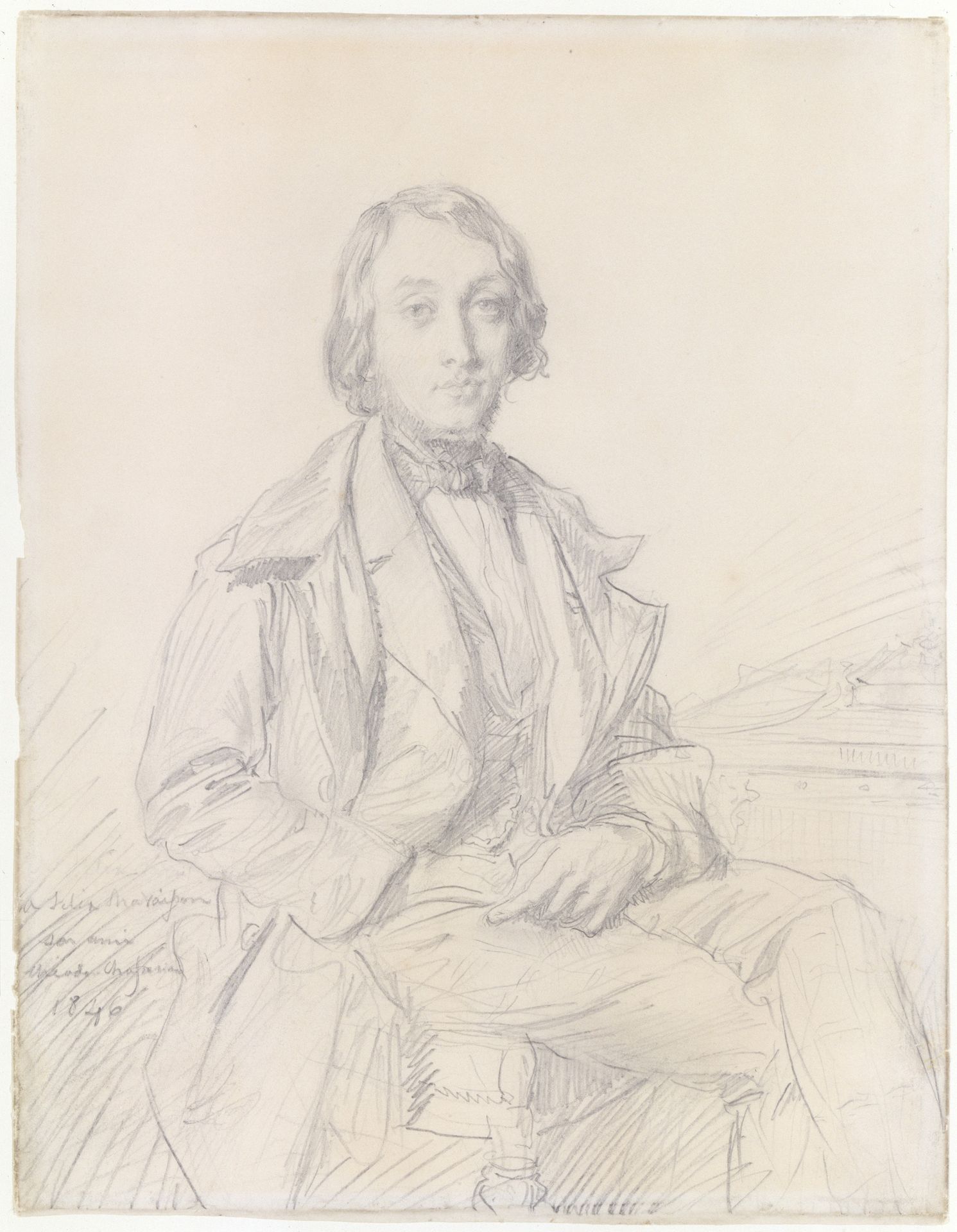
Théodore Chassériau sketched “Portrait of Félix Ravaisson” in the mid-19th century, capturing the likeness of a philosopher amidst the currents of French intellectual life. Chassériau, of mixed European and Afro-Dominican heritage, navigated the complex social strata of 19th-century Paris. His personal experience may have influenced his sensitive portrayals of individuals within his circle. In this portrait, Ravaisson is depicted with a gaze that seems to invite contemplation. The delicate lines of the drawing convey both his intellectual depth and his humanity. The sketch provides a glimpse into the intimate relationships between artists and thinkers during a period of significant social and political change. It reminds us that portraiture is not just about capturing a likeness, but also about revealing the subject’s inner world and their place within a broader cultural landscape. In rendering Ravaisson, Chassériau offers a delicate rendering of identity, shaped by intellect, friendship, and the subtle nuances of lived experience.
Portrait of Félix Ravaisson
1846

Théodore Chassériau
1819 - 1856
The Metropolitan Museum of Art
Metropolitan Museum of Art, New York, NYArtwork details
- Medium
- drawing
- Dimensions
- 13 1/8 x 10 in. (33.3 x 25.4 cm)
- Location
- Metropolitan Museum of Art, New York, NY
- Copyright
- Public Domain
Tags
Comments
Share your thoughts
About this artwork
Théodore Chassériau sketched “Portrait of Félix Ravaisson” in the mid-19th century, capturing the likeness of a philosopher amidst the currents of French intellectual life. Chassériau, of mixed European and Afro-Dominican heritage, navigated the complex social strata of 19th-century Paris. His personal experience may have influenced his sensitive portrayals of individuals within his circle. In this portrait, Ravaisson is depicted with a gaze that seems to invite contemplation. The delicate lines of the drawing convey both his intellectual depth and his humanity. The sketch provides a glimpse into the intimate relationships between artists and thinkers during a period of significant social and political change. It reminds us that portraiture is not just about capturing a likeness, but also about revealing the subject’s inner world and their place within a broader cultural landscape. In rendering Ravaisson, Chassériau offers a delicate rendering of identity, shaped by intellect, friendship, and the subtle nuances of lived experience.
Comments
Share your thoughts