![["Rand Drill co's compressor plant, shaft no. 15", "Rand Drill co's compressor plant, shaft no. 18"] by P.K. Yates](https://d2w8kbdekdi1gv.cloudfront.net/eyJidWNrZXQiOiAiYXJ0ZXJhLWltYWdlcy1idWNrZXQiLCAia2V5IjogImFydHdvcmtzL2MzOGE5ZGNmLTgzYzctNDZhYS04ODg2LTk2ZjgyNDhkNzM2Yi9jMzhhOWRjZi04M2M3LTQ2YWEtODg4Ni05NmY4MjQ4ZDczNmJfZnVsbC5qcGciLCAiZWRpdHMiOiB7InJlc2l6ZSI6IHsid2lkdGgiOiAxOTIwLCAiaGVpZ2h0IjogMTkyMCwgImZpdCI6ICJpbnNpZGUifX19)
before 1887
["Rand Drill co's compressor plant, shaft no. 15", "Rand Drill co's compressor plant, shaft no. 18"]

Listen to curator's interpretation
Curatorial notes
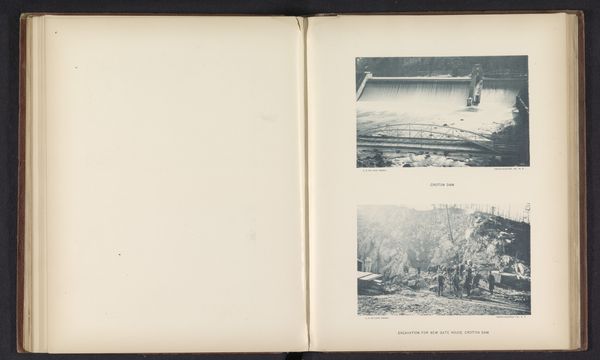
Editor: So, here we have a photo album page, “Rand Drill co’s compressor plant, shaft no. 15” and “Rand Drill co’s compressor plant, shaft no. 18,” from before 1887, by P.K. Yates. They're albumen prints and have such a stark, realistic feel. Looking at these two industrial scenes side-by-side really makes me wonder about the lives of the workers. What strikes you most when you look at these? Curator: The visual record they provide of industrial advancement is significant. Before 1887, photography was increasingly used by companies to document infrastructure and progress, which reflects not just engineering, but the socio-political embrace of industrialization itself. Editor: So, it's like a company bragging about its accomplishments through images? Curator: Precisely. And the chosen aesthetic of realism is crucial. It gives the impression of unvarnished truth, validating the company's narrative of progress. Consider who these images were intended to influence—investors, potential clients, even the public. How do you think these images impacted the perception of industrial labor at the time? Editor: I imagine that it promoted a sense of strength and forward motion. But also, maybe obscured some of the realities of the working conditions? Curator: An astute point. By presenting these pristine, organized scenes, issues like worker safety or environmental impact get sidelined. Editor: This really shows how even seemingly objective photographs can be carefully constructed messages. Curator: Indeed. This photo album unveils the deliberate crafting of an industrial narrative, a kind of visual propaganda promoting a specific image of progress.