1800 - 1900
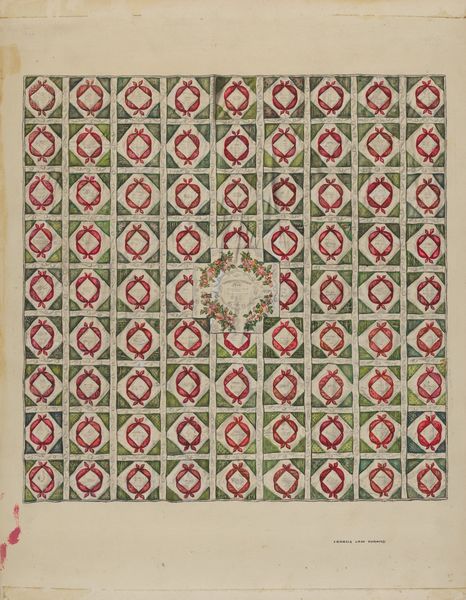
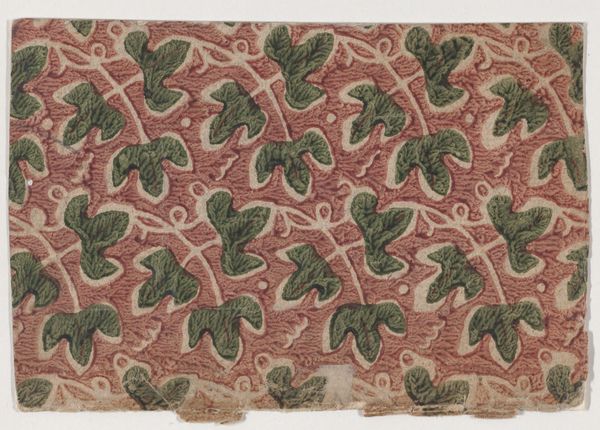
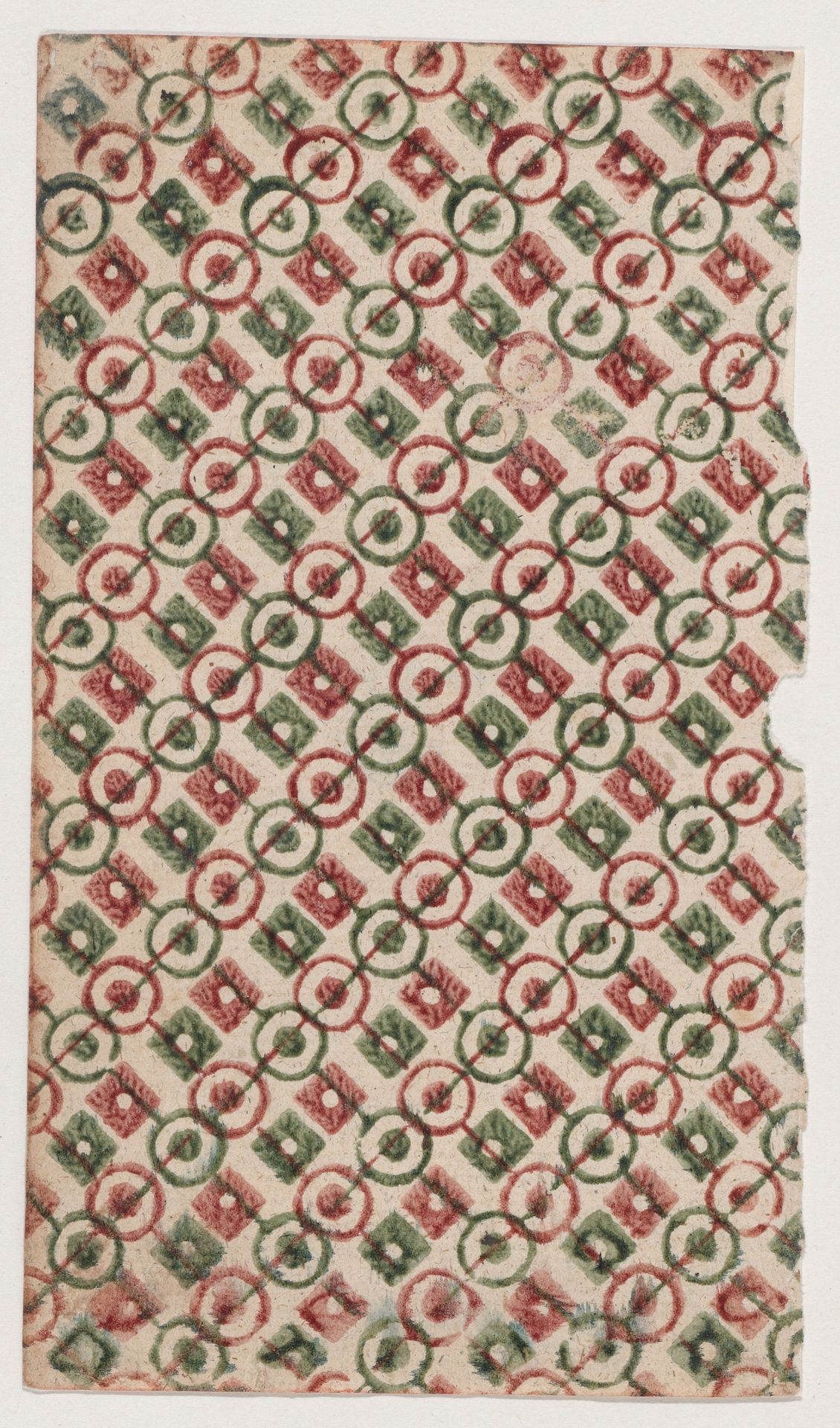
Sheet with overall pattern of circles and squares with lines through them


Listen to curator's interpretation
Curatorial notes
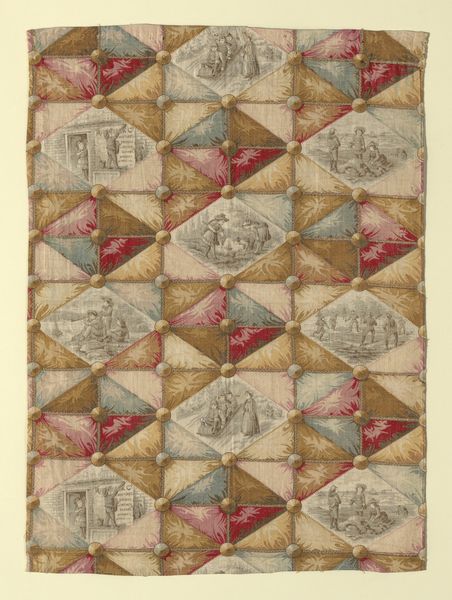
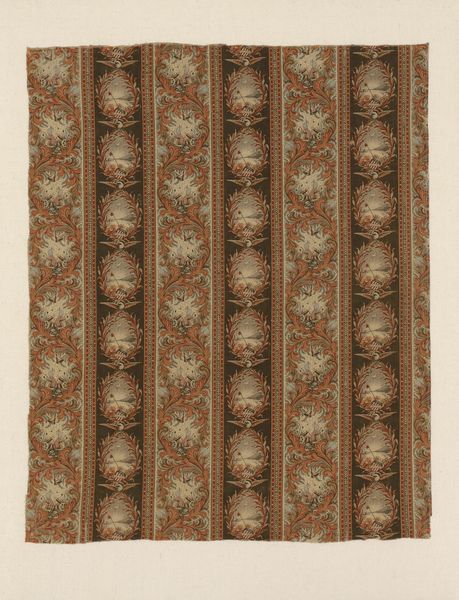
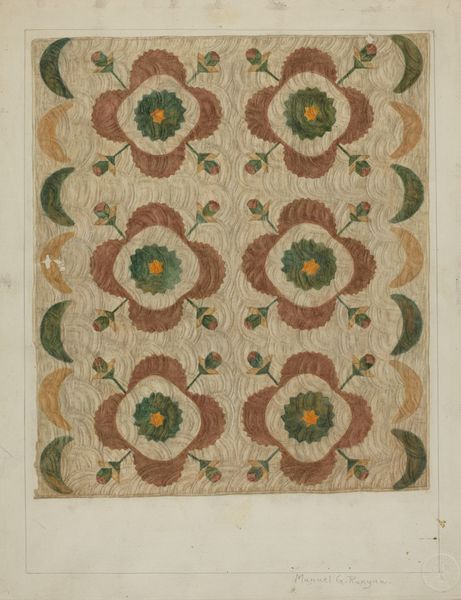
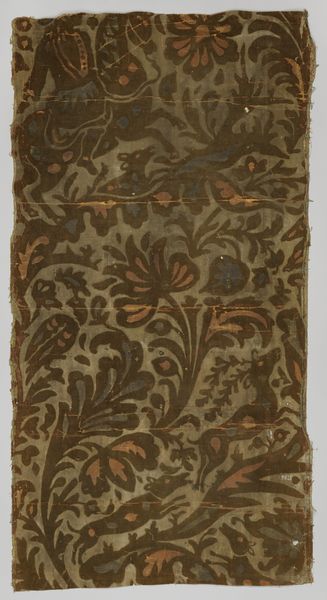
Curator: Before us, we have a fascinating, if humble, textile study. Dating from sometime in the 19th century, this "Sheet with overall pattern of circles and squares with lines through them", as it's titled, is an anonymous drawing, a print of some sort featuring simple geometric shapes rendered in green and red. Editor: It’s deceptively simple, isn’t it? My first impression is one of subdued vibrancy. The muted tones create a calm surface, yet the geometric rigor feels insistent, almost restless. I can imagine this as wallpaper in a room designed for someone caught between tradition and the budding Industrial Revolution. Curator: The repetition and precise execution absolutely resonate with the mechanized production that was accelerating at the time, an exploration of pure form through shape and color. I am immediately intrigued by the systematic structure, how the pattern's network balances those circles and squares in neat diagonal rows. Note how the intersection creates further geometrical complexity. Editor: I agree that it appears self-contained, a mere exercise in geometry, yet I wonder about the social conditions out of which that exercise was undertaken. The colors, the very act of repeating shapes – isn’t there an inherent challenge to capitalist values here, particularly as applied to interior decoration for a certain emerging social class? Couldn't we connect its production to the various anonymous textile workers of the time? Curator: It’s certainly possible. But let's first analyze this in purely aesthetic terms. I find myself drawn to how each individual element interacts and creates harmony within the overall design; there is elegance within its constraints. That repetitive framework provides ample opportunities for exploring a potentially transformative, new artistic practice. Editor: Perhaps. I'd argue that understanding its potential impact means looking outward, into the social structures that simultaneously constrained and enabled the artist’s imagination to create such a vibrant artwork. I think that there are other dialogues at play within such images – dialogues concerning class, gender, and an awareness of social limitations, or possibilities. Curator: Ultimately, this pattern functions as a sort of language, using shapes to articulate a balanced visual experience. It makes me consider the power of abstraction and precision in its own terms. Editor: It leaves me pondering the artist’s unspoken critique, and the hidden labor embedded within each repeated shape, its possible dialogue with nascent industrial processes.