About this artwork
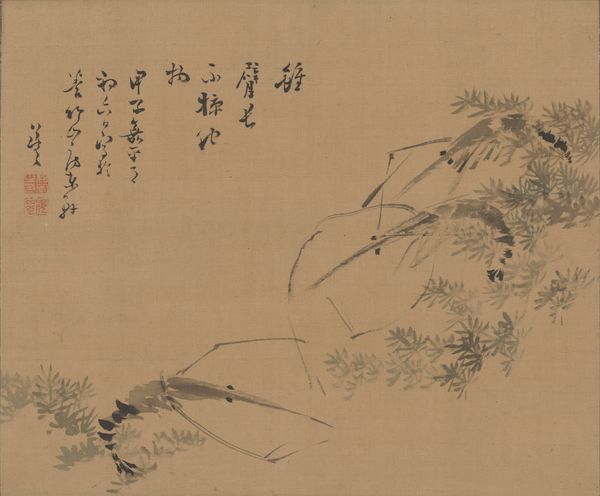
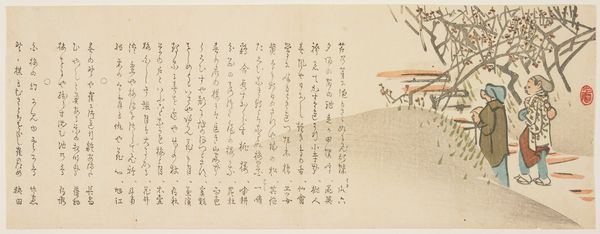
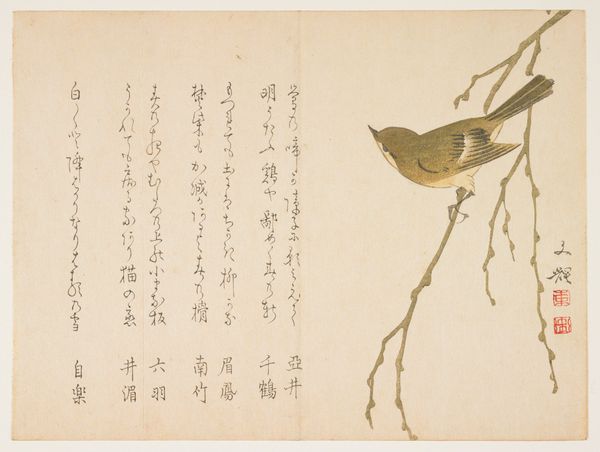
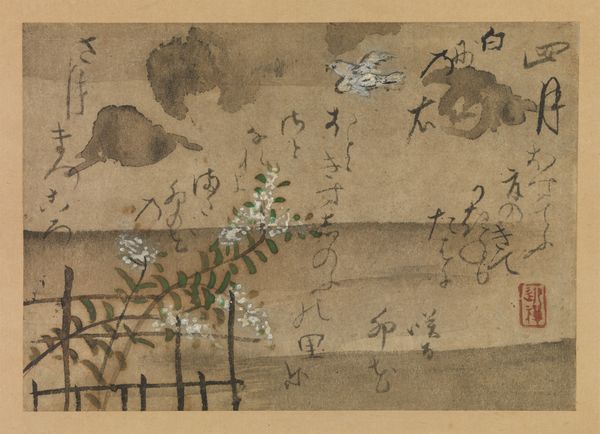
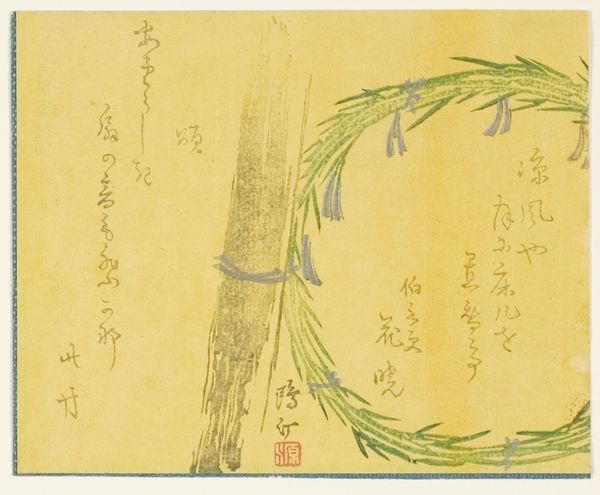
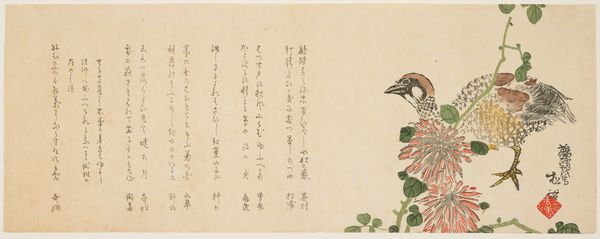
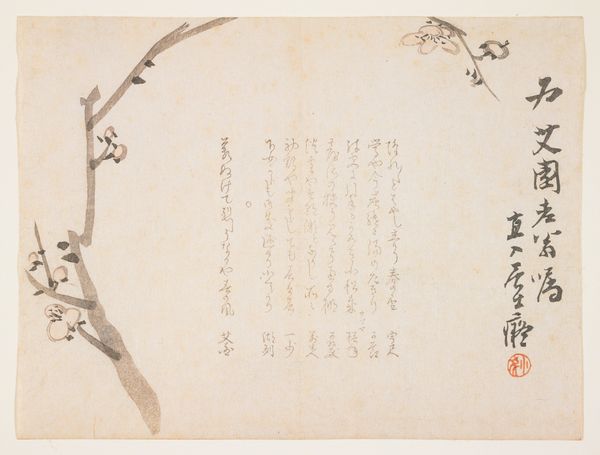
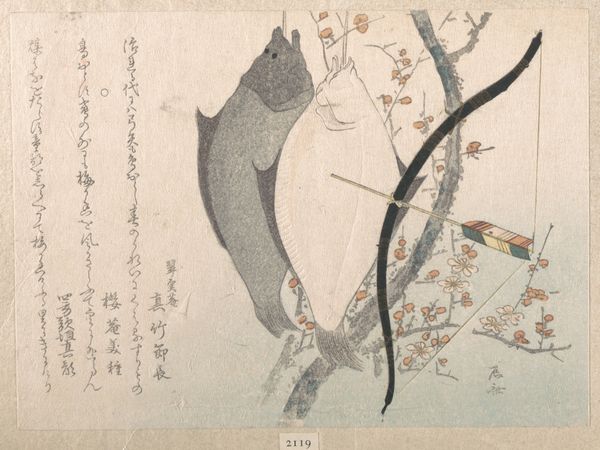
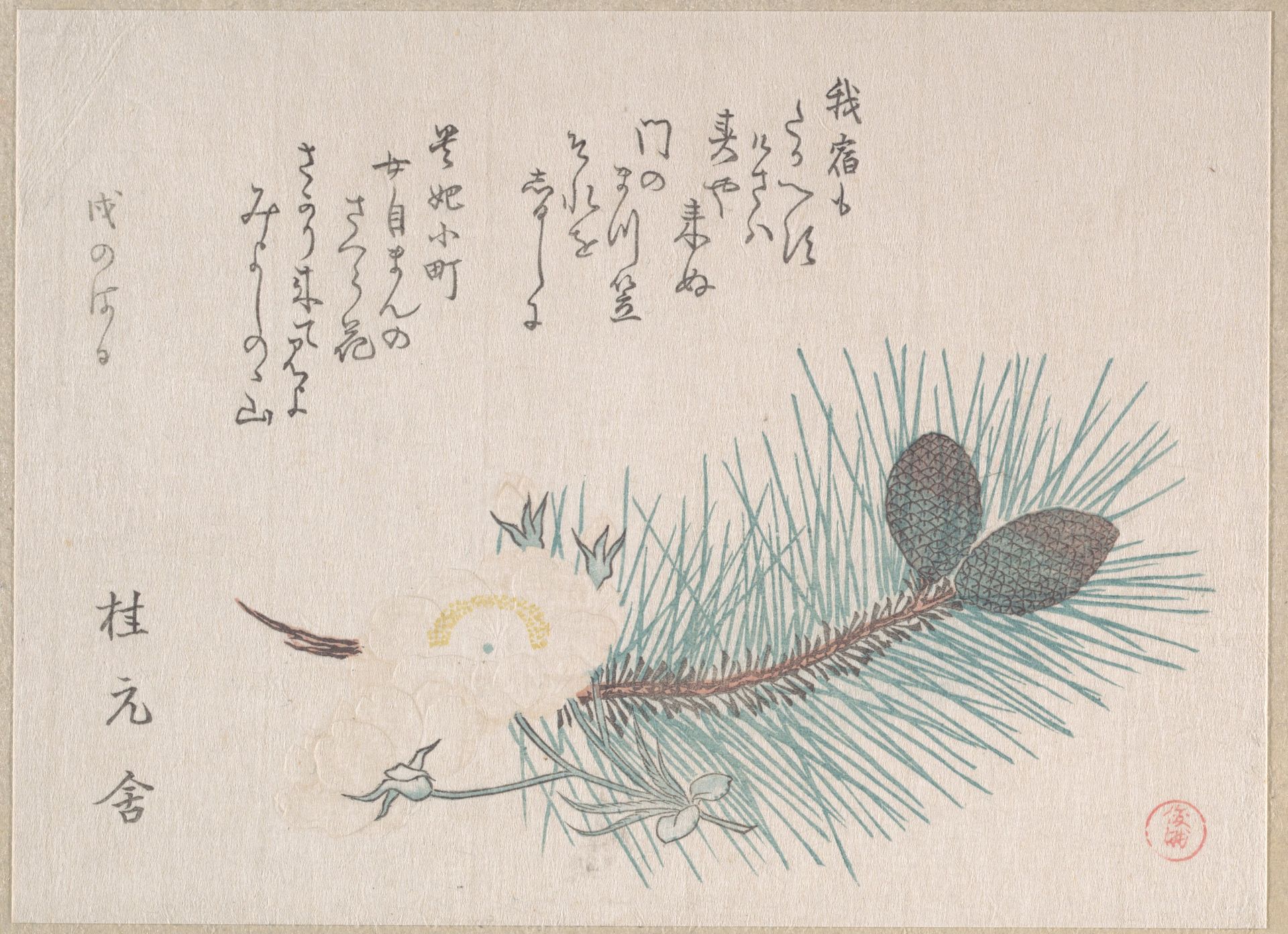
This print by Kubo Shunman, made around the turn of the 19th century, presents us with carefully rendered pines and cherry blossoms. In Japanese art, the pine is an ancient symbol, often representing steadfastness and longevity, while cherry blossoms, or *sakura*, evoke the ephemeral nature of life and beauty. These symbols resonate deeply, and recall similar motifs in European art. The cherry blossom, like the fleeting beauty captured in Dutch Vanitas paintings, serves as a *memento mori*, reminding us of life's transient quality. The pine, mirroring the oak in Northern European traditions, embodies endurance through time. Observe how Shunman's composition creates a tension between the eternal and the transient, engaging our subconscious with the cyclical nature of existence, a concept that echoes across cultures and centuries. This piece invites us to reflect on our own place within the grand tapestry of time.
Pines and Cherry Blossoms
1814


Artwork details
- Medium
- print, watercolor, woodblock-print
- Dimensions
- 5 1/8 x 7 in. (13 x 17.8 cm)
- Location
- Metropolitan Museum of Art, New York, NY
- Copyright
- Public Domain
Tags
water colours
asian-art
ukiyo-e
watercolor
woodblock-print
orientalism
Comments
Be the first to share your thoughts about this work.
About this artwork
This print by Kubo Shunman, made around the turn of the 19th century, presents us with carefully rendered pines and cherry blossoms. In Japanese art, the pine is an ancient symbol, often representing steadfastness and longevity, while cherry blossoms, or *sakura*, evoke the ephemeral nature of life and beauty. These symbols resonate deeply, and recall similar motifs in European art. The cherry blossom, like the fleeting beauty captured in Dutch Vanitas paintings, serves as a *memento mori*, reminding us of life's transient quality. The pine, mirroring the oak in Northern European traditions, embodies endurance through time. Observe how Shunman's composition creates a tension between the eternal and the transient, engaging our subconscious with the cyclical nature of existence, a concept that echoes across cultures and centuries. This piece invites us to reflect on our own place within the grand tapestry of time.
Comments
Be the first to share your thoughts about this work.