About this artwork
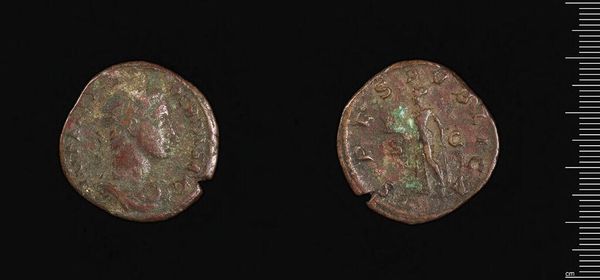
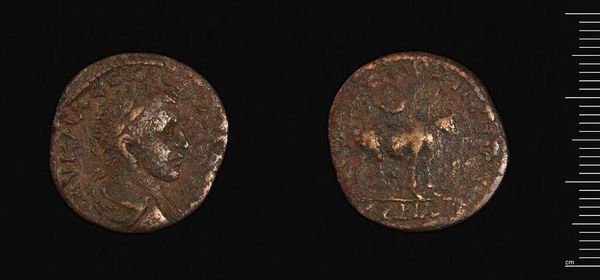
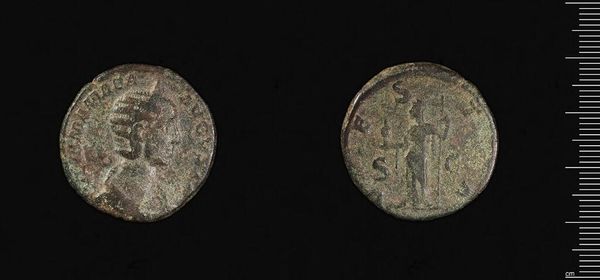
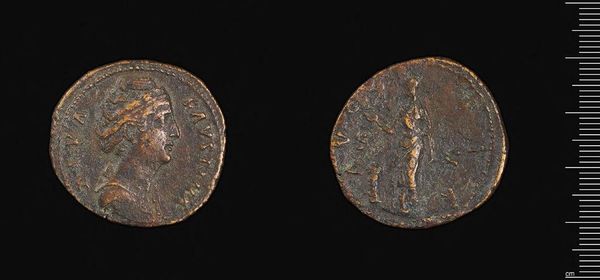
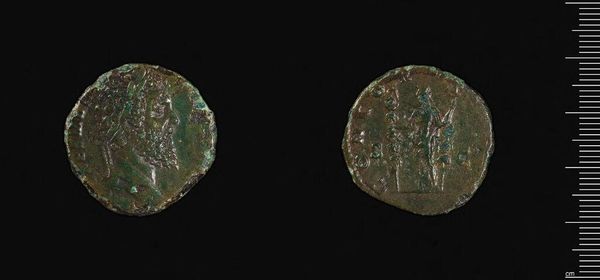
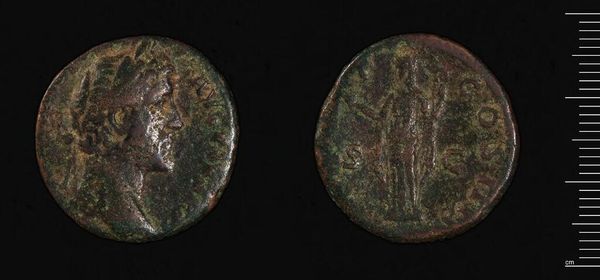
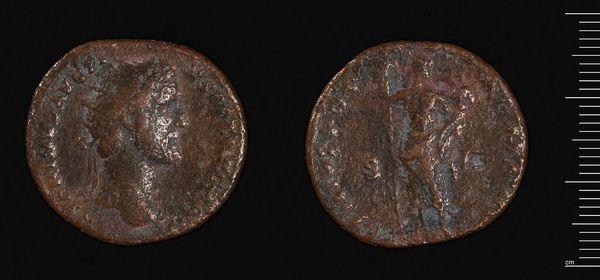
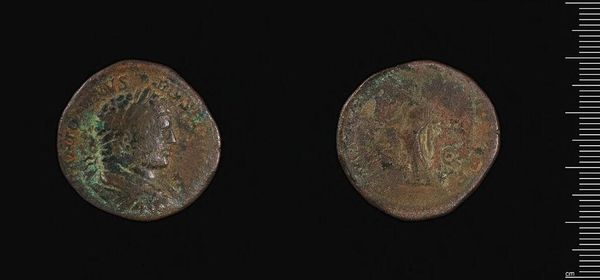
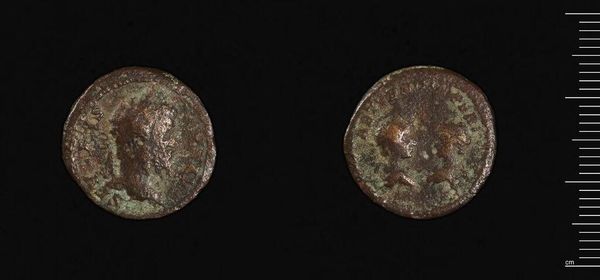
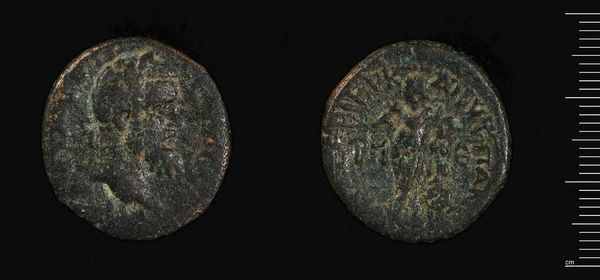
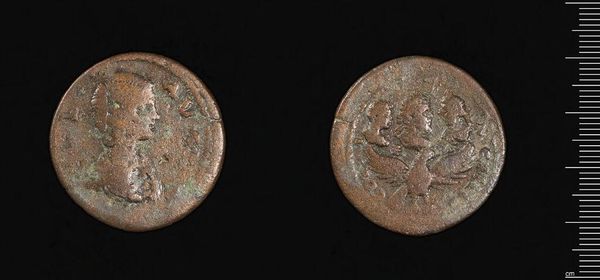
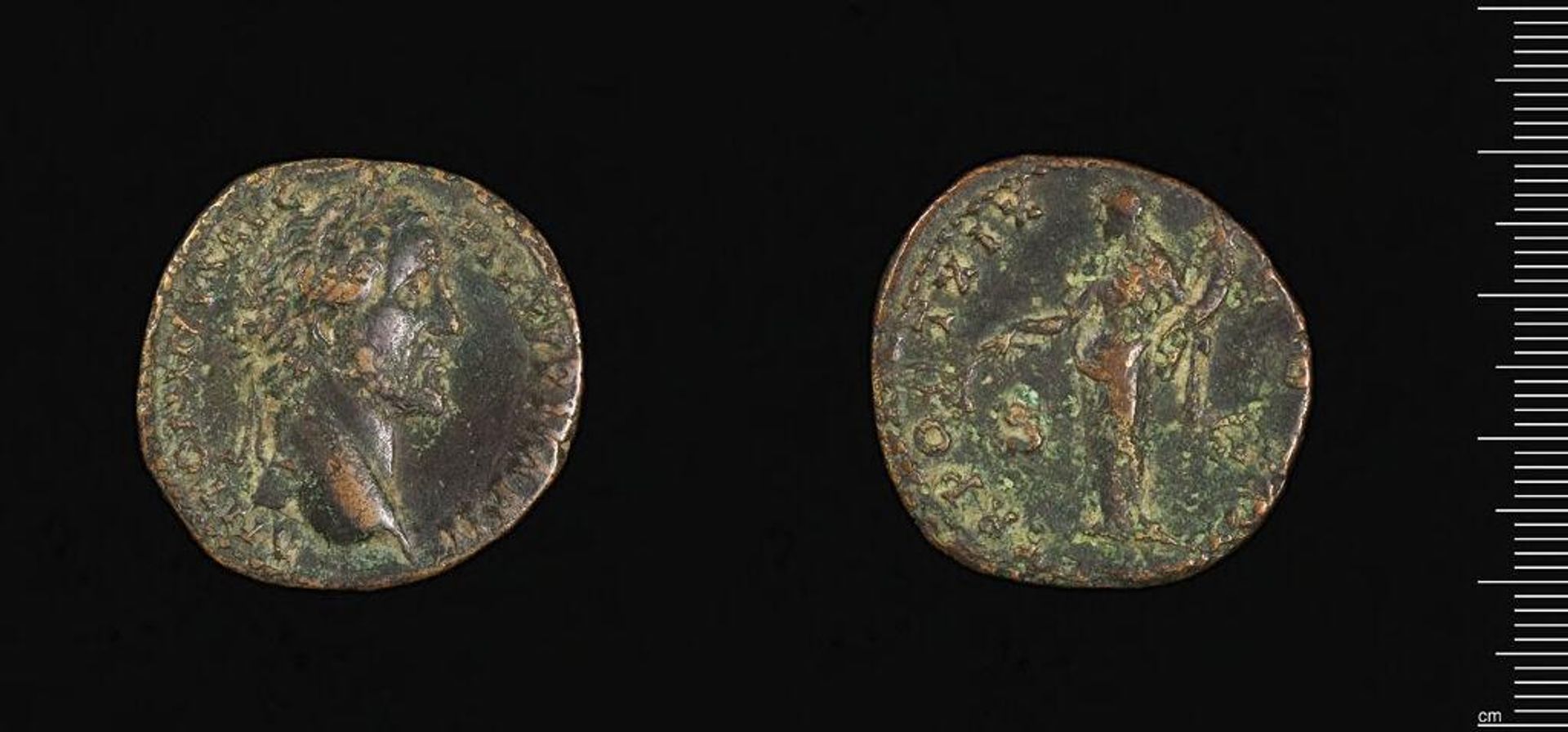
Curator: This is a sestertius, essentially a bronze coin from the reign of Antoninus Pius, the Roman emperor who ruled from 138 to 161 AD. Editor: The immediate thing I notice is the patina, that green surface, which speaks to centuries of exposure and handling. It’s a tangible link to the past, literally touched by history. Curator: Absolutely. Think about the bronze itself—mined, smelted, cast—each step involving labor and specific technical knowledge. The coin's existence represents a whole system of production. Editor: And its purpose! Consider how the image of Antoninus Pius functions as propaganda. His likeness, stamped onto currency, reinforced his authority and projected a carefully constructed image of power throughout the Empire. Curator: Right. But the coin's material also has a story to tell. Bronze was a durable, relatively common metal, making it accessible to a wider range of people than, say, gold. Editor: Which reveals so much about power dynamics and economic stratification. The coin is not just currency, it’s a reflection of social structures and the emperor’s carefully mediated image in relation to those structures. Curator: Seeing this coin makes one consider the weight of history, literally and figuratively. Editor: It’s incredible how a seemingly simple object can open up such vast perspectives on the past and its reverberations in our present.
Sestertius of Antoninus Pius
c. 155 - 156

Artwork details
- Dimensions
- 23.46 g
- Location
- Harvard Art Museums
- Copyright
- CC0 1.0
Comments
Share your thoughts
About this artwork
Curator: This is a sestertius, essentially a bronze coin from the reign of Antoninus Pius, the Roman emperor who ruled from 138 to 161 AD. Editor: The immediate thing I notice is the patina, that green surface, which speaks to centuries of exposure and handling. It’s a tangible link to the past, literally touched by history. Curator: Absolutely. Think about the bronze itself—mined, smelted, cast—each step involving labor and specific technical knowledge. The coin's existence represents a whole system of production. Editor: And its purpose! Consider how the image of Antoninus Pius functions as propaganda. His likeness, stamped onto currency, reinforced his authority and projected a carefully constructed image of power throughout the Empire. Curator: Right. But the coin's material also has a story to tell. Bronze was a durable, relatively common metal, making it accessible to a wider range of people than, say, gold. Editor: Which reveals so much about power dynamics and economic stratification. The coin is not just currency, it’s a reflection of social structures and the emperor’s carefully mediated image in relation to those structures. Curator: Seeing this coin makes one consider the weight of history, literally and figuratively. Editor: It’s incredible how a seemingly simple object can open up such vast perspectives on the past and its reverberations in our present.
Comments
Share your thoughts