1597 - 1599
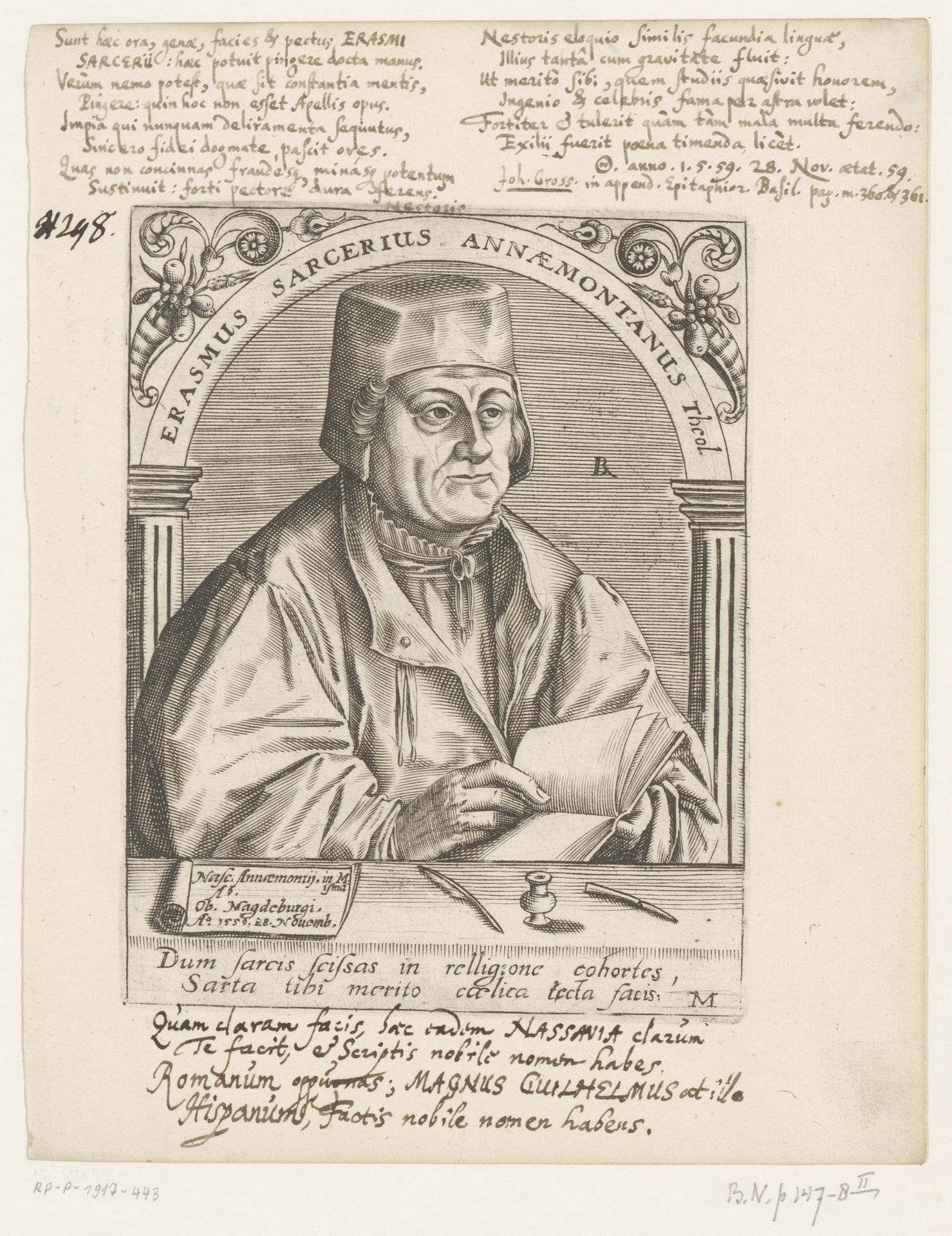
Portret van Erasmus Sarcerius

Robert Boissard
1586 - 1691Location
RijksmuseumListen to curator's interpretation
Curatorial notes
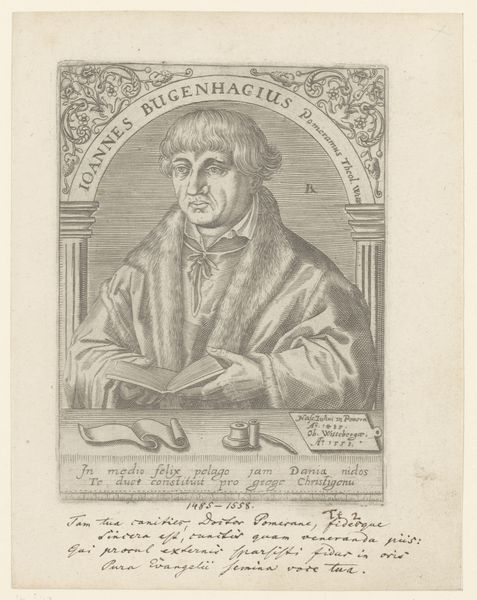
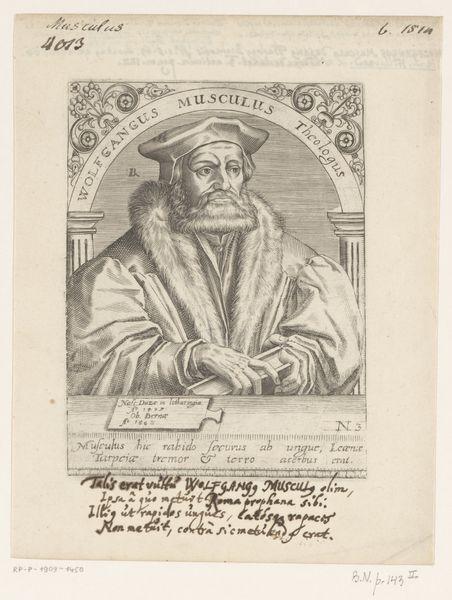
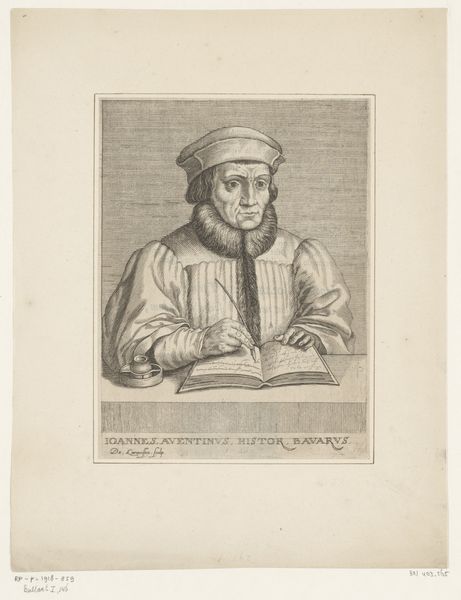
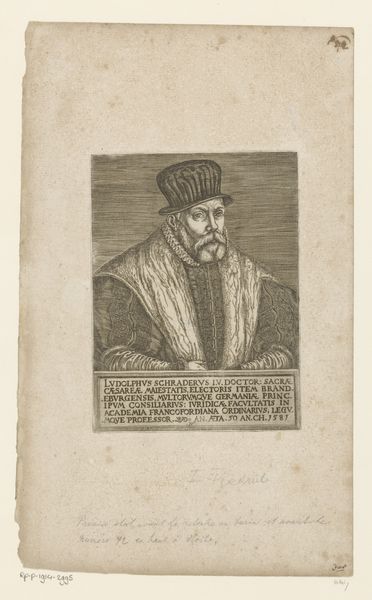
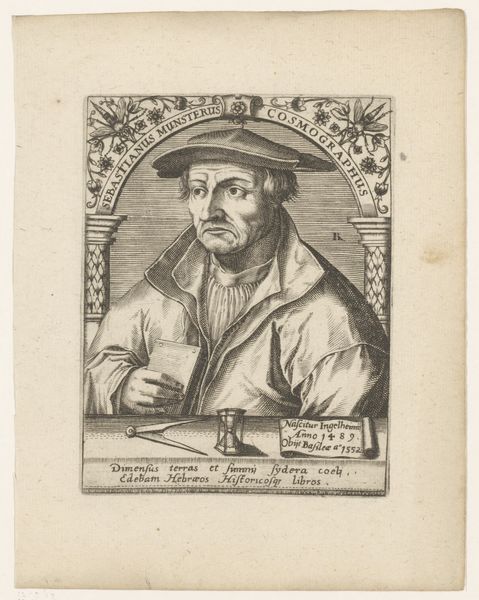
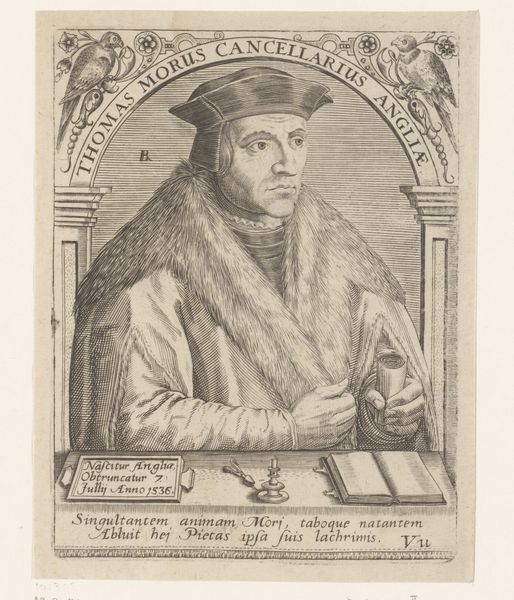
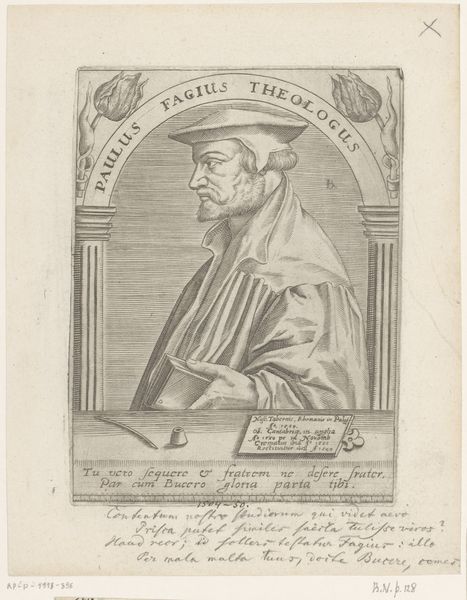
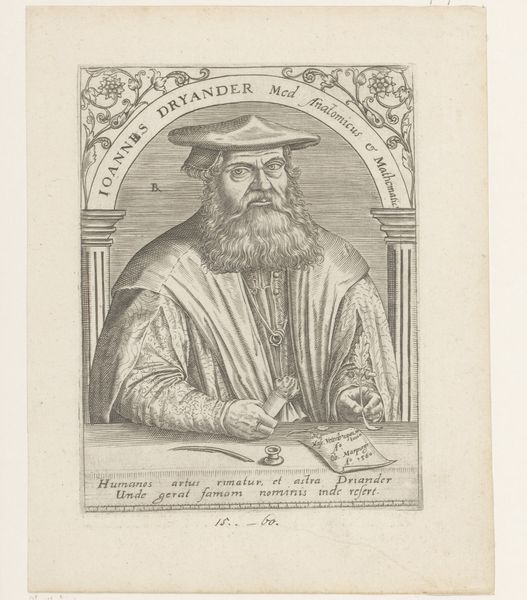
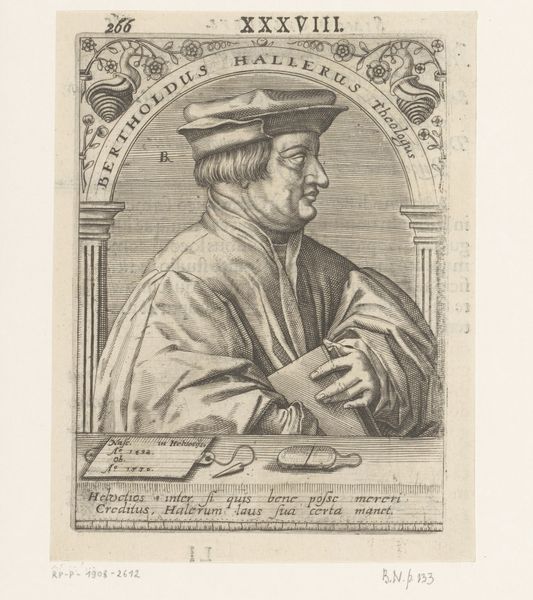
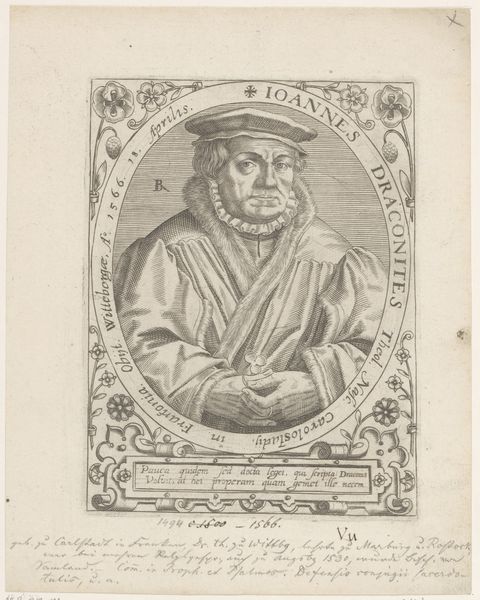
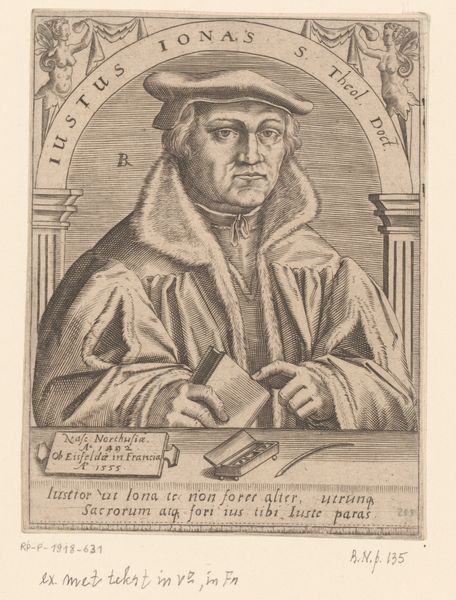
Robert Boissard created this engraving of Erasmus Sarcerius, a theologian, sometime around 1586. It is an image that embodies the complex connections between religious authority, intellectual life, and the emerging technologies of visual representation in early modern Europe. Produced in the context of the Reformation, portraits like these were important in defining and disseminating particular religious and intellectual positions. Sarcerius is shown in the act of reading or writing, surrounded by Latin inscriptions that praise his intellect and piety. This image isn't just a likeness; it’s a statement about the power of religious scholarship and its role in shaping social and religious life. Consider the institutional context: Sarcerius was a professor of theology, an important and powerful position within the religious order. Boissard’s engraving reflects and reinforces this authority, presenting Sarcerius as a figure of profound learning and devotion. To fully understand this image, we can look to archival sources such as church records, publications by and about Sarcerius, and studies of the Reformation. These will show how the artwork is deeply embedded in the social, religious, and institutional contexts of its time.