About this artwork
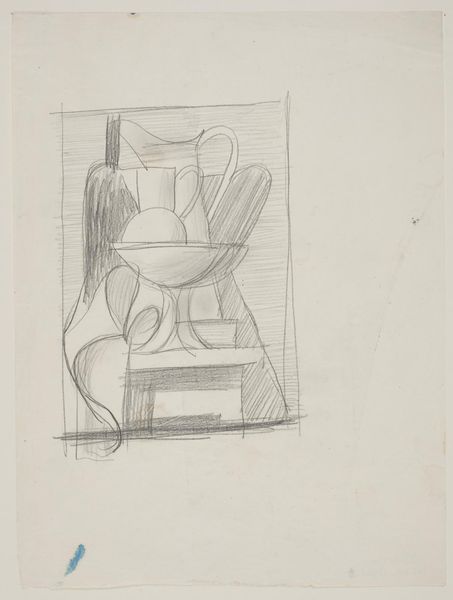
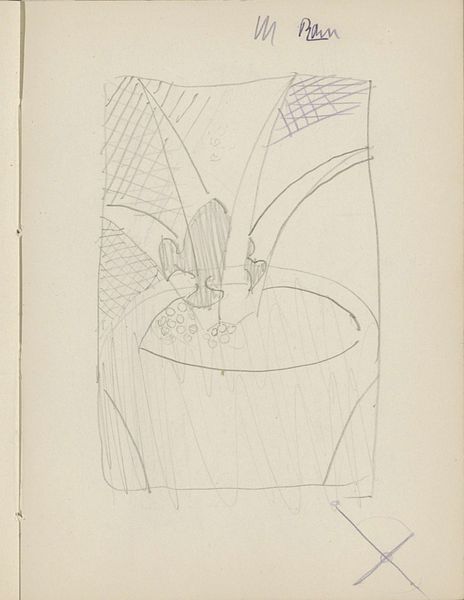
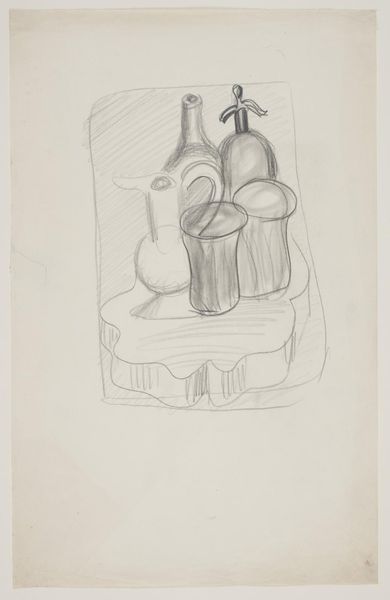
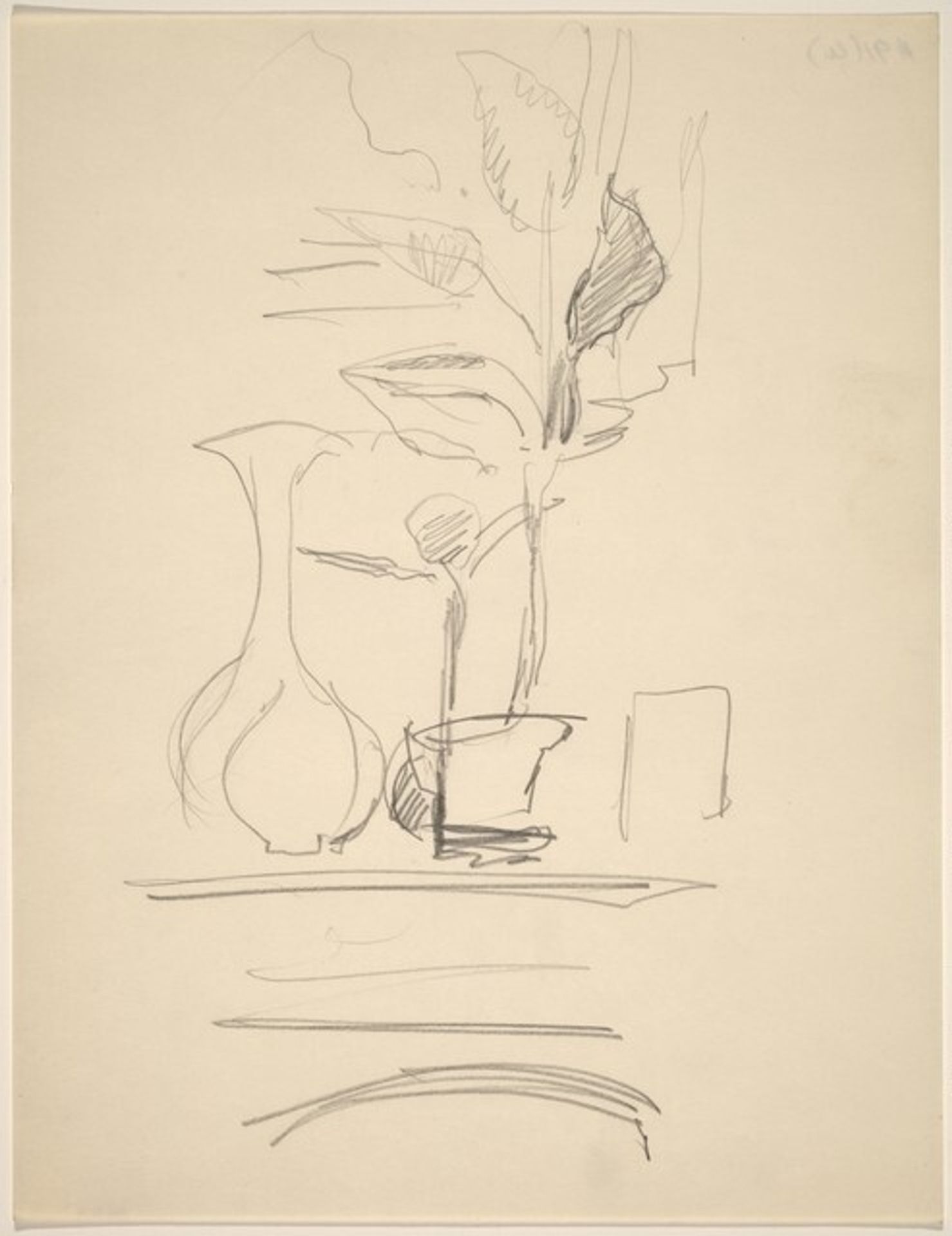
This is Mark Rothko’s sketch "Still Life with Vase and Potted Plant" done in pencil on paper. It is a study in rudimentary form. At first glance, the composition appears as a casual arrangement of objects on a table, however, the work's structural elements reveal a calculated arrangement. The composition is constructed through a series of lines that define the contours of the vase, plant, and other forms. The interplay of vertical and curved lines creates a visual rhythm, drawing the viewer's eye across the surface. The spatial relationships between the objects suggest a deeper exploration of perception. The seemingly simple act of placing a vase next to a plant becomes a meditation on form and space. Rothko invites us to consider how these basic elements can convey a sense of balance and harmony. What might seem unfinished is, in fact, a statement on the very essence of visual language, stripping it down to its most fundamental components. Ultimately, it's a reminder that art exists not in the complexity of detail, but in the simple elegance of form.
Still Life with Vase and Potted Plant


Artwork details
- Medium
- drawing, pencil
- Dimensions
- overall: 28 x 21.5 cm (11 x 8 7/16 in.)
- Copyright
- National Gallery of Art: CC0 1.0
Tags
Comments
Share your thoughts
About this artwork
This is Mark Rothko’s sketch "Still Life with Vase and Potted Plant" done in pencil on paper. It is a study in rudimentary form. At first glance, the composition appears as a casual arrangement of objects on a table, however, the work's structural elements reveal a calculated arrangement. The composition is constructed through a series of lines that define the contours of the vase, plant, and other forms. The interplay of vertical and curved lines creates a visual rhythm, drawing the viewer's eye across the surface. The spatial relationships between the objects suggest a deeper exploration of perception. The seemingly simple act of placing a vase next to a plant becomes a meditation on form and space. Rothko invites us to consider how these basic elements can convey a sense of balance and harmony. What might seem unfinished is, in fact, a statement on the very essence of visual language, stripping it down to its most fundamental components. Ultimately, it's a reminder that art exists not in the complexity of detail, but in the simple elegance of form.
Comments
Share your thoughts