About this artwork
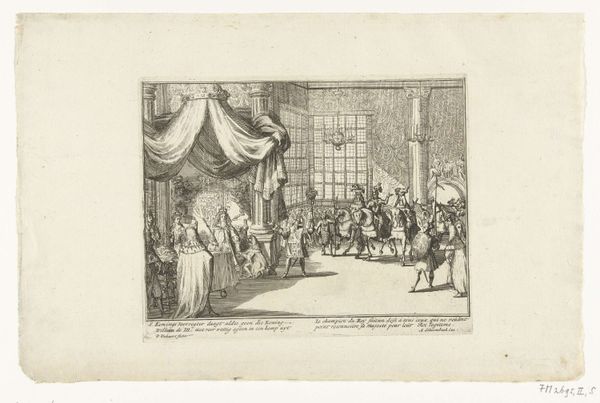
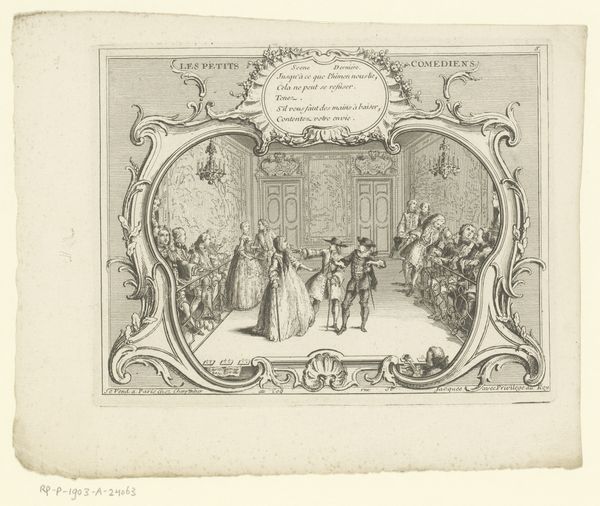
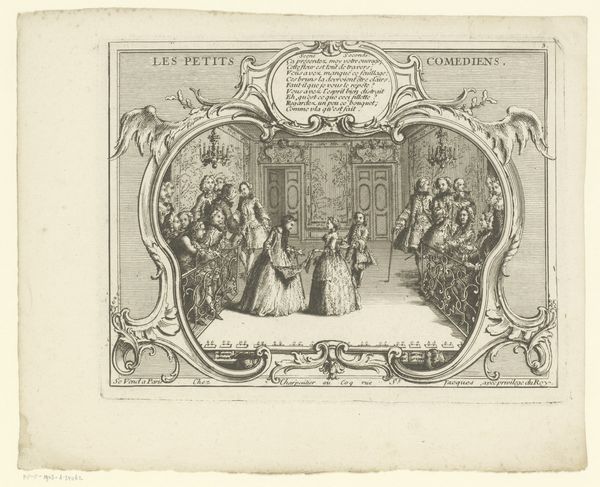
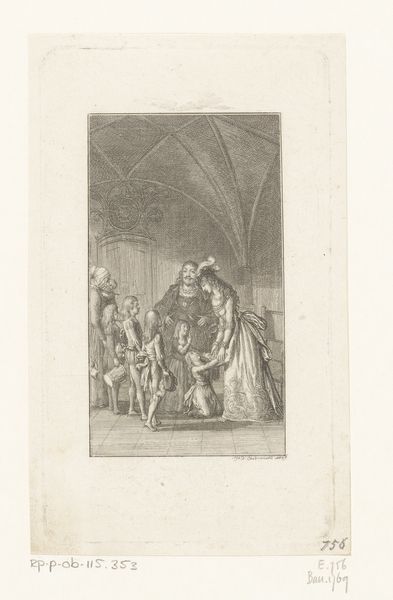
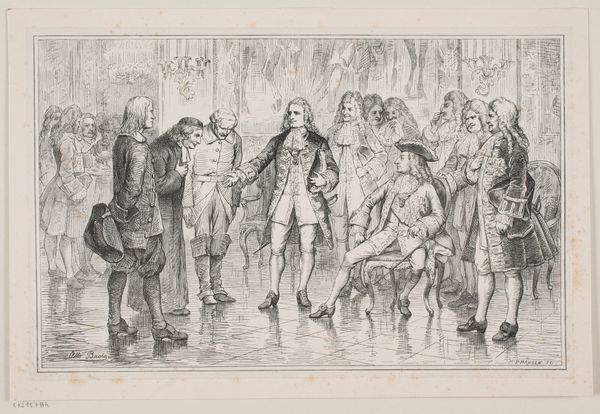
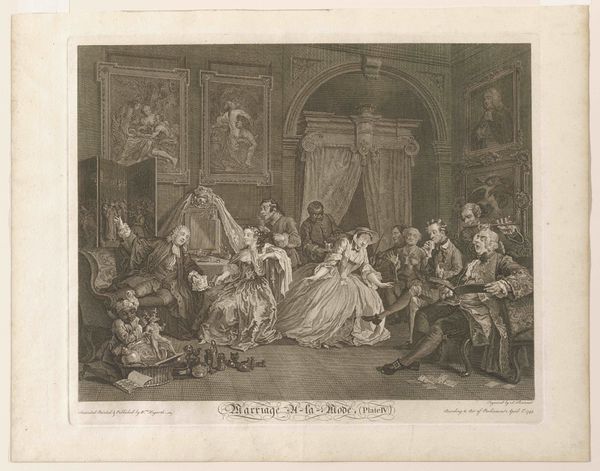
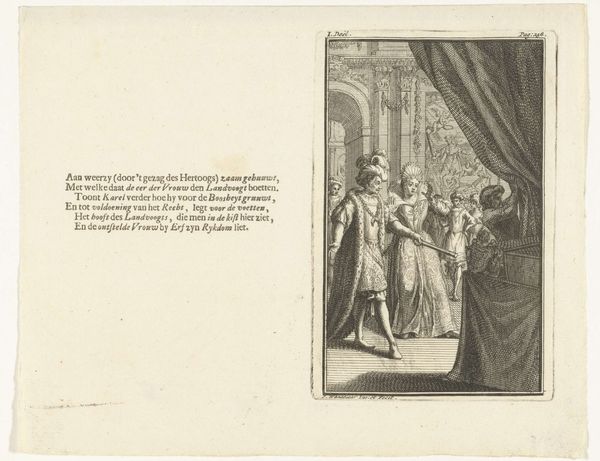
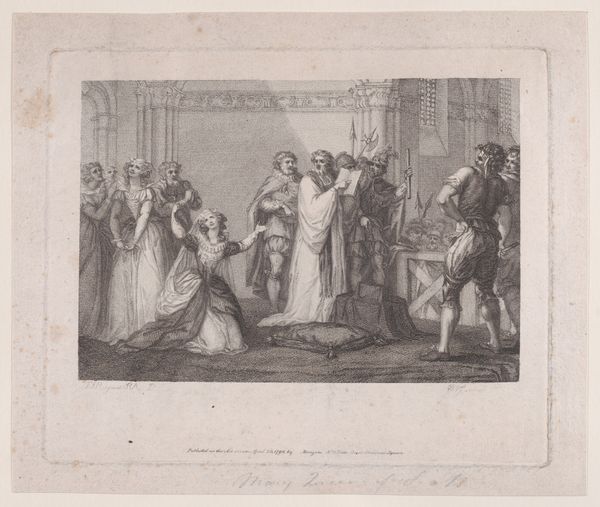
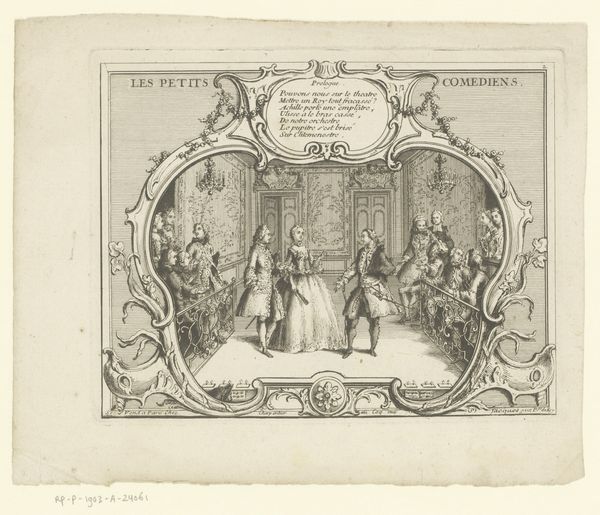
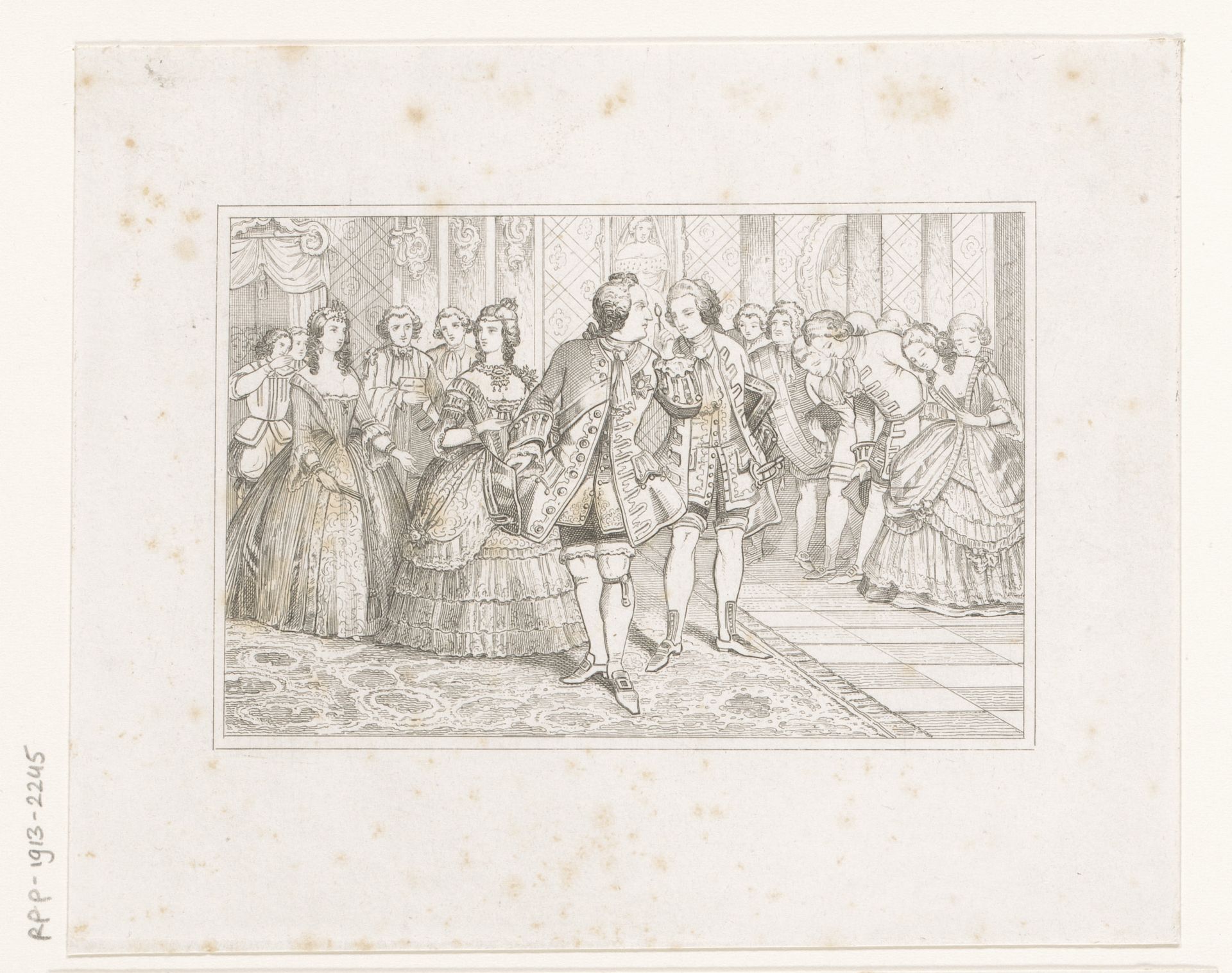
Auguste Numans created this image of well-to-do men and women in a richly decorated interior using graphite, pen, and brush in the 19th century. The composition, framed by curtains and architectural details, emphasizes the elaborate costumes and social interactions of the figures. Notice how Numans uses line and shading to define form, creating a sense of depth. The linear quality lends the scene a graphic feel. The architecture reinforces a structured social hierarchy. Each figure’s position and posture is carefully considered. The clothing acts almost like a semiotic code, signaling social status and identity through exaggerated ruffles and ornamented jackets. This careful arrangement invites us to consider the underlying power dynamics within these social gatherings. The artwork, therefore, functions as a commentary on the constructed nature of social roles and the performance of identity. It reminds us that art is a site of ongoing interpretation.
Gezelschap van welgestelde mannen en vrouwen in een rijkelijk interieur
1833 - 1880

Artwork details
- Medium
- drawing, print, etching, pen, engraving
- Dimensions
- height 130 mm, width 162 mm
- Copyright
- Rijks Museum: Open Domain
Tags
Comments
Share your thoughts
About this artwork
Auguste Numans created this image of well-to-do men and women in a richly decorated interior using graphite, pen, and brush in the 19th century. The composition, framed by curtains and architectural details, emphasizes the elaborate costumes and social interactions of the figures. Notice how Numans uses line and shading to define form, creating a sense of depth. The linear quality lends the scene a graphic feel. The architecture reinforces a structured social hierarchy. Each figure’s position and posture is carefully considered. The clothing acts almost like a semiotic code, signaling social status and identity through exaggerated ruffles and ornamented jackets. This careful arrangement invites us to consider the underlying power dynamics within these social gatherings. The artwork, therefore, functions as a commentary on the constructed nature of social roles and the performance of identity. It reminds us that art is a site of ongoing interpretation.
Comments
Share your thoughts