About this artwork
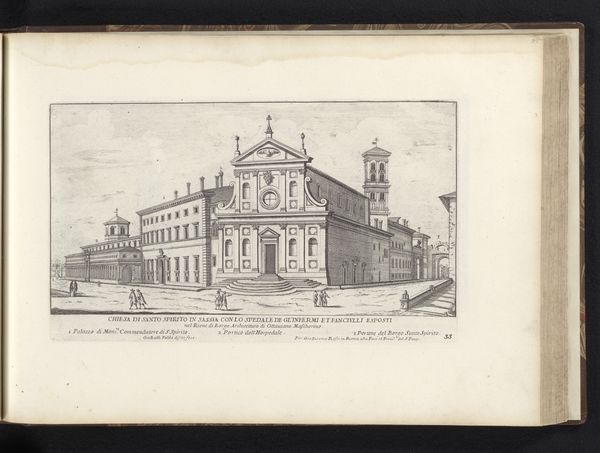
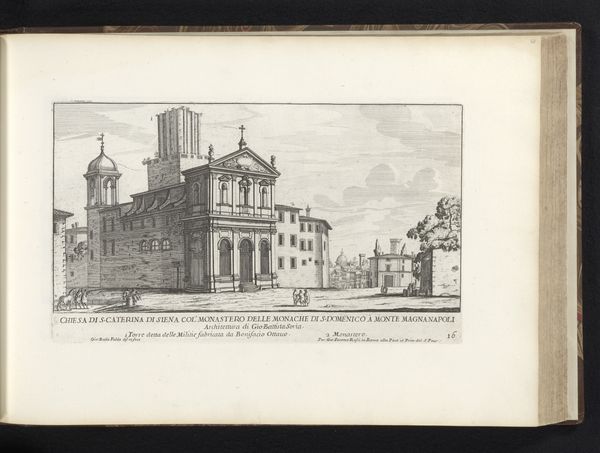
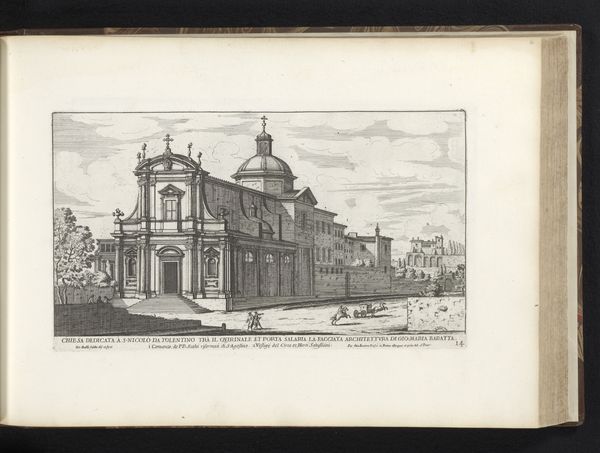
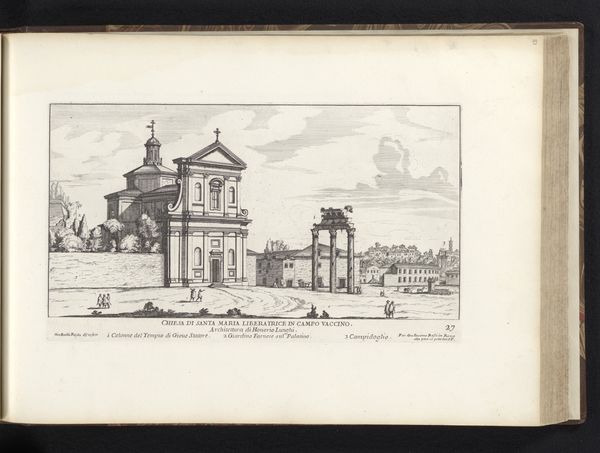
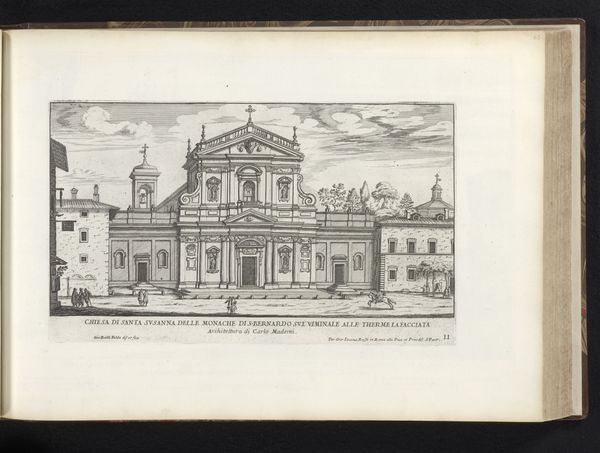
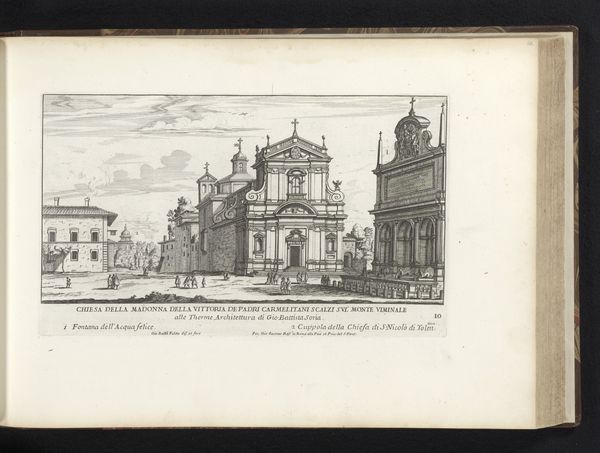
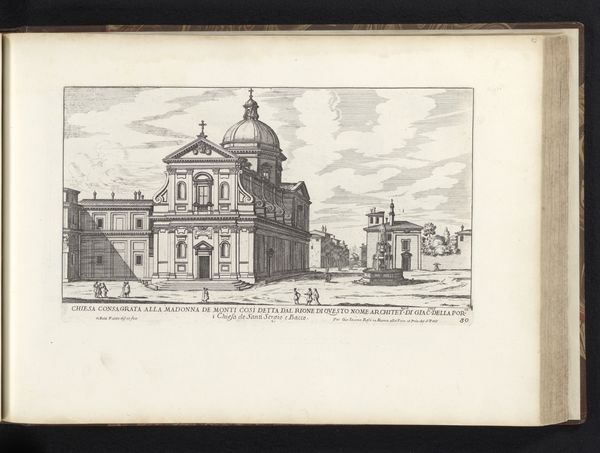
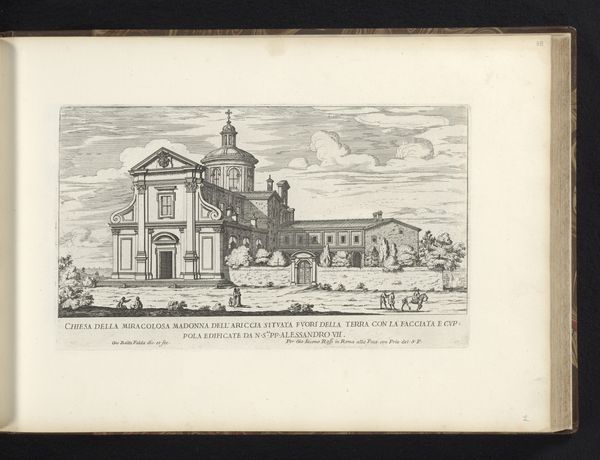
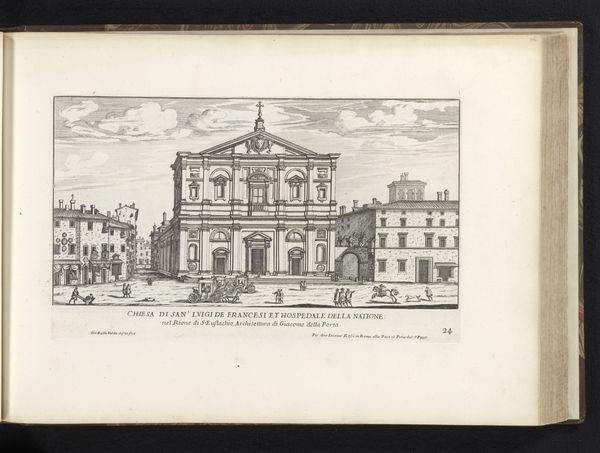
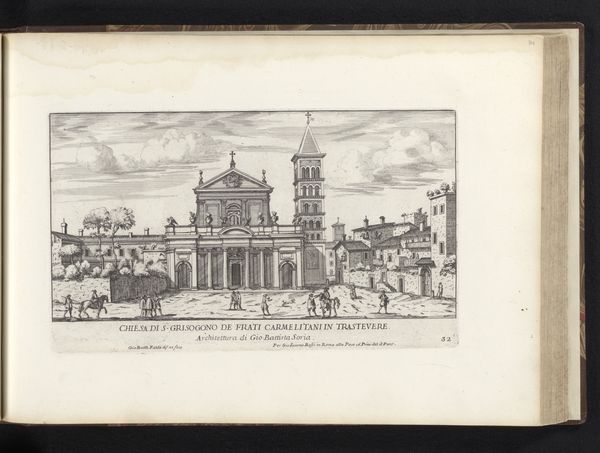
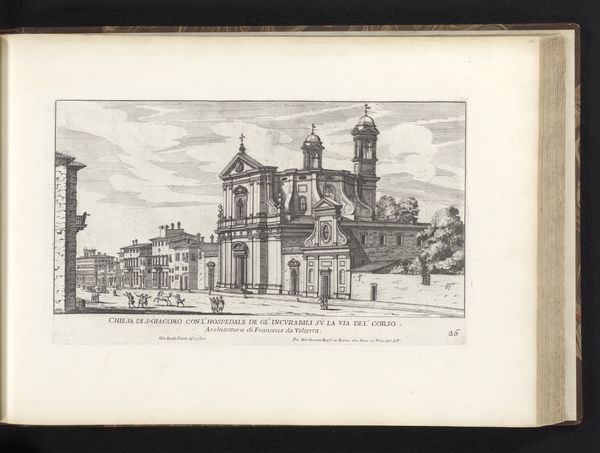
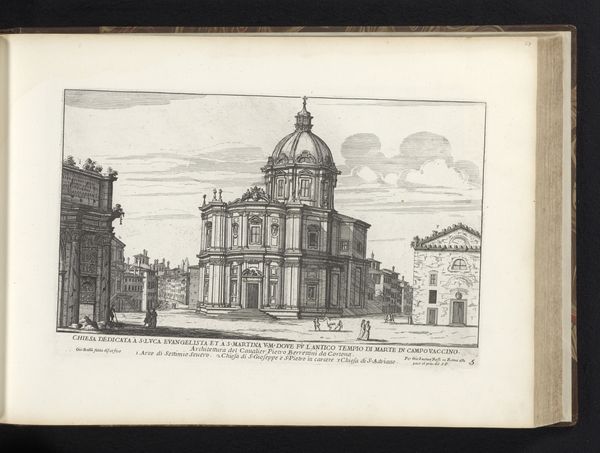
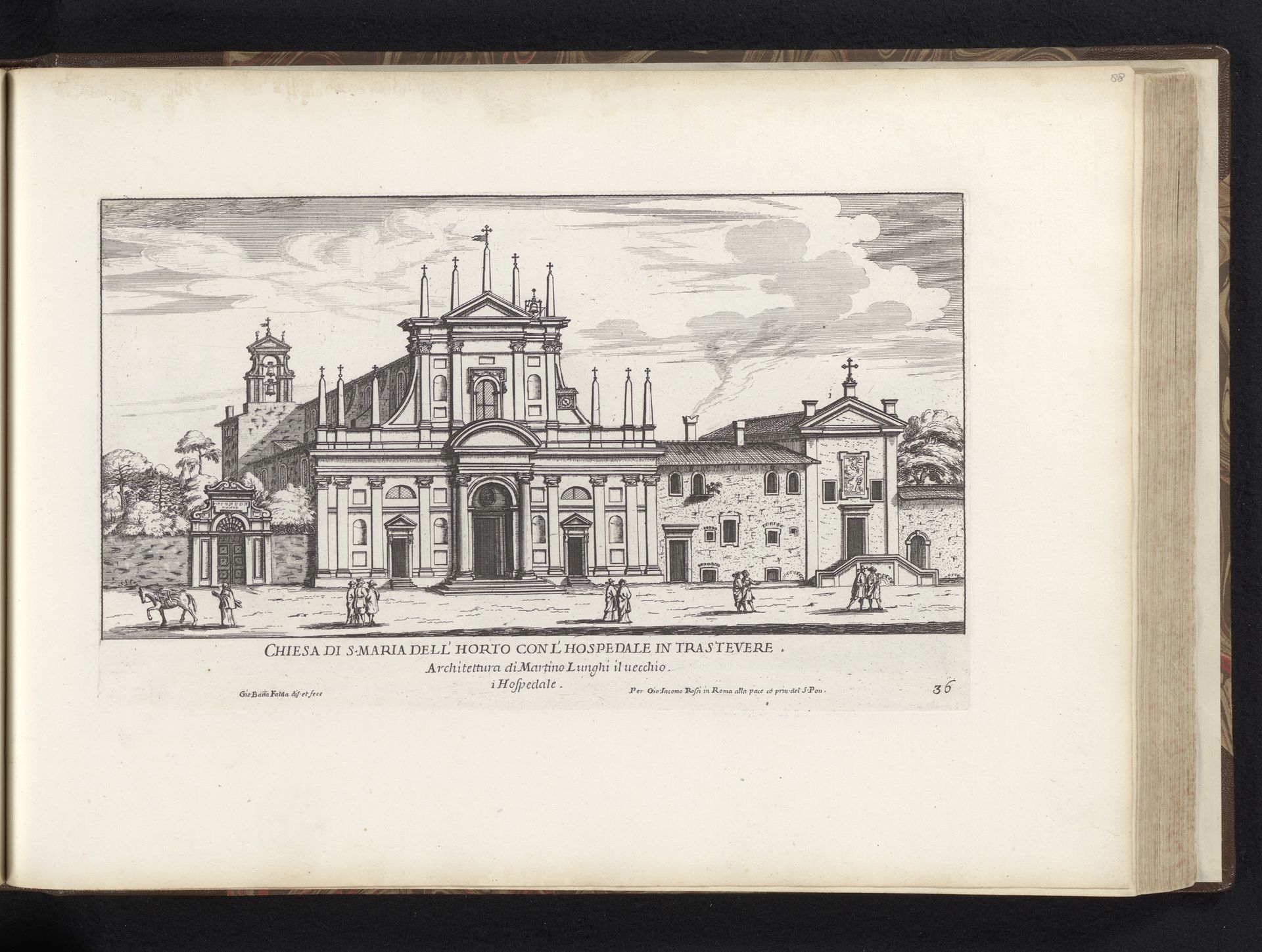
Giovanni Battista Falda created this print of the Chiesa di Santa Maria dell'Orto in Rome. The engraving captures the church's facade and adjacent structures, emphasizing a structured organization of architectural forms. Falda's technique relies on the power of line to define shape and space. Observe how the precise hatching and cross-hatching create a sense of depth and volume, characteristic of the period's interest in rationalizing space through linear perspective. The facade, meticulously detailed, presents a hierarchy of geometric shapes—squares, rectangles, and triangles—that create a balanced and harmonious composition. This structured approach reflects the prevailing intellectual climate, where clarity and order were seen as virtues. Note how the linear structure both represents and embodies a certain worldview. The detailed rendering invites us to analyze not just the appearance, but also the underlying principles of design and representation. The print serves not only as a visual document but also as a site for continuous engagement with the ideas of order, representation, and meaning.
Chiesa di Santa Maria dell'Orto te Rome 1669 - 1670

Giovanni Battista Falda
1643 - 1678Location
RijksmuseumArtwork details
- Medium
- drawing, print, etching, architecture
- Dimensions
- height 175 mm, width 292 mm
- Location
- Rijksmuseum
- Copyright
- Rijks Museum: Open Domain
Tags
drawing
aged paper
toned paper
baroque
etching
old engraving style
sketch book
personal sketchbook
pen-ink sketch
pen and pencil
pen work
sketchbook drawing
cityscape
italian-renaissance
sketchbook art
architecture
Comments
No comments
About this artwork
Giovanni Battista Falda created this print of the Chiesa di Santa Maria dell'Orto in Rome. The engraving captures the church's facade and adjacent structures, emphasizing a structured organization of architectural forms. Falda's technique relies on the power of line to define shape and space. Observe how the precise hatching and cross-hatching create a sense of depth and volume, characteristic of the period's interest in rationalizing space through linear perspective. The facade, meticulously detailed, presents a hierarchy of geometric shapes—squares, rectangles, and triangles—that create a balanced and harmonious composition. This structured approach reflects the prevailing intellectual climate, where clarity and order were seen as virtues. Note how the linear structure both represents and embodies a certain worldview. The detailed rendering invites us to analyze not just the appearance, but also the underlying principles of design and representation. The print serves not only as a visual document but also as a site for continuous engagement with the ideas of order, representation, and meaning.
Comments
No comments