1808
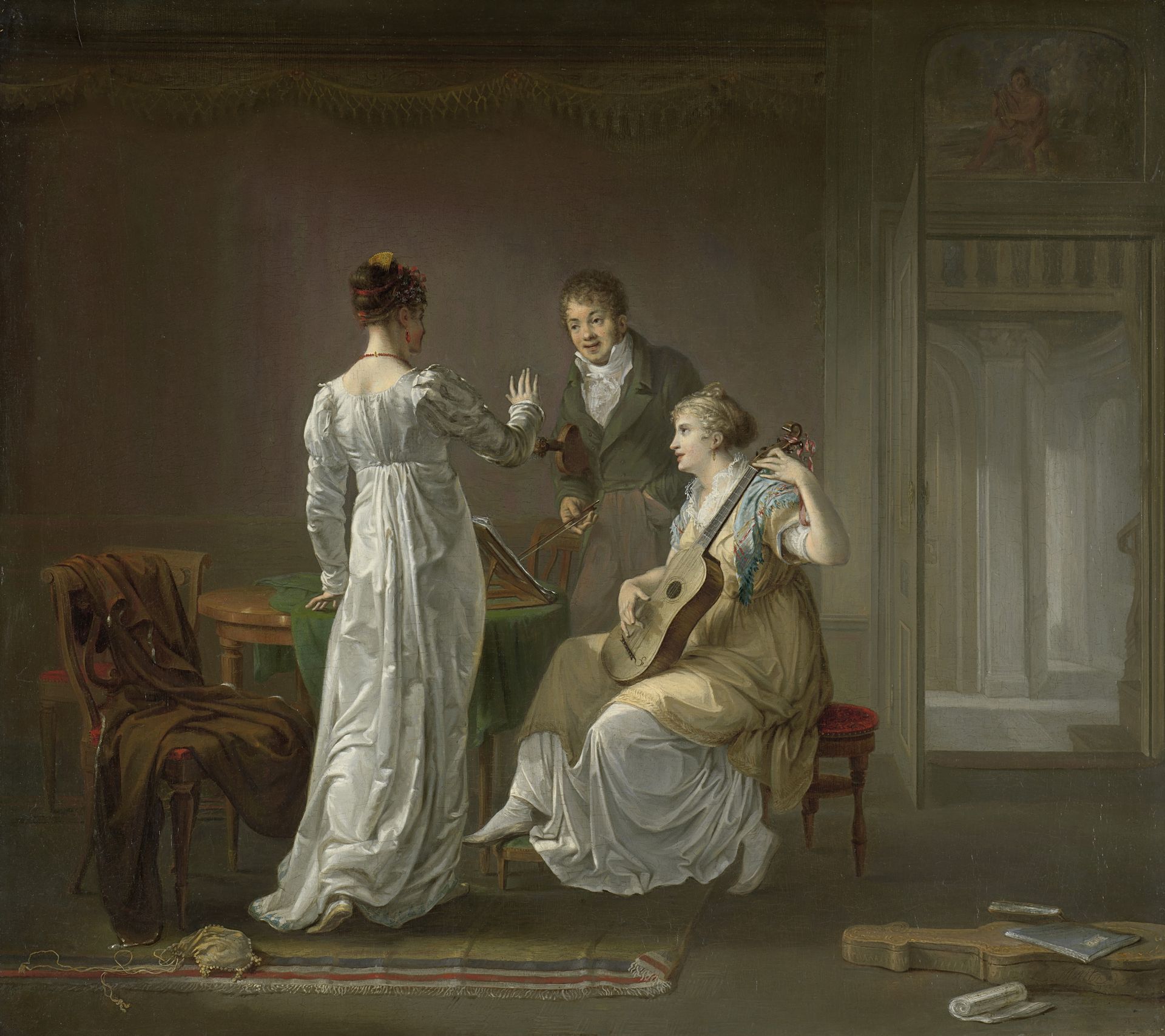
The Music Lesson

Louis Moritz
1773 - 1850Location
RijksmuseumListen to curator's interpretation
Curatorial notes
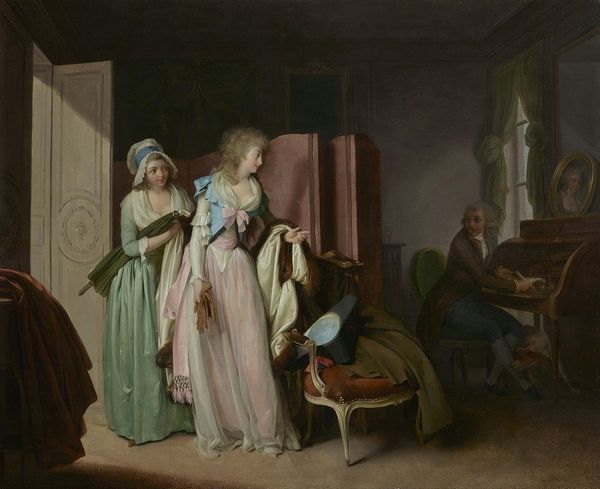
Curator: Ah, here we have "The Music Lesson" by Louis Moritz, dating back to 1808, now residing in the Rijksmuseum. The scene, rendered in oil on canvas, depicts three figures engaged in a musical interaction. What’s your first impression? Editor: My eye is drawn immediately to the cool palette and the soft light. There is a sense of quiet contemplation about it. The pale tones almost give the scene a dreamlike quality. It seems to capture a specific mood, doesn’t it? Curator: Indeed. This was a time of societal shift, reflecting a turn towards Romanticism, away from stark Classicism. Notice the setting; it portrays the interior of a domestic space, rather than a public one, echoing an increased interest in privacy and intimate relationships, common during the era. Editor: And it is interesting how Moritz has captured the subtle dynamics within the image. A woman is being instructed on the guitar. This guitar seems to suggest gentility and leisure; not just a display of musicality, but refinement. You get a sense of who has time for such artistic cultivation, socially. Curator: Precisely. Music lessons were a typical pastime for women of a certain social standing. Also notice the third figure, observing. This introduces the notion of performance and spectatorship within a domestic setting, speaking to emerging social rituals. The positioning creates this sort of viewing dynamic, this intimate moment being seen. Editor: I am captivated by the delicate representation of femininity present, particularly in the woman listening to her teacher's guidance. It is this iconic representation of virtue, subtly infused into this act of artistic acquisition and receptiveness to culture, but also, arguably, passive receptiveness to social norms. Curator: Absolutely. Beyond the compositional aspects, there’s an implied narrative around the gender roles in 19th-century bourgeois society, reflected through something as simple as a music lesson. It brings together all these complexities, making it richer as a historical piece, especially because of its domestic and simple imagery. Editor: I concur. Examining the symbolism and societal undertones allows for a deeper comprehension of its period, going beyond simple aesthetic appreciation. Curator: A powerful intersection of artistry and society reflected beautifully, it makes us reevaluate social customs in retrospect.