

About this artwork
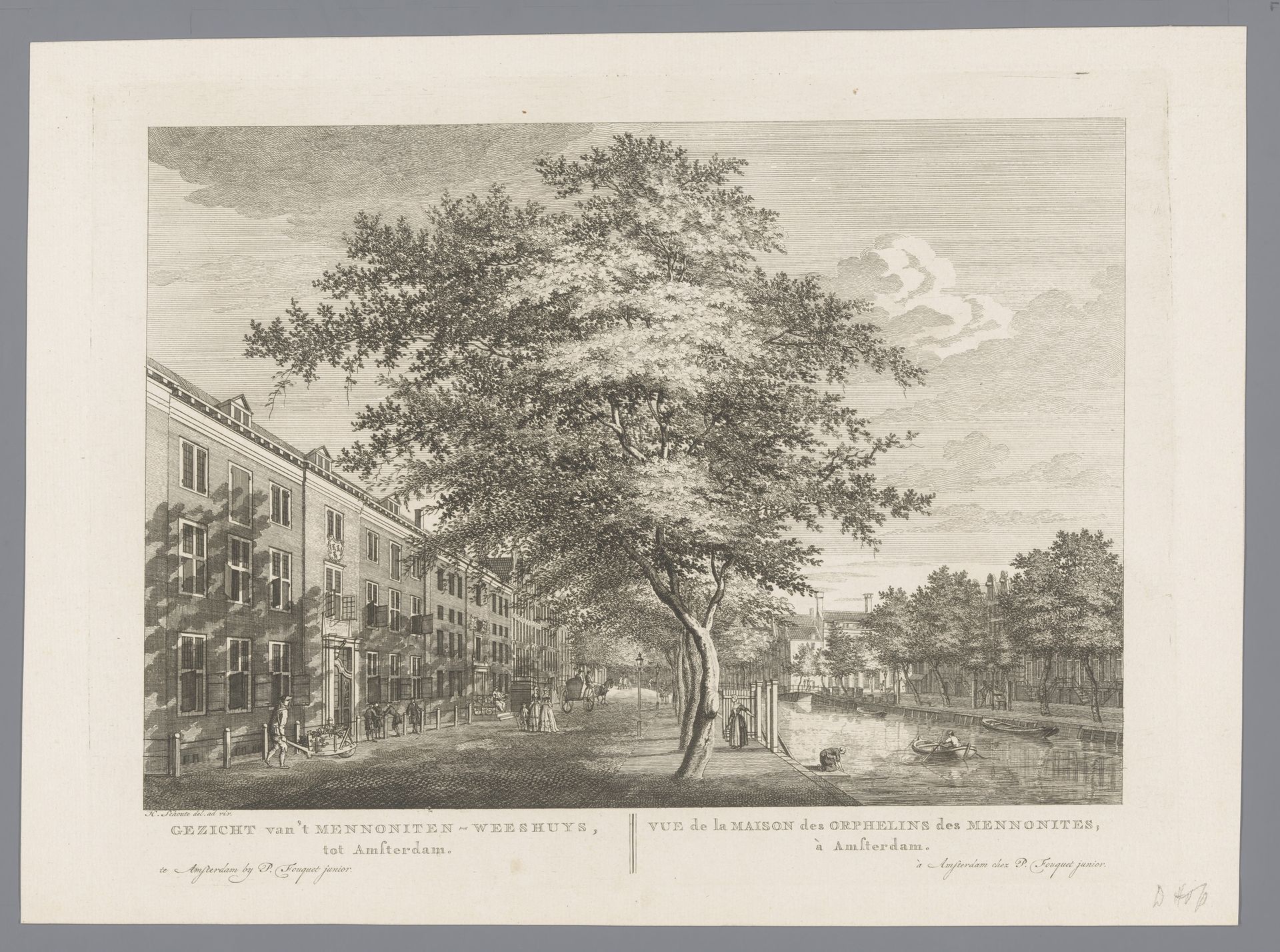
This is Hermanus Petrus Schouten’s rendering of the Doopsgezinde Weeshuis in Amsterdam. It's a carefully etched print capturing the orphanage, offering us a glimpse into the architecture and daily life of 18th-century Amsterdam. Consider the era: the late 1700s, a time of social stratification where institutions like orphanages played a crucial role. These were places where society’s most vulnerable—often children from marginalized communities—found refuge. But they were also sites of strict social control. Schouten’s choice to depict this orphanage invites us to reflect on the experiences of these children. What did it mean to grow up within the walls of such an institution? What expectations were placed upon them? The image offers a window into a world that, while intended to provide care, also enforced a certain way of life, raising questions about social mobility and the shaping of identity within these confines. It invites us to reflect on how society cares for its most vulnerable members.
Gezicht op het Doopsgezinde Weeshuis te Amsterdam
c. 1770 - 1783

Hermanus Petrus Schouten
1747 - 1822Location
RijksmuseumArtwork details
- Medium
- print, etching
- Dimensions
- height 274 mm, width 366 mm
- Location
- Rijksmuseum
- Copyright
- Rijks Museum: Open Domain
Tags
dutch-golden-age
etching
landscape
cityscape
realism
Comments
Be the first to share your thoughts about this work.
About this artwork
This is Hermanus Petrus Schouten’s rendering of the Doopsgezinde Weeshuis in Amsterdam. It's a carefully etched print capturing the orphanage, offering us a glimpse into the architecture and daily life of 18th-century Amsterdam. Consider the era: the late 1700s, a time of social stratification where institutions like orphanages played a crucial role. These were places where society’s most vulnerable—often children from marginalized communities—found refuge. But they were also sites of strict social control. Schouten’s choice to depict this orphanage invites us to reflect on the experiences of these children. What did it mean to grow up within the walls of such an institution? What expectations were placed upon them? The image offers a window into a world that, while intended to provide care, also enforced a certain way of life, raising questions about social mobility and the shaping of identity within these confines. It invites us to reflect on how society cares for its most vulnerable members.
Comments
Be the first to share your thoughts about this work.