About this artwork
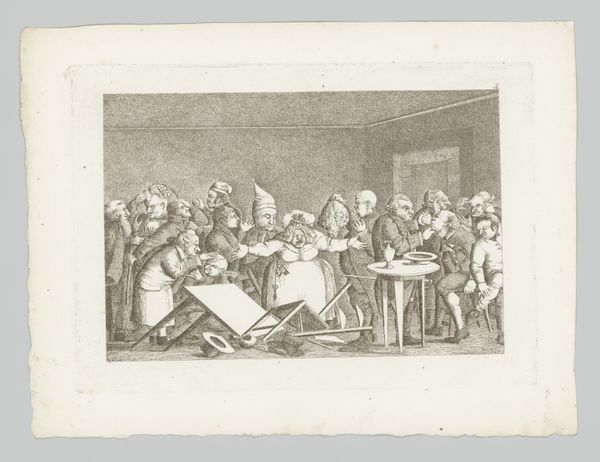
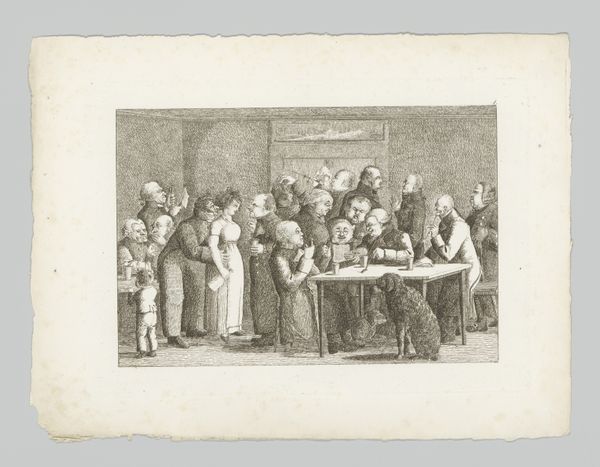
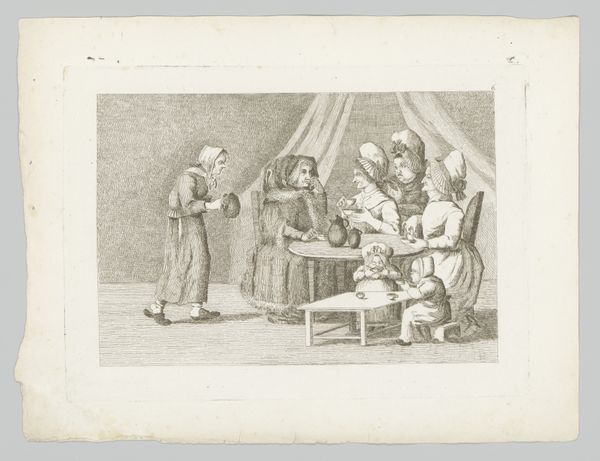
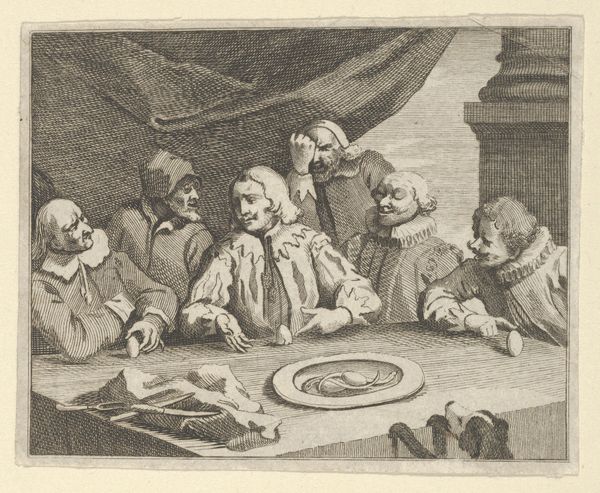
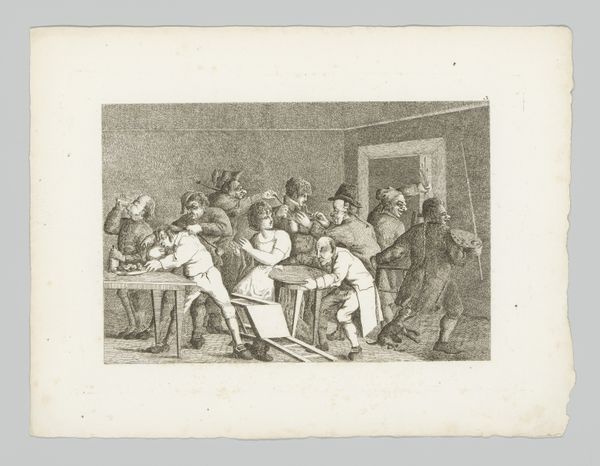
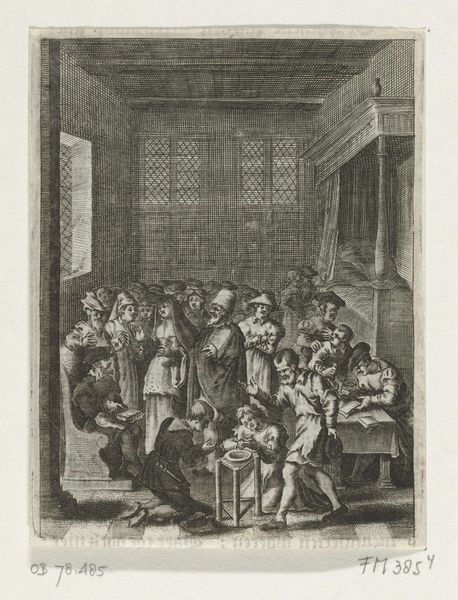
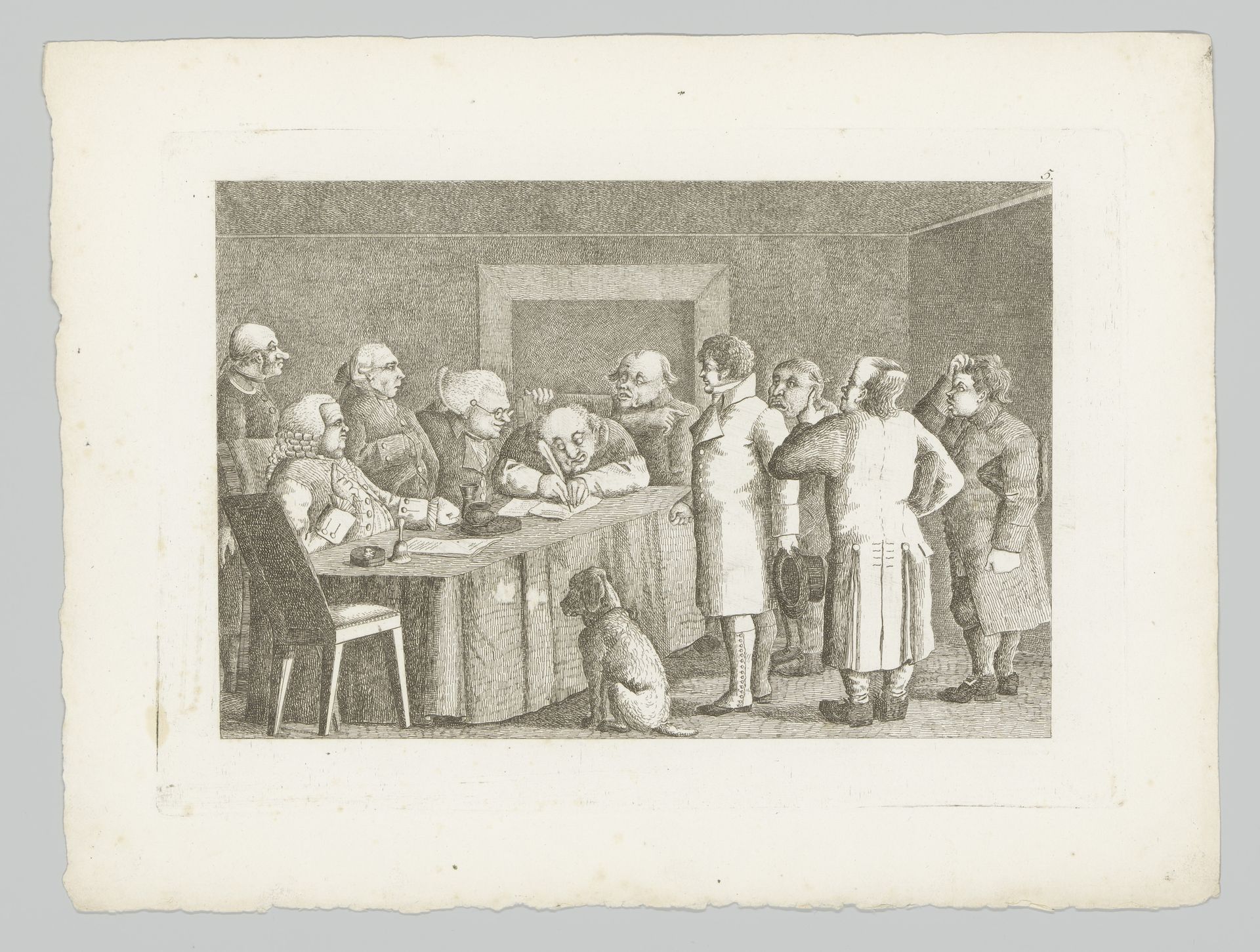
Friedrich Rottmann created this print, "Young man in front of a desk with writing men", in Germany in the late eighteenth or early nineteenth century. It depicts a group of men gathered around a table, some writing, others looking on, and a young man standing before them. The scene suggests an official or bureaucratic setting, perhaps a town council or a legal proceeding. The print's style and subject matter reflect the social and political climate of the time, a period of significant change and upheaval in Europe. The rise of Enlightenment ideals and the French Revolution challenged traditional hierarchies and power structures, and this print captures the sense of a society in transition. The presence of the young man suggests the passing of judgement, or instruction in the ways of the world. The historian might use archival records to research the institutional setting and the specific roles and responsibilities of the individuals depicted. This work reminds us that art is always shaped by the social, political, and economic forces of its time.

Artwork details
- Medium
- drawing, print, engraving
- Dimensions
- height 175 mm, width 252 mm
- Copyright
- Rijks Museum: Open Domain
Tags
portrait
drawing
genre-painting
history-painting
engraving
realism
Comments
No comments
About this artwork
Friedrich Rottmann created this print, "Young man in front of a desk with writing men", in Germany in the late eighteenth or early nineteenth century. It depicts a group of men gathered around a table, some writing, others looking on, and a young man standing before them. The scene suggests an official or bureaucratic setting, perhaps a town council or a legal proceeding. The print's style and subject matter reflect the social and political climate of the time, a period of significant change and upheaval in Europe. The rise of Enlightenment ideals and the French Revolution challenged traditional hierarchies and power structures, and this print captures the sense of a society in transition. The presence of the young man suggests the passing of judgement, or instruction in the ways of the world. The historian might use archival records to research the institutional setting and the specific roles and responsibilities of the individuals depicted. This work reminds us that art is always shaped by the social, political, and economic forces of its time.
Comments
No comments