About this artwork
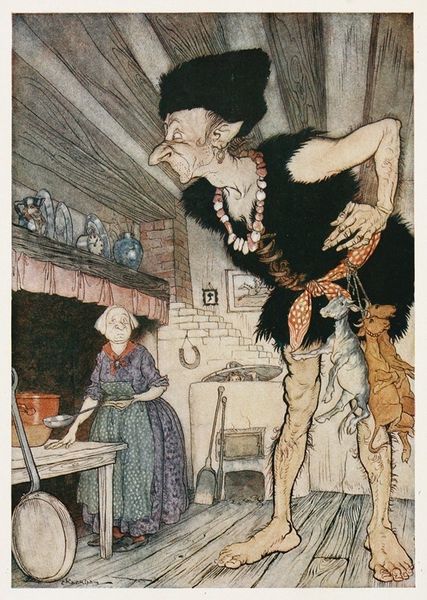
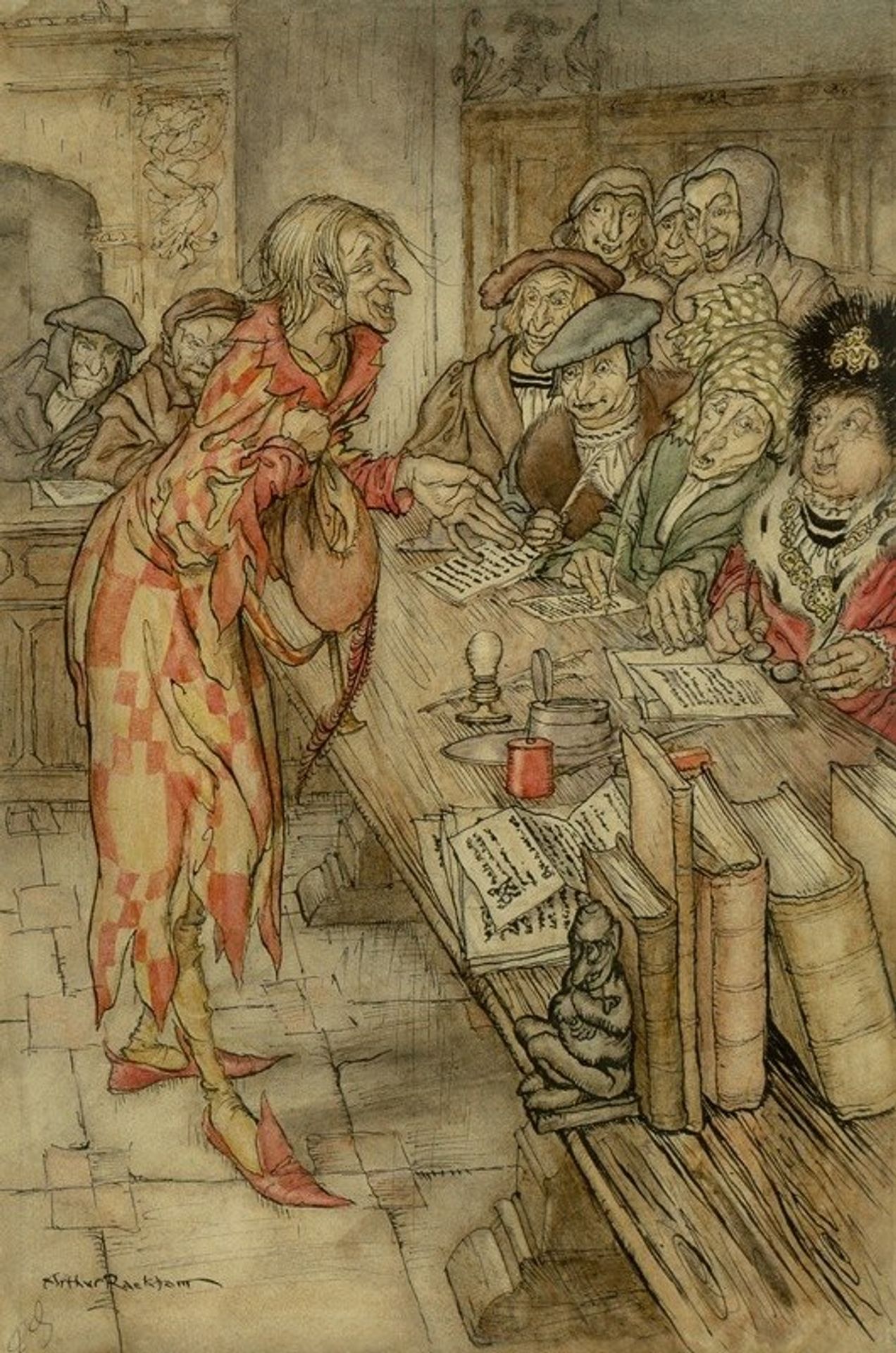
Arthur Rackham created this illustration, "In Did Come the Strangest Figure," using ink and watercolor. The scene is dominated by a jester-like figure, whose harlequin attire, rendered in faded reds and whites, contrasts sharply with the drab setting and the severe expressions of the seated figures around a table. Rackham uses line and color to create a world rife with character. The exaggerated features of the characters and the intricate detailing in their costumes and surrounding objects invite you to decode a narrative about societal roles and perceptions. The texture of the drawing, achieved through delicate ink work and watercolor washes, adds a tactile quality. The overall composition uses a limited palette to disrupt conventional beauty standards. By embracing the grotesque, Rackham destabilizes fixed meanings, and his work reflects broader artistic concerns about representation. The piece acts as a cultural and philosophical mirror, inviting continuous interpretation.

Artwork details
- Medium
- drawing, watercolor, pen
- Copyright
- Public Domain: Artvee
Tags
Comments
Share your thoughts
About this artwork
Arthur Rackham created this illustration, "In Did Come the Strangest Figure," using ink and watercolor. The scene is dominated by a jester-like figure, whose harlequin attire, rendered in faded reds and whites, contrasts sharply with the drab setting and the severe expressions of the seated figures around a table. Rackham uses line and color to create a world rife with character. The exaggerated features of the characters and the intricate detailing in their costumes and surrounding objects invite you to decode a narrative about societal roles and perceptions. The texture of the drawing, achieved through delicate ink work and watercolor washes, adds a tactile quality. The overall composition uses a limited palette to disrupt conventional beauty standards. By embracing the grotesque, Rackham destabilizes fixed meanings, and his work reflects broader artistic concerns about representation. The piece acts as a cultural and philosophical mirror, inviting continuous interpretation.
Comments
Share your thoughts