About this artwork
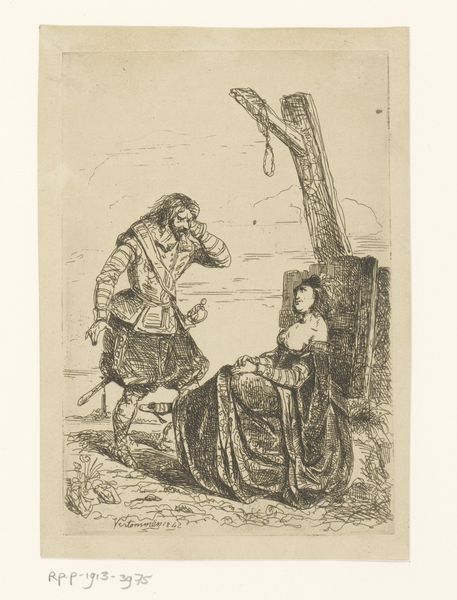
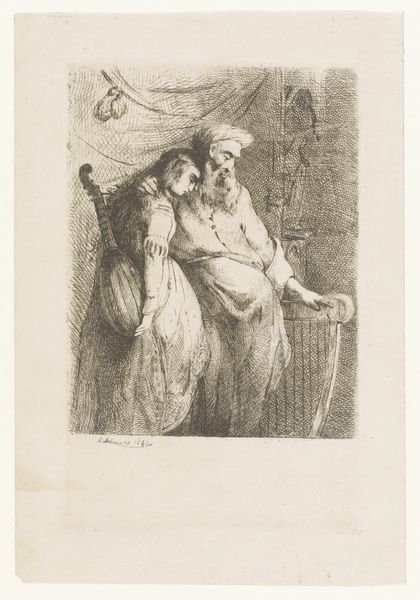
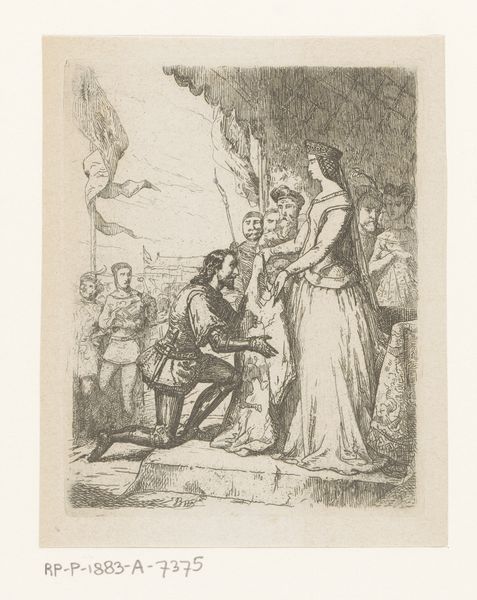
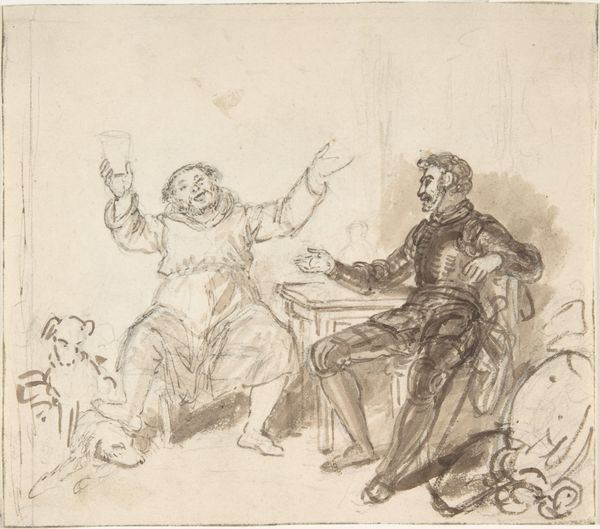
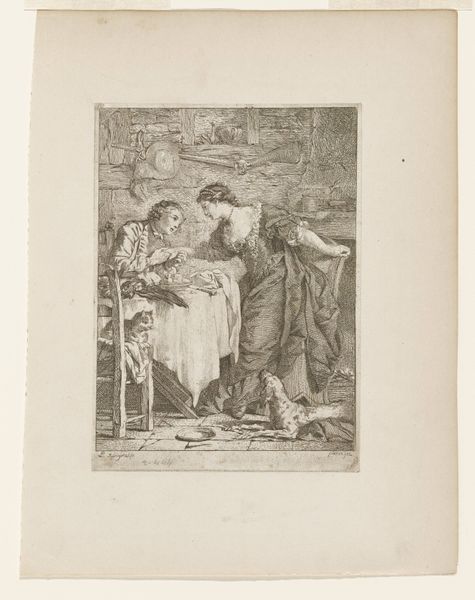
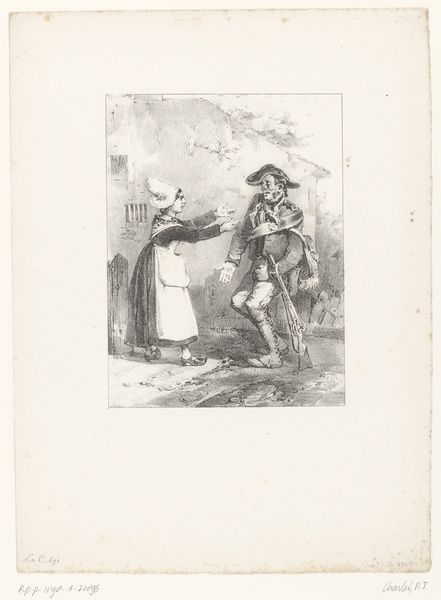
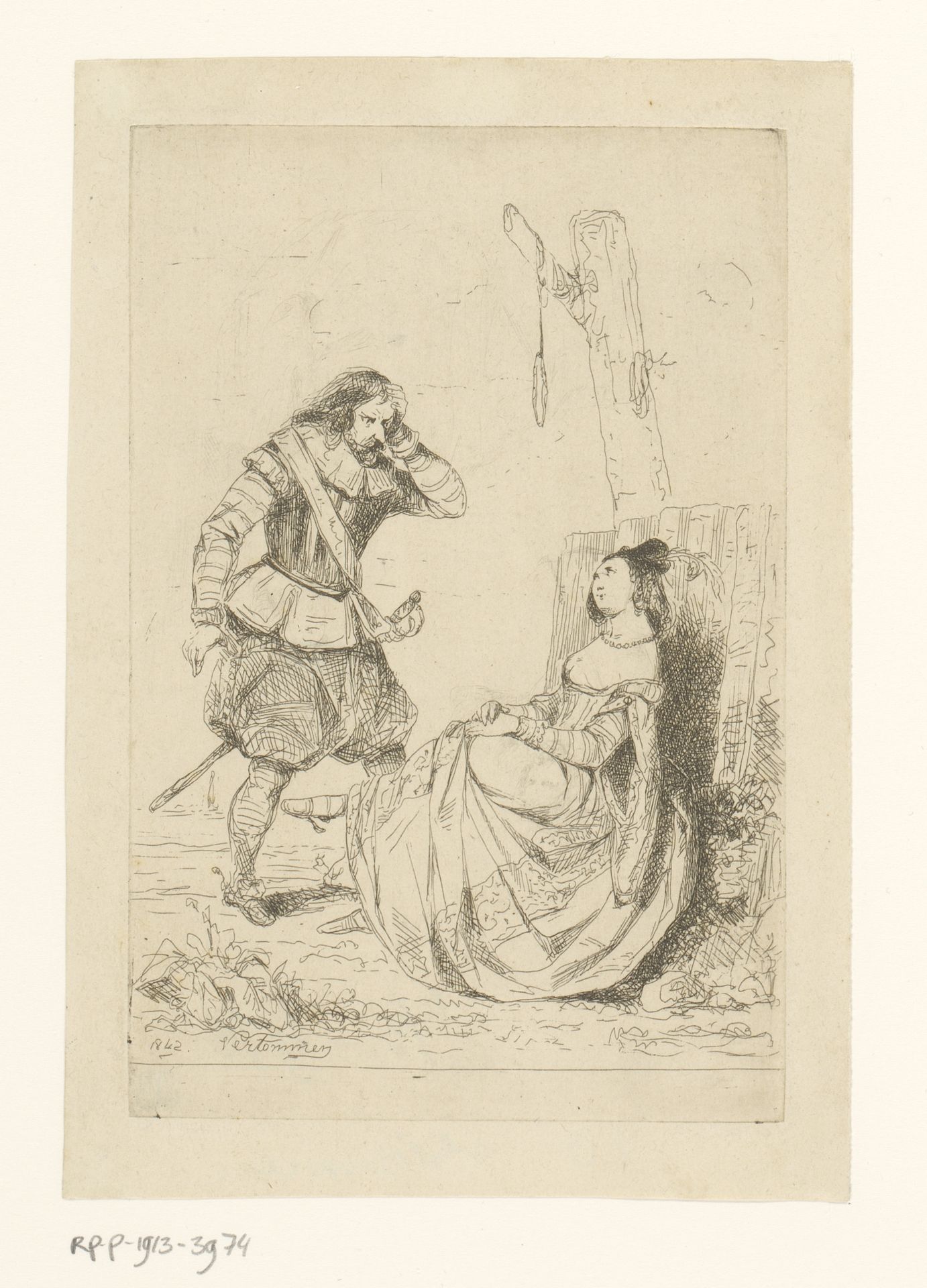
This etching, "A Soldier Stands by a Woman Seated Under a Gallows," was made by Guillaume Joseph Vertommen in the 19th century. The artist employed etching, an intaglio printmaking technique where a metal plate is coated with a waxy resist, and then the image is scratched into the surface. The plate is then immersed in acid, which bites into the exposed metal, creating lines that hold ink. The etched lines define the contours of the figures, their clothing, and the ominous gallows. The quality of the lines—thin, scratchy, and densely packed—creates tonal variation, capturing the somber mood of the scene. This mode of production is critical to understanding the artist's concept. Printmaking, like etching, democratized artmaking, and these kinds of prints were often made and sold to a wide public. Materials, making, and context are therefore important elements of the image.
Krijgsman staat bij een vrouw gezeten onder een galg 1842

Guillaume Joseph Vertommen
1815 - 1863Location
RijksmuseumArtwork details
- Medium
- drawing, print, etching
- Dimensions
- height 150 mm, width 100 mm
- Location
- Rijksmuseum
- Copyright
- Rijks Museum: Open Domain
Tags
drawing
narrative-art
etching
pencil sketch
figuration
romanticism
genre-painting
history-painting
Comments
No comments
About this artwork
This etching, "A Soldier Stands by a Woman Seated Under a Gallows," was made by Guillaume Joseph Vertommen in the 19th century. The artist employed etching, an intaglio printmaking technique where a metal plate is coated with a waxy resist, and then the image is scratched into the surface. The plate is then immersed in acid, which bites into the exposed metal, creating lines that hold ink. The etched lines define the contours of the figures, their clothing, and the ominous gallows. The quality of the lines—thin, scratchy, and densely packed—creates tonal variation, capturing the somber mood of the scene. This mode of production is critical to understanding the artist's concept. Printmaking, like etching, democratized artmaking, and these kinds of prints were often made and sold to a wide public. Materials, making, and context are therefore important elements of the image.
Comments
No comments