1651 - 1702
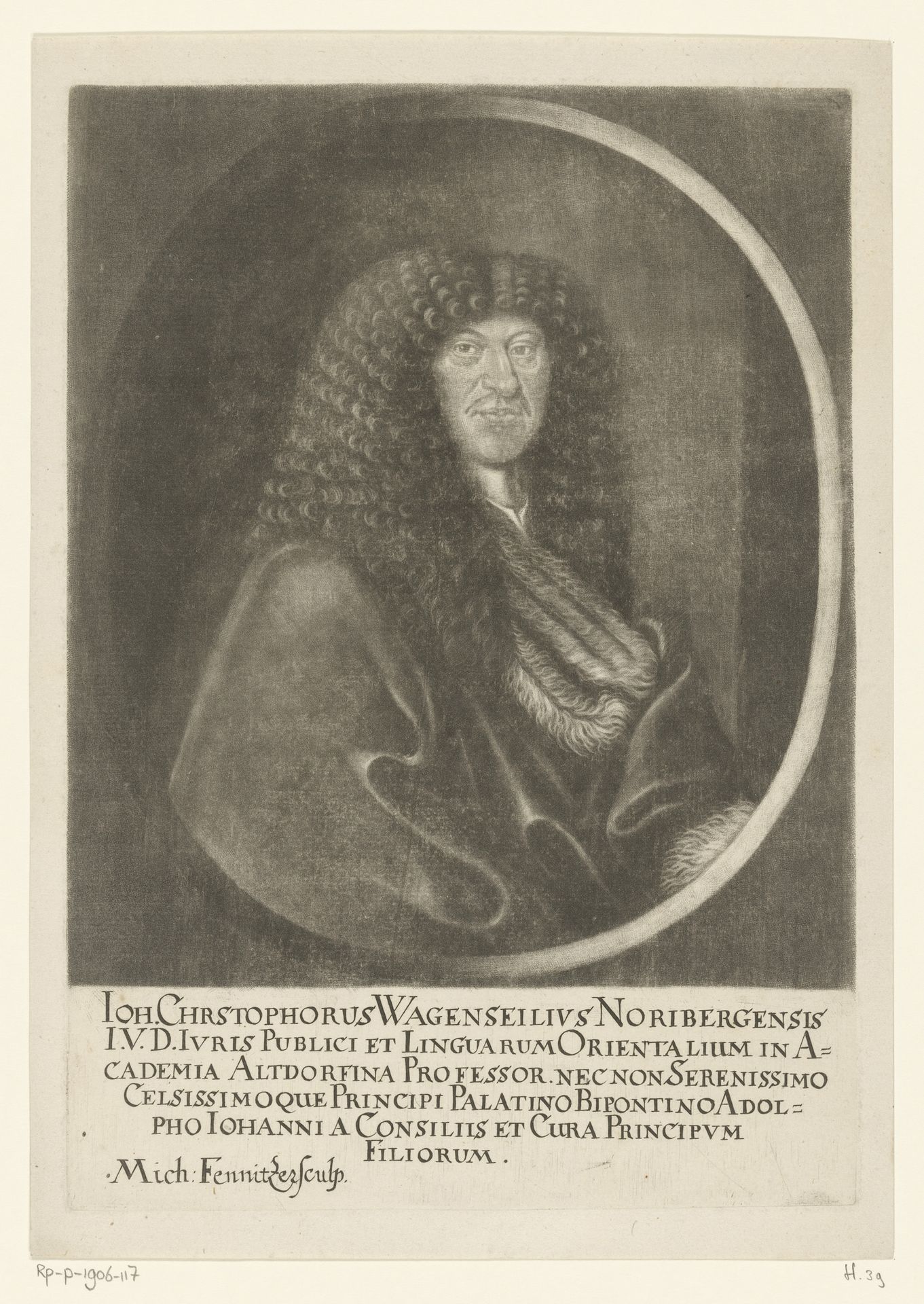
Portret van Johann Christoph Wagenseil

Listen to curator's interpretation
Curatorial notes
Curator: Here we have Michael Fennitzer's engraving of Johann Christoph Wagenseil, created sometime between 1651 and 1702. The artwork offers a glimpse into the baroque era's visual culture, especially the portraiture styles and the prominence of intellectual figures. Editor: My first impression is dominated by the texture—look at the intense detail in that wig! The printmaking process has really captured every curl and strand. Curator: Absolutely, and it tells us so much. Wagenseil was a highly respected professor of Oriental Languages and Law. Note how Fennitzer frames him. The flowing wig, the plush fabric, these details conveyed status and scholarly importance in that period. The choice of engraving speaks to how these images were reproduced and distributed among academic circles. Editor: Exactly. Think about the labor involved. Engraving demands meticulous skill, carefully etching lines to create form and texture. Each groove filled with ink, each press… It's a mechanical reproduction but rooted in handcraft. Also the paper itself - the kind of paper used here, its availability and cost - played into the social dynamic of the work. Curator: The inscription below the portrait emphasizes Wagenseil’s titles and connections to influential figures, reinforcing his social standing and achievements within the academic world. That carefully inscribed text makes it as much a document as it is a likeness. It shows the intersection of image-making, social power and scholarly authority. Editor: And in terms of that imagery, that oval framing creates this almost objectified sense. A specimen or a study, neatly presented. I am wondering if that speaks more generally about seventeenth-century perspectives. What the engraver saw in their subject, and, more broadly, what the establishment sought in its dignitaries. Curator: I think that is right, it definitely shows something that helps us understand period values and representation practices. These aren't simply portraits, but also material evidence of cultural values and social structures. Editor: Absolutely. When you consider the artist's choices—medium, subject, and style—you find they expose something about labor and socio-cultural conditions within seventeenth-century knowledge economies. Curator: Thanks to that detail you spotted, considering materiality in context, even this fairly conventional engraving has become an invaluable source for grasping 17th-century societal priorities.