About this artwork
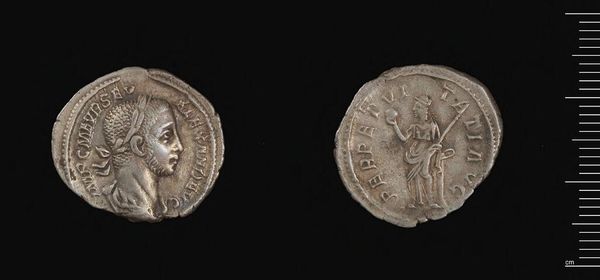
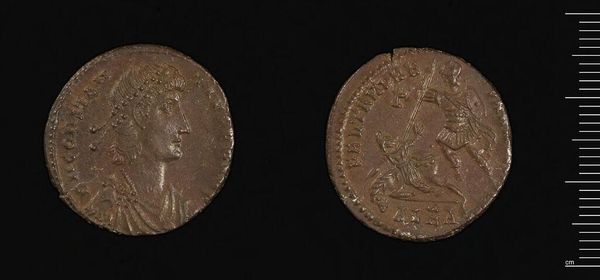
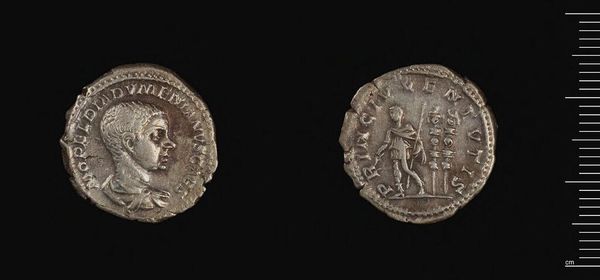
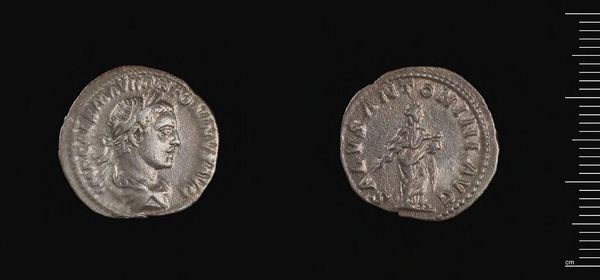
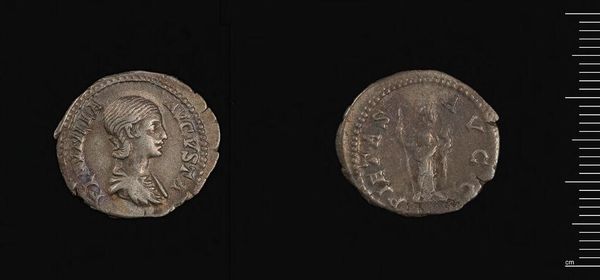
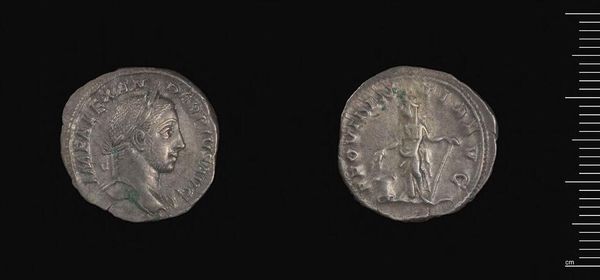
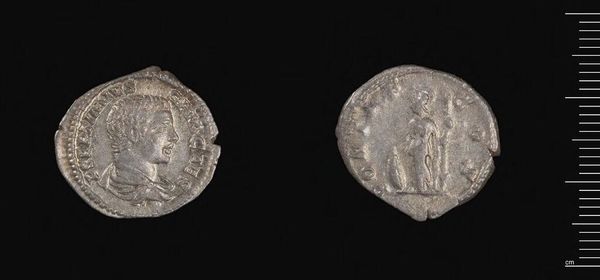
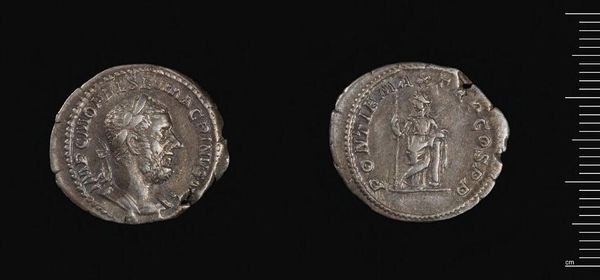
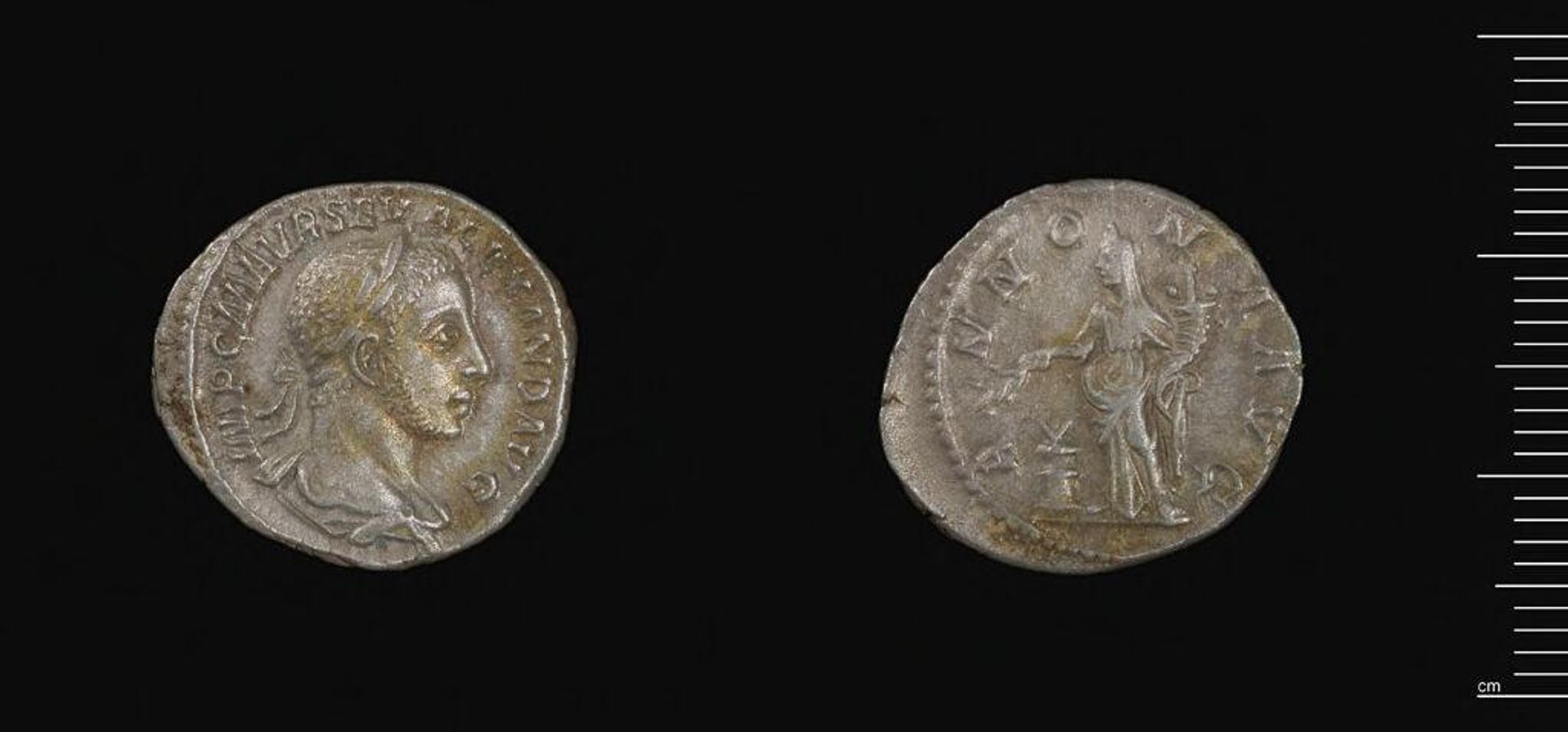
Curator: I find this Denarius of Severus Alexander from the Harvard Art Museums so compelling. The coin is small, yet it speaks volumes. Editor: It’s remarkable how this tiny object holds such weight. I'm immediately struck by the figure on the reverse. It feels like a hope for prosperity cast in miniature. Curator: Indeed. The imagery of the emperor on one side and a goddess—likely Pax, goddess of peace—on the other creates a powerful symbolic dialogue about leadership and the desired state of the empire. Editor: And consider its context. Coins weren't just currency, they were propaganda tools. Each one carried an image of power, circulating throughout the empire and shaping public perception. Curator: Exactly. The symbolism wasn’t just decorative; it was a carefully crafted message about the emperor's legitimacy and the virtues he wished to project onto his reign. This continuity of symbolic language is fascinating. Editor: It’s incredible to think that such a small, everyday object could be so potent in shaping the political landscape and collective consciousness of an entire civilization. Curator: It truly makes you reflect on the enduring power of symbols and how they reflect cultural memory. Editor: Yes, and how power is performed and reproduced in the most minute of objects, rippling out across society.
Denarius of Severus Alexander
c. 226

Artwork details
- Dimensions
- 3.11 g
- Location
- Harvard Art Museums
- Copyright
- CC0 1.0
Comments
Be the first to share your thoughts about this work.
About this artwork
Curator: I find this Denarius of Severus Alexander from the Harvard Art Museums so compelling. The coin is small, yet it speaks volumes. Editor: It’s remarkable how this tiny object holds such weight. I'm immediately struck by the figure on the reverse. It feels like a hope for prosperity cast in miniature. Curator: Indeed. The imagery of the emperor on one side and a goddess—likely Pax, goddess of peace—on the other creates a powerful symbolic dialogue about leadership and the desired state of the empire. Editor: And consider its context. Coins weren't just currency, they were propaganda tools. Each one carried an image of power, circulating throughout the empire and shaping public perception. Curator: Exactly. The symbolism wasn’t just decorative; it was a carefully crafted message about the emperor's legitimacy and the virtues he wished to project onto his reign. This continuity of symbolic language is fascinating. Editor: It’s incredible to think that such a small, everyday object could be so potent in shaping the political landscape and collective consciousness of an entire civilization. Curator: It truly makes you reflect on the enduring power of symbols and how they reflect cultural memory. Editor: Yes, and how power is performed and reproduced in the most minute of objects, rippling out across society.
Comments
Be the first to share your thoughts about this work.