1800 - 1815
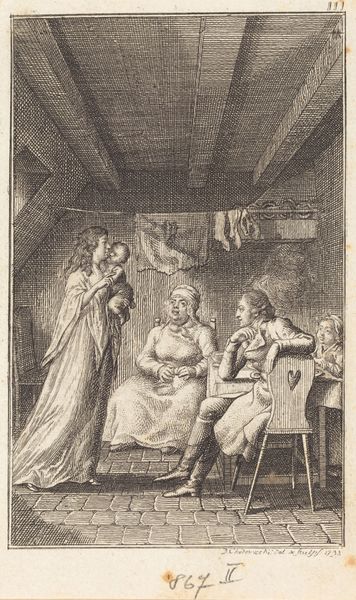
Le Suprême Bon Ton, 1800-1815, No. 21: L'Élégant chez son marechal ferrant

Anonymous
@anonymousLocation
RijksmuseumListen to curator's interpretation
Curatorial notes
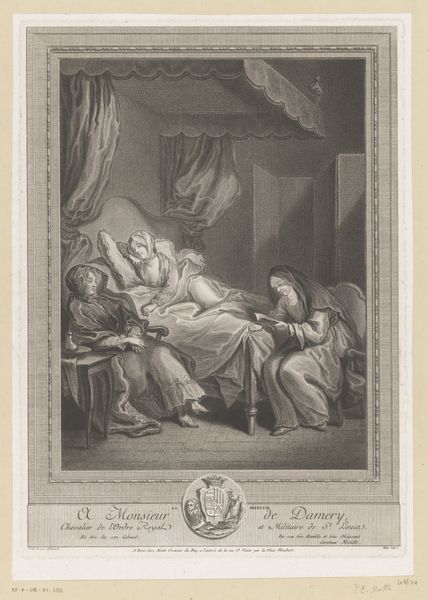
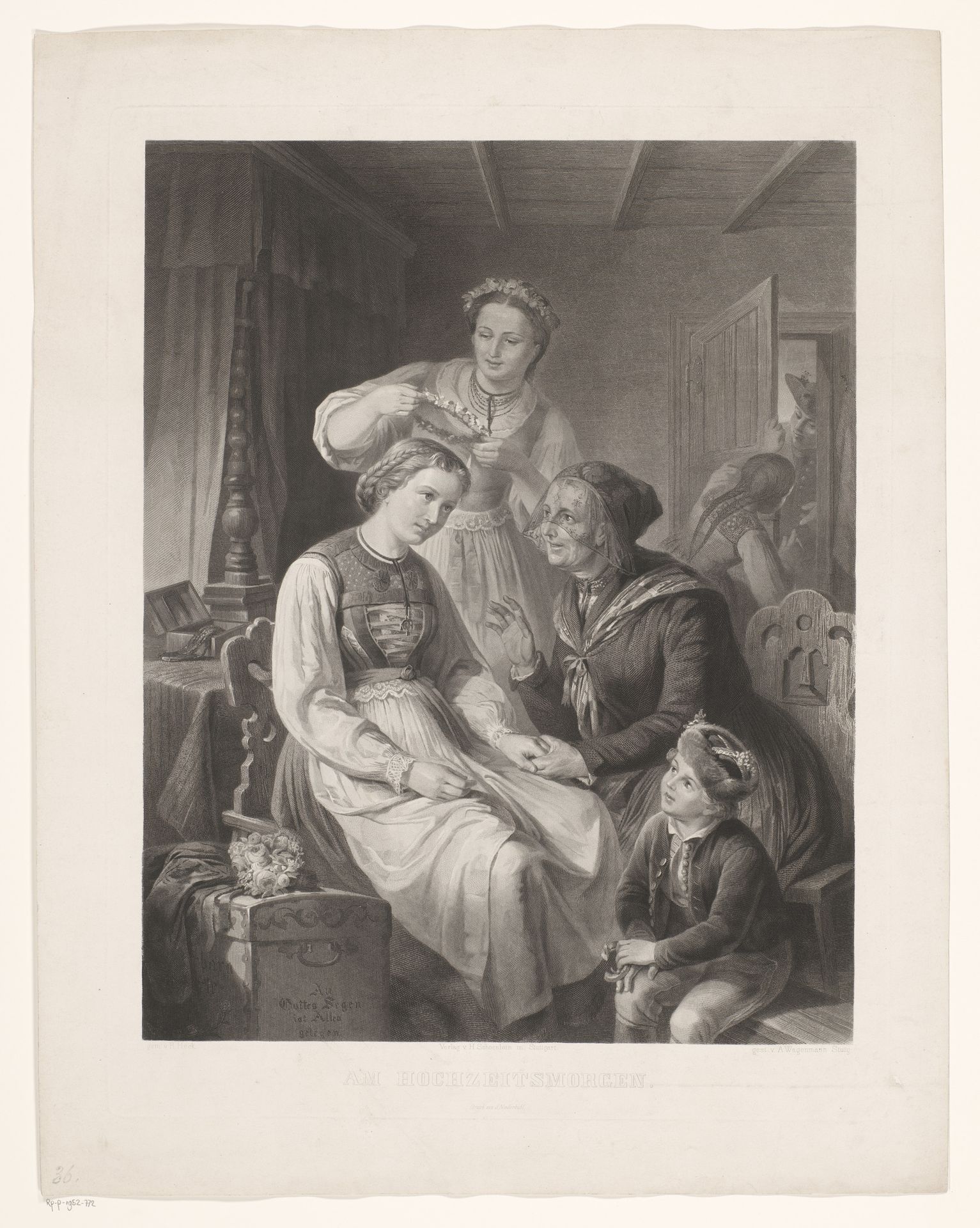
This is an anonymous print titled "The Elegant at his Farrier's," made sometime between 1800 and 1815. This was a period of immense social upheaval following the French Revolution, where traditional class structures were being questioned, and new forms of social mobility were emerging. In the print, we see a well-dressed man visiting what appears to be a domestic scene of a farrier's family. The details in clothing and setting speak volumes about class and gender roles. The central woman, possibly the farrier's daughter, is the image of modesty, and the gaze of the child suggests curiosity. An older woman touches the hand of the young woman, perhaps signifying the transfer of tradition and expectation. The presence of the ‘elegant’ man hints at a negotiation—perhaps an offer of marriage, a transaction of social mobility. The image subtly critiques the commodification of relationships across class lines, where personal worth becomes entangled with economic status. Ultimately, the print invites us to reflect on the personal negotiations within broader social changes, asking us to consider how individual lives are woven into the fabric of historical transformation.