1910 - 1911
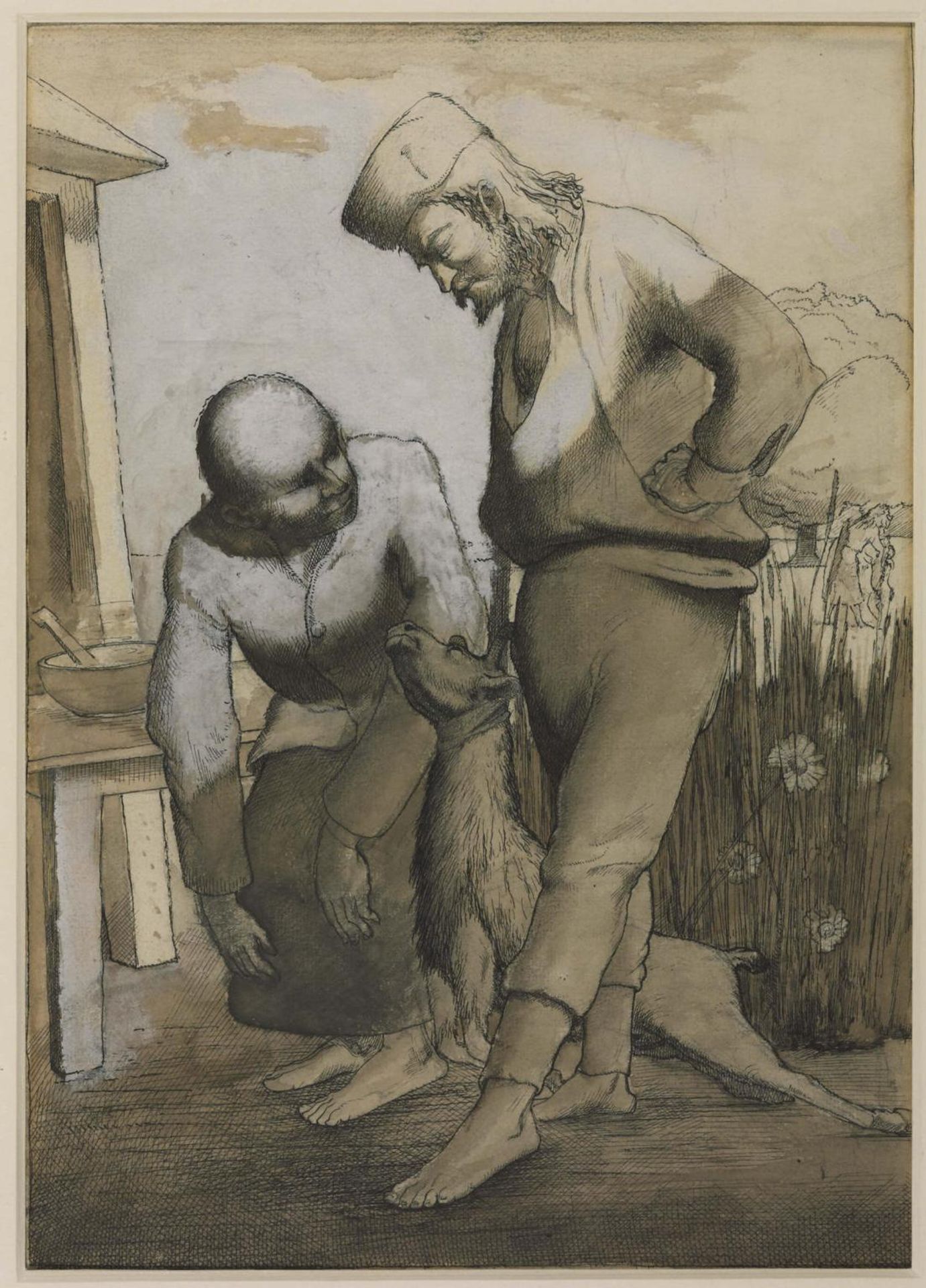
Jacob and Esau

Listen to curator's interpretation
Curatorial notes
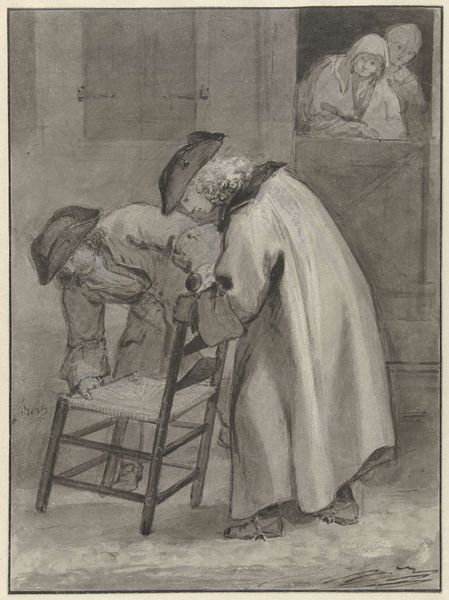
Editor: Here we have Sir Stanley Spencer's "Jacob and Esau" from the Tate Collections. It has a very intimate, almost theatrical feel to it. How do you interpret this work, considering its biblical subject matter? Curator: Well, Spencer often situated biblical scenes within the context of everyday life and its politics. Notice how he renders Jacob and Esau in simple, almost coarse terms. Could this be a reflection on class dynamics within British society during the early 20th century? Editor: So, you're saying it's less about the religious narrative itself and more about using that narrative to comment on societal issues? Curator: Precisely! Spencer used religious imagery as a vehicle to explore contemporary social and cultural tensions, engaging the public in discussions around faith, class, and identity. Editor: That's fascinating; it gives me a whole new perspective on the piece. Curator: Indeed, art's power lies in its ability to provoke dialogue across different historical and cultural landscapes.