c. 1650 - 1656
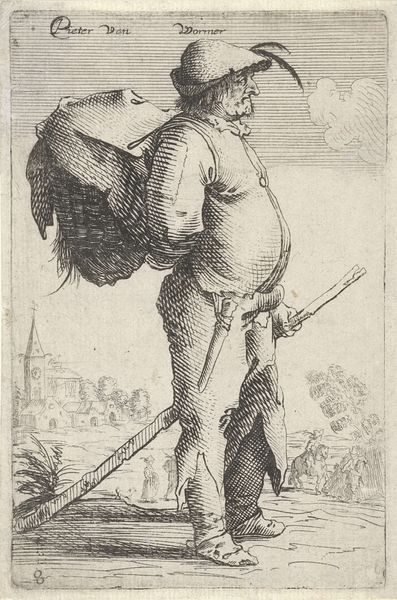
Staande man

Frederick Bloemaert
1610Location
RijksmuseumListen to curator's interpretation
Curatorial notes
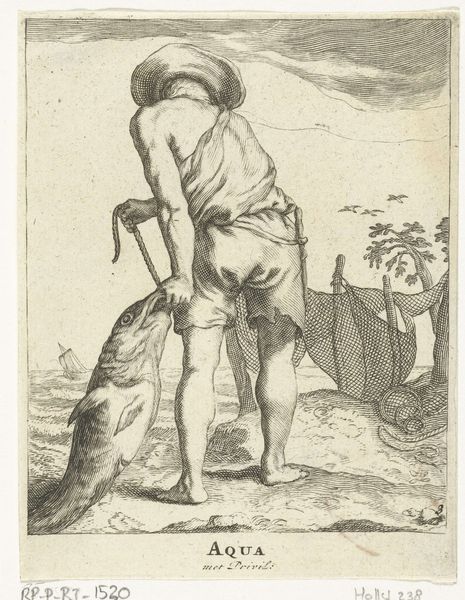
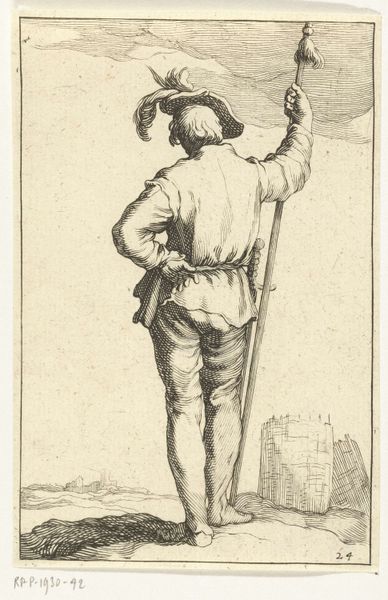
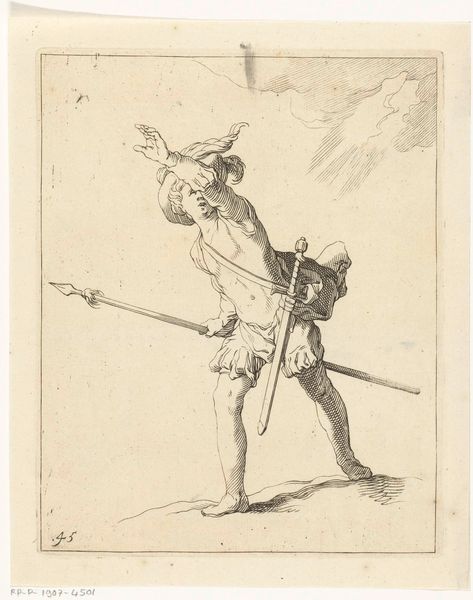
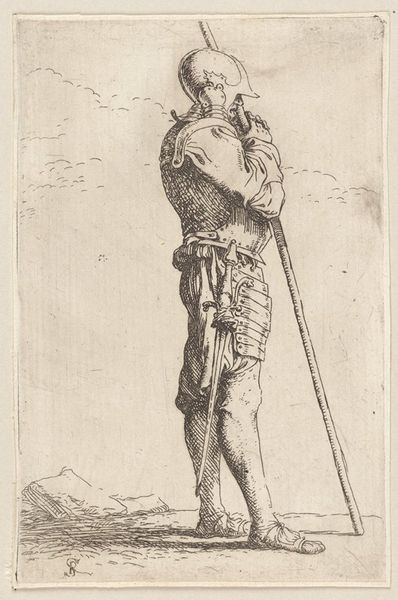
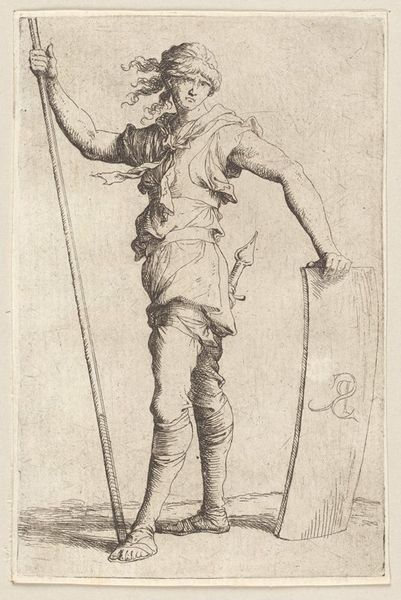
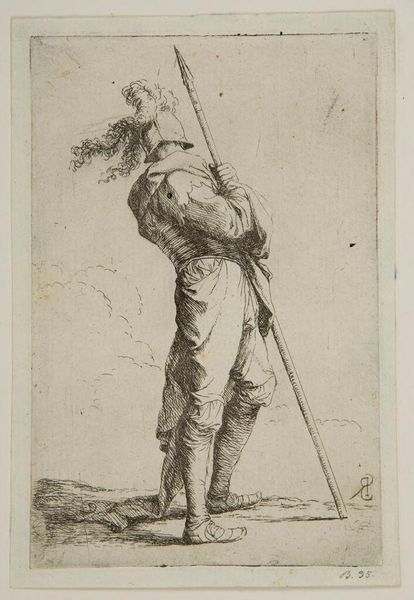
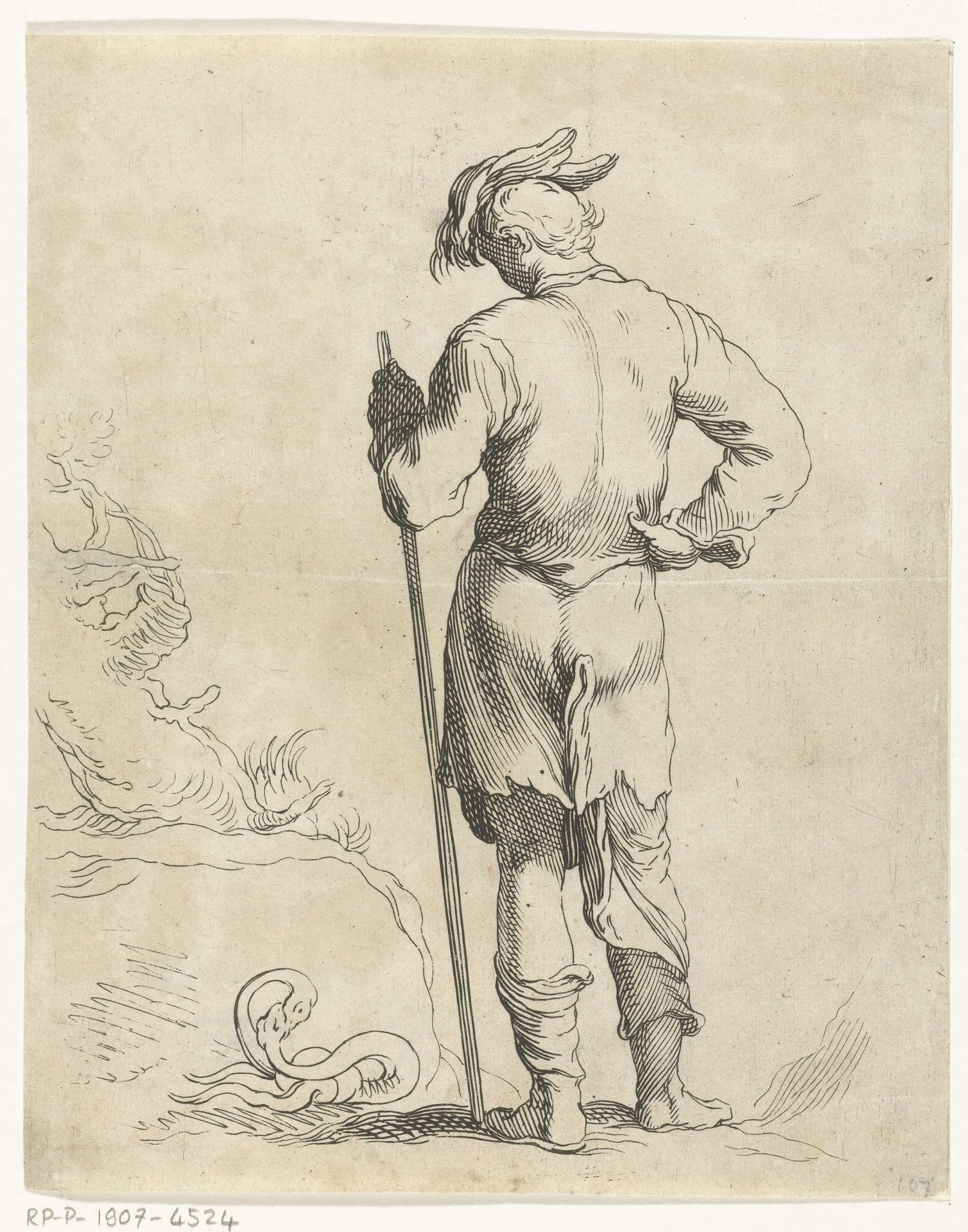
This is Frederick Bloemaert’s etching "Standing Man," created sometime in the 17th century. Bloemaert was part of a generation of Dutch artists grappling with the legacy of the Golden Age, a period marked by economic prosperity but also profound social stratification. Here, Bloemaert presents us with a figure whose identity is both asserted and obscured. We see a man, staff in hand, turned away from us. His clothing suggests a life of labor, yet there's a certain poise in his stance. The snake could symbolize a range of things – temptation, healing, or perhaps the hidden dangers lurking beneath the surface of Dutch society. Bloemaert, coming from a family of artists, would have been acutely aware of the power dynamics at play in the art world and beyond. This piece invites us to consider the complexities of identity and the ways in which individuals navigate a world shaped by both opportunity and constraint. It’s a quiet, contemplative work that hints at the stories of those often unseen.