About this artwork
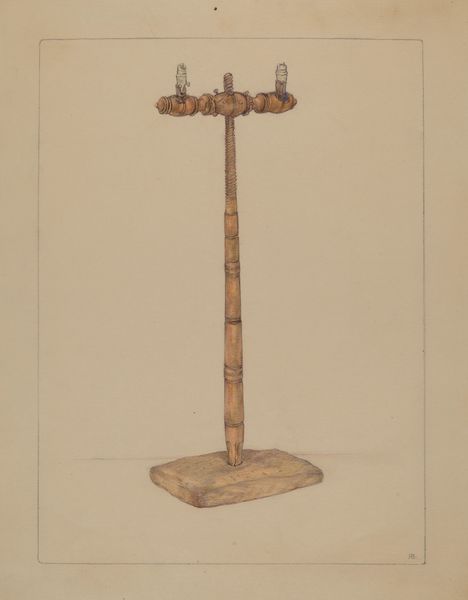
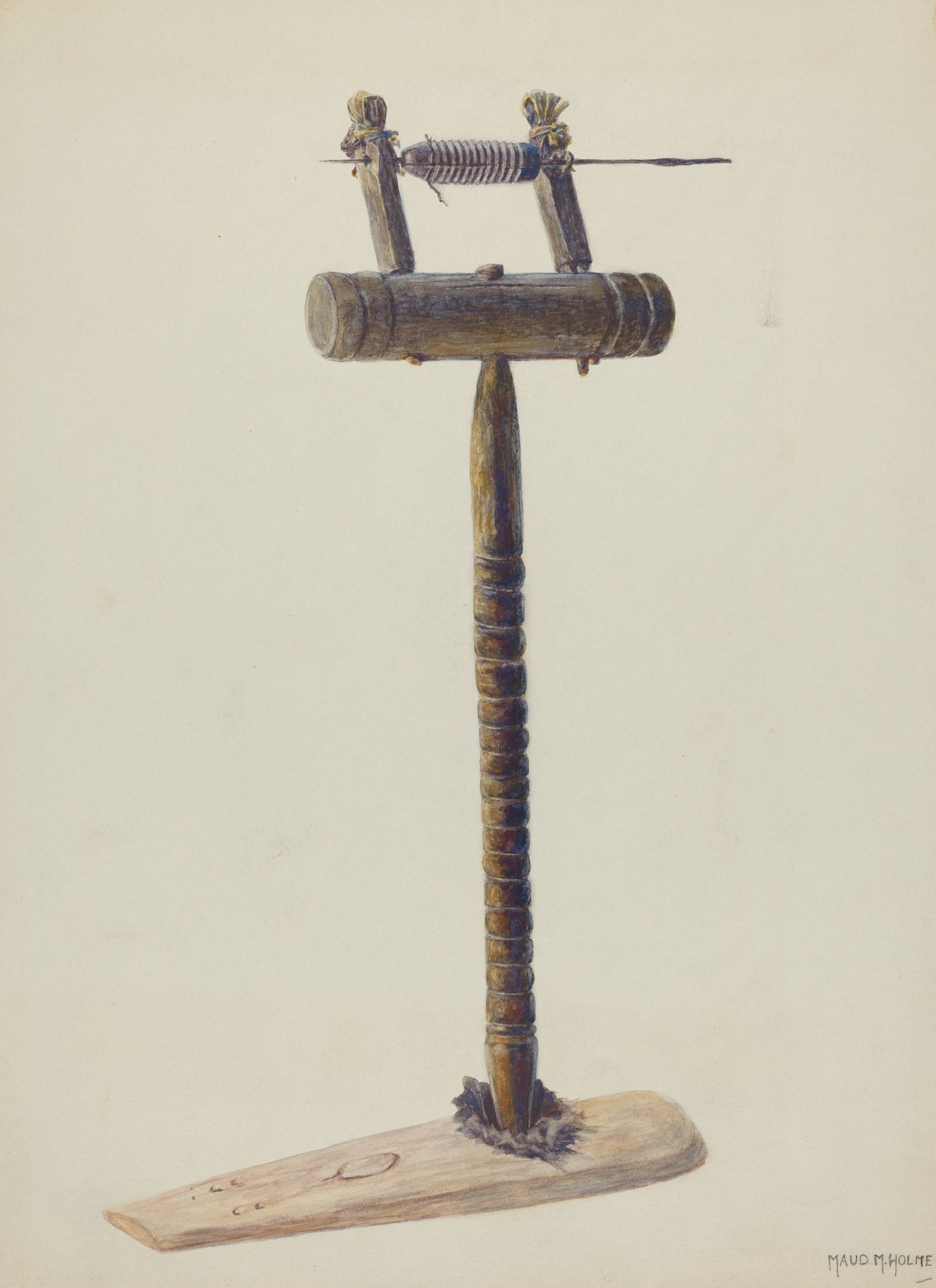
Maud Holme made this drawing of a spinning wheel using watercolor, though the date of its creation is unknown. I really like the way the watercolor is applied so delicately, in thin washes that give a real sense of the object's form. You can see the texture of the paper coming through, which makes the whole thing feel light and airy. Holme captures the way light reflects off the wooden surfaces with subtle gradations of color, from warm browns to cool grays. Notice how she uses these tiny, precise strokes to depict the grooves and curves of the spinning wheel's components, like around the central spindle? It's almost like she's mapping out the object's structure. The piece reminds me a little of Agnes Martin's drawings, there's that same kind of quiet attention to detail, a meditative quality, but instead of Martin's austere abstraction, Holme gives us the everyday beauty of a functional object. It's like she's saying, "Look closely, there's poetry in the ordinary."


Artwork details
- Medium
- drawing, watercolor
- Dimensions
- overall: 34 x 25 cm (13 3/8 x 9 13/16 in.) Original IAD Object: 19" high; 8" wide
- Copyright
- National Gallery of Art: CC0 1.0
Tags
Comments
Share your thoughts
About this artwork
Maud Holme made this drawing of a spinning wheel using watercolor, though the date of its creation is unknown. I really like the way the watercolor is applied so delicately, in thin washes that give a real sense of the object's form. You can see the texture of the paper coming through, which makes the whole thing feel light and airy. Holme captures the way light reflects off the wooden surfaces with subtle gradations of color, from warm browns to cool grays. Notice how she uses these tiny, precise strokes to depict the grooves and curves of the spinning wheel's components, like around the central spindle? It's almost like she's mapping out the object's structure. The piece reminds me a little of Agnes Martin's drawings, there's that same kind of quiet attention to detail, a meditative quality, but instead of Martin's austere abstraction, Holme gives us the everyday beauty of a functional object. It's like she's saying, "Look closely, there's poetry in the ordinary."
Comments
Share your thoughts