About this artwork
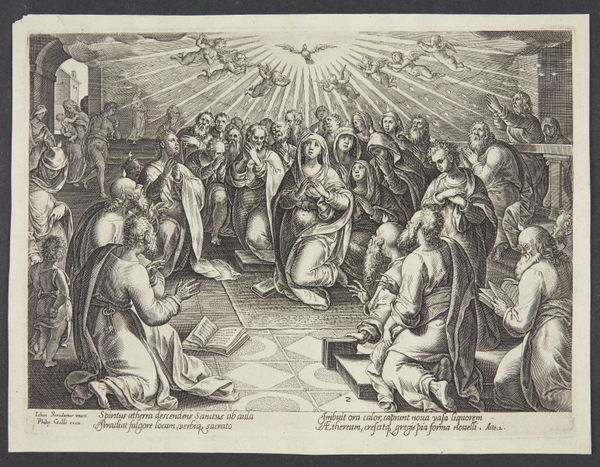
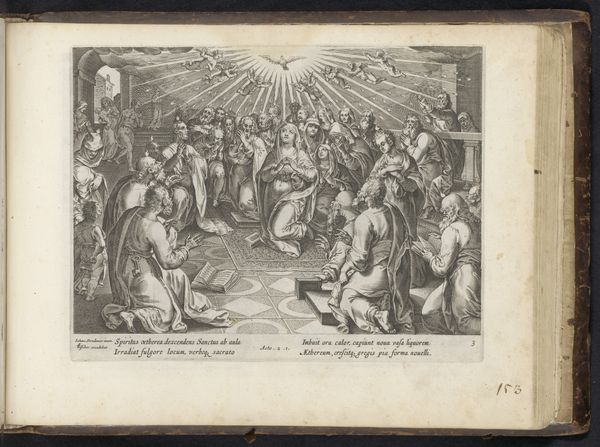
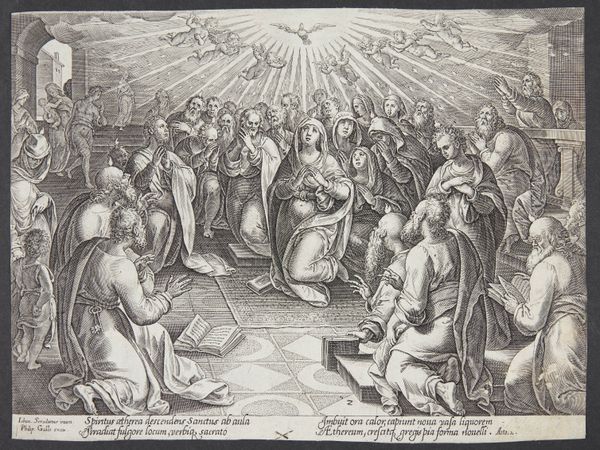
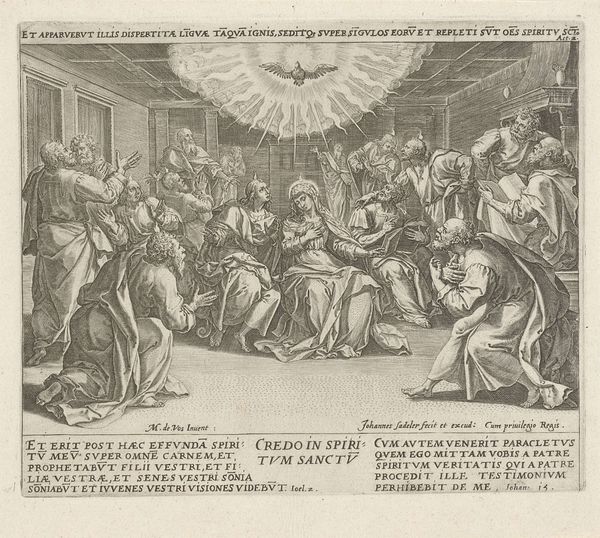
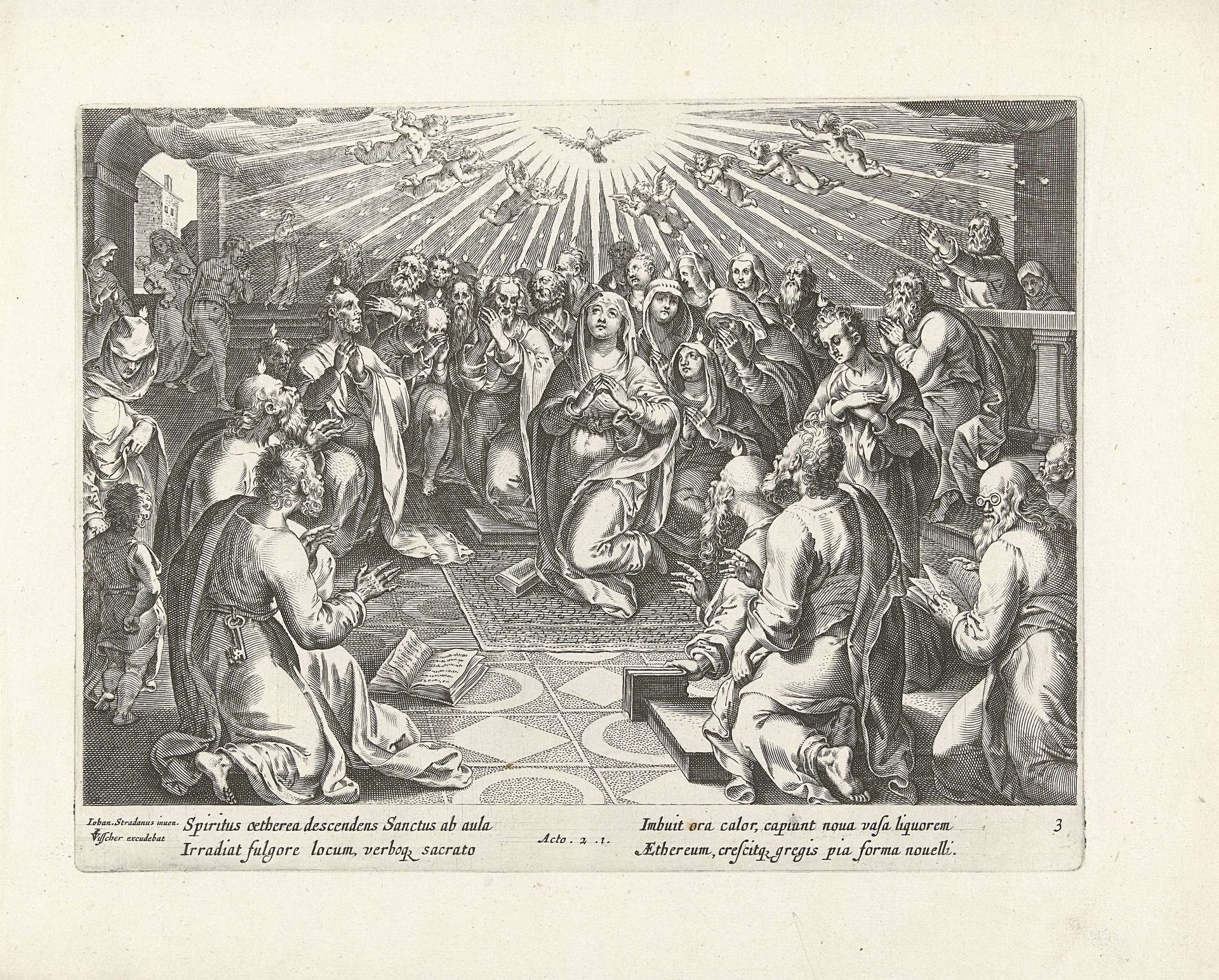
This is Claes Jansz. Visscher’s engraving of The Descent of the Holy Spirit. Visscher made this print, with a burin, sometime between the late 16th and early to mid-17th century in the Netherlands, a period marked by religious and political upheaval. This piece depicts a pivotal scene from the New Testament. Gathered together are the Virgin Mary and the Apostles when suddenly the Holy Spirit descends upon them. They are emboldened, speaking in different languages, ready to spread the teachings of Jesus. What’s fascinating is the positioning of Mary at the center, drawing attention to her role and spiritual experience within a patriarchal religious structure. Consider how the artist navigates the representation of spiritual awakening within the confines of established religious doctrine. The engraving invites us to reflect on the themes of transformation, empowerment, and the complex interplay between individual experience and collective identity. It offers a glimpse into the ways in which religious narratives can be interpreted and reimagined through art.
Uitstorting van de Heilige Geest
1643 - 1646

Claes Jansz. Visscher
1586 - 1652Location
RijksmuseumArtwork details
- Medium
- print, engraving
- Dimensions
- height 205 mm, width 265 mm
- Location
- Rijksmuseum
- Copyright
- Rijks Museum: Open Domain
Tags
Comments
Share your thoughts
About this artwork
This is Claes Jansz. Visscher’s engraving of The Descent of the Holy Spirit. Visscher made this print, with a burin, sometime between the late 16th and early to mid-17th century in the Netherlands, a period marked by religious and political upheaval. This piece depicts a pivotal scene from the New Testament. Gathered together are the Virgin Mary and the Apostles when suddenly the Holy Spirit descends upon them. They are emboldened, speaking in different languages, ready to spread the teachings of Jesus. What’s fascinating is the positioning of Mary at the center, drawing attention to her role and spiritual experience within a patriarchal religious structure. Consider how the artist navigates the representation of spiritual awakening within the confines of established religious doctrine. The engraving invites us to reflect on the themes of transformation, empowerment, and the complex interplay between individual experience and collective identity. It offers a glimpse into the ways in which religious narratives can be interpreted and reimagined through art.
Comments
Share your thoughts