About this artwork
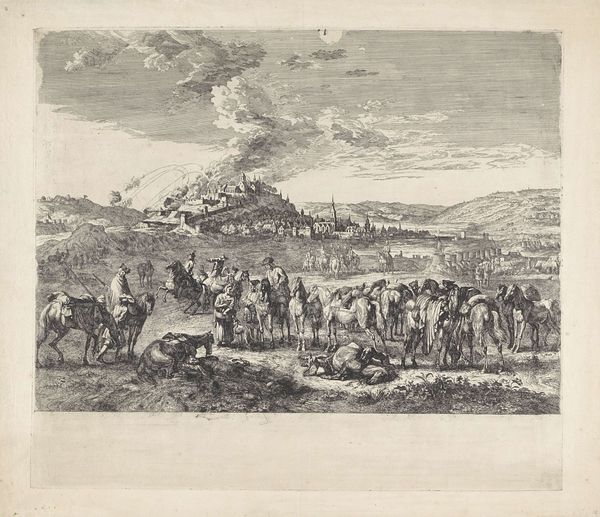
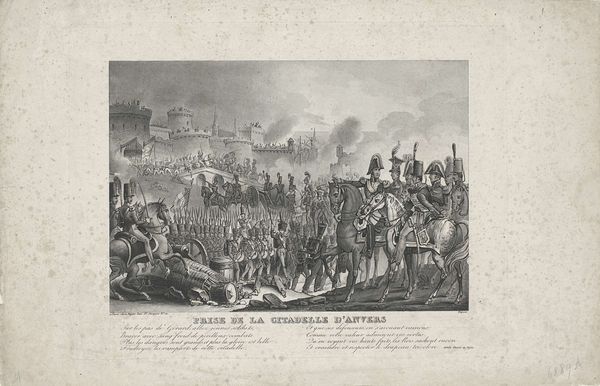
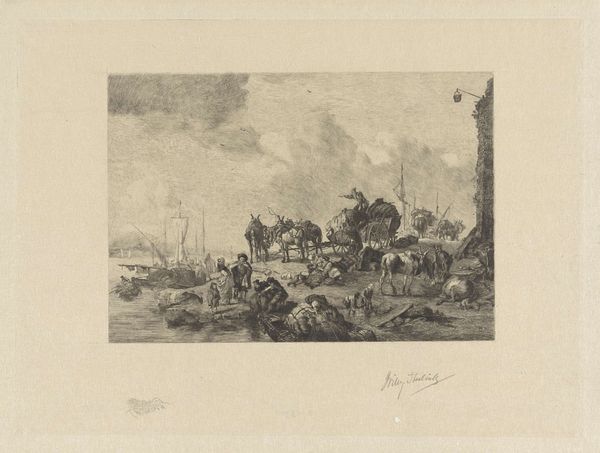
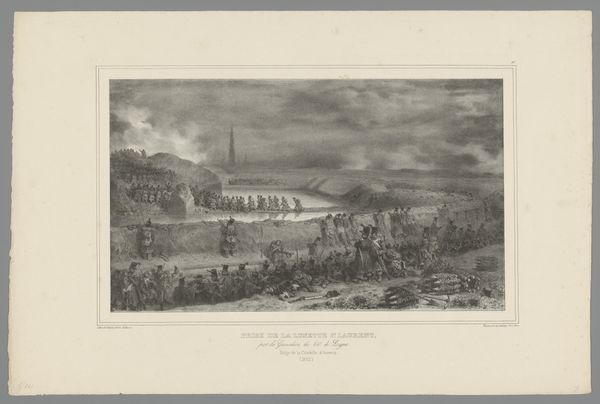
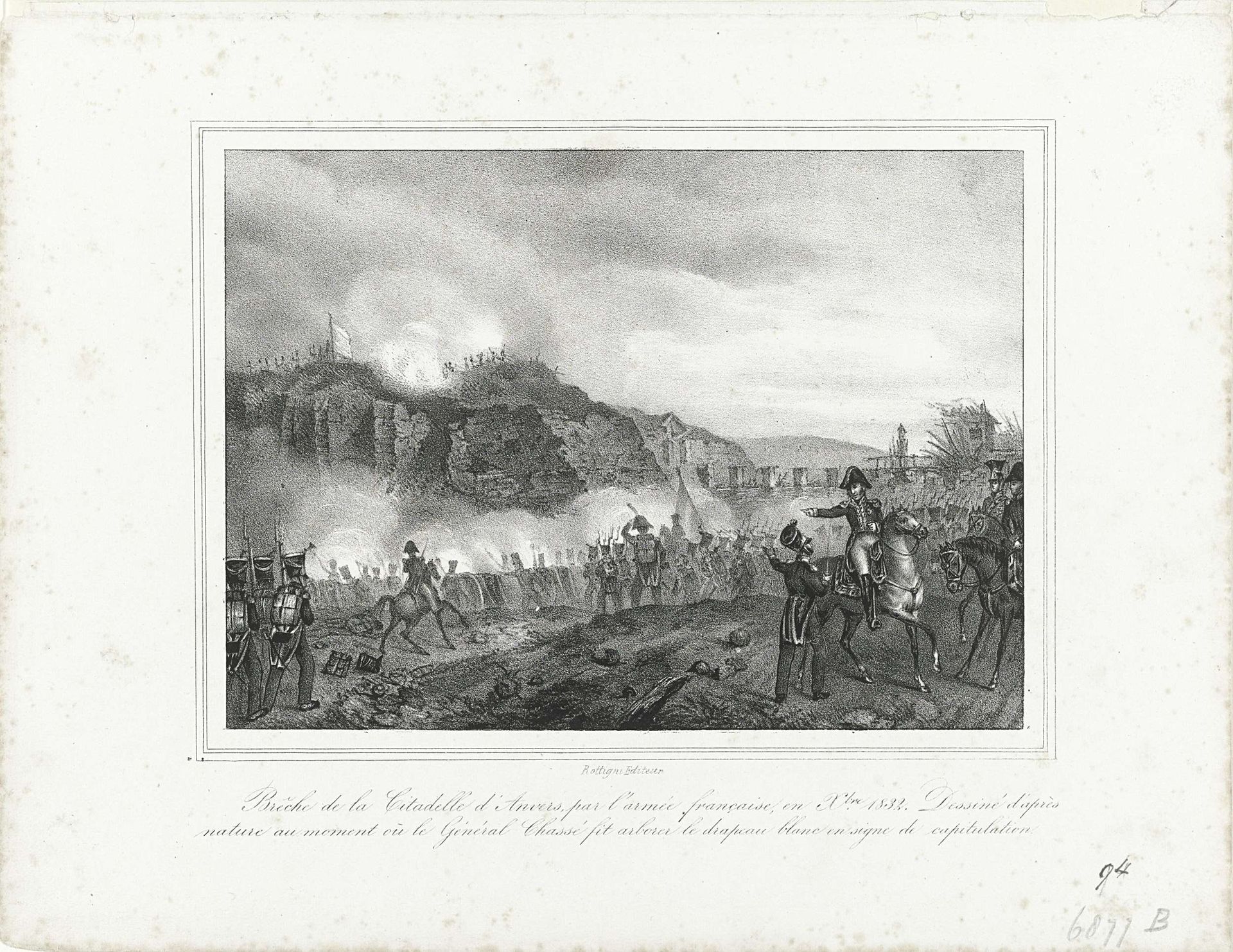
This print, "Overgave van de Citadel van Antwerpen, 1832", was made anonymously, using etching and engraving. These are intaglio processes, meaning that lines are incised into a metal plate, which is then inked and printed. The crisp lines and tonal range we see here result from skilled manipulation of tools. Look closely, and you'll notice the precise lines used to depict the soldiers, horses, and the crumbling citadel. The etcher's labor is evident in the intricate details, conveying a sense of immediacy, depicting a specific historical event. Prints like this one were produced in multiples, for a growing market for images documenting current events. This print is not just a depiction of war, but also a product of a particular moment in the history of image-making, in which traditional craft skills met the demands of mass production and widespread consumption. It blurs the lines between documentation, art, and commodity.
Overgave van de Citadel van Antwerpen, 1832 1832 - 1833

Anonymous
@anonymousLocation
RijksmuseumArtwork details
- Medium
- print, etching, paper
- Dimensions
- height 236 mm, width 305 mm
- Location
- Rijksmuseum
- Copyright
- Rijks Museum: Open Domain
Tags
etching
landscape
paper
romanticism
history-painting
academic-art
realism
Comments
No comments
About this artwork
This print, "Overgave van de Citadel van Antwerpen, 1832", was made anonymously, using etching and engraving. These are intaglio processes, meaning that lines are incised into a metal plate, which is then inked and printed. The crisp lines and tonal range we see here result from skilled manipulation of tools. Look closely, and you'll notice the precise lines used to depict the soldiers, horses, and the crumbling citadel. The etcher's labor is evident in the intricate details, conveying a sense of immediacy, depicting a specific historical event. Prints like this one were produced in multiples, for a growing market for images documenting current events. This print is not just a depiction of war, but also a product of a particular moment in the history of image-making, in which traditional craft skills met the demands of mass production and widespread consumption. It blurs the lines between documentation, art, and commodity.
Comments
No comments