About this artwork
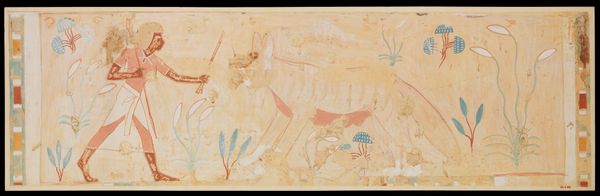
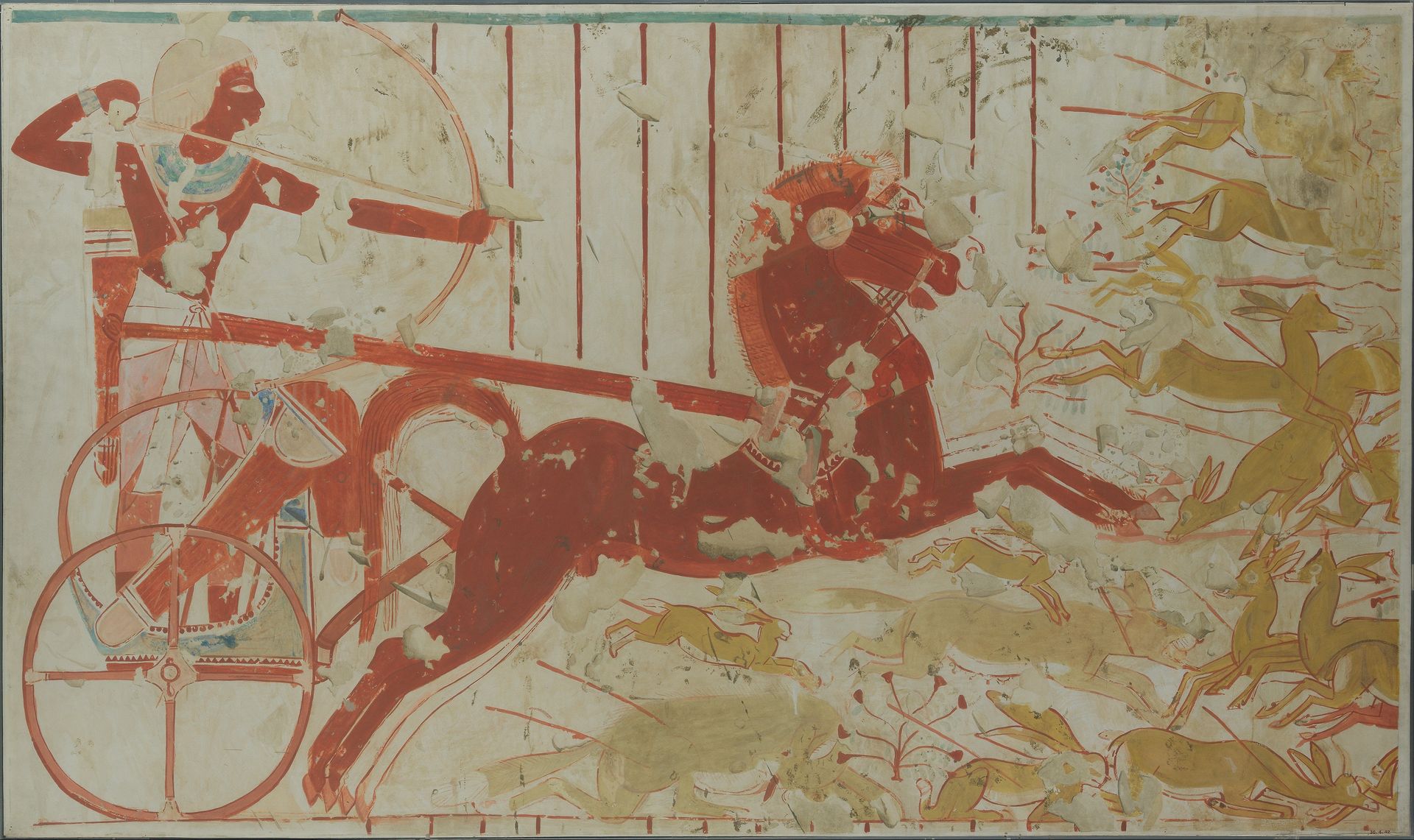
Curator: Ah, here we have “Hunting from a Chariot” found in the Tomb of Userhat dating back to 1427 BC. It's a painted fresco. Editor: It feels so immediate, even urgent. The energy practically vibrates off the surface. The strong horizontals are disrupted by the chaotic movement of the animals and the determined figure in the chariot. Curator: Absolutely. The visual language speaks to deeply ingrained concepts of power, order and the pharaoh's role. This hunt wasn't just for sustenance. Editor: Notice the economical use of color. The terracotta hues dominate, providing structure. The artist restricts themselves, giving visual clarity to a complex scene with many repeated, rhythmic shapes. Curator: And that rhythm speaks volumes. The constant repetition of the animals symbolizes both the bounty of the land, but also the untamed chaos that the Pharaoh, as protector, keeps at bay. Userhat, whose tomb this adorned, was likely a high-ranking official, trusted by the Pharaoh. Depicting this hunt associates him with those vital symbols of order. Editor: Interesting you mention Userhat. Because it is, nominally, about this person, who had this made, whose tomb it was for – but for all its historical information about the identity of its patron, the figures are idealized rather than personalized. Curator: Of course! These figures and the imagery tie into core spiritual beliefs as well. Hunting can symbolize the triumph over the forces of evil or the untamed aspects of nature. Editor: It's that tension between stasis and kinesis which captures the attention and holds it. I appreciate the formal construction here. The balance and imbalance draw you into it in fascinating ways. Curator: Yes, understanding the symbolic weight these images held for the ancient Egyptians provides a connection to their world. A world where art and life were seamlessly intertwined with spirituality. Editor: It reveals a kind of elegance within the imposed grid. Something both timeless, because human, and timely, as in specific to Userhat's story. Curator: I completely agree. We've both uncovered valuable perspectives today!
Hunting from a Chariot, Tomb of Userhat
1427 BC

Charles K. Wilkinson
1897 - 1986
The Metropolitan Museum of Art
Metropolitan Museum of Art, New York, NYArtwork details
- Medium
- painting, fresco
- Dimensions
- Facsimile: H. 74 cm (29 1/8 in); W. 127 cm (50 in); scale 1:1; Framed: H. 76.8 cm (30 1/4 in); W. 129.5 cm (51 in); Th. 1.9 cm (3/4 in)
- Location
- Metropolitan Museum of Art, New York, NY
- Copyright
- Public Domain
Tags
Comments
Share your thoughts
About this artwork
Curator: Ah, here we have “Hunting from a Chariot” found in the Tomb of Userhat dating back to 1427 BC. It's a painted fresco. Editor: It feels so immediate, even urgent. The energy practically vibrates off the surface. The strong horizontals are disrupted by the chaotic movement of the animals and the determined figure in the chariot. Curator: Absolutely. The visual language speaks to deeply ingrained concepts of power, order and the pharaoh's role. This hunt wasn't just for sustenance. Editor: Notice the economical use of color. The terracotta hues dominate, providing structure. The artist restricts themselves, giving visual clarity to a complex scene with many repeated, rhythmic shapes. Curator: And that rhythm speaks volumes. The constant repetition of the animals symbolizes both the bounty of the land, but also the untamed chaos that the Pharaoh, as protector, keeps at bay. Userhat, whose tomb this adorned, was likely a high-ranking official, trusted by the Pharaoh. Depicting this hunt associates him with those vital symbols of order. Editor: Interesting you mention Userhat. Because it is, nominally, about this person, who had this made, whose tomb it was for – but for all its historical information about the identity of its patron, the figures are idealized rather than personalized. Curator: Of course! These figures and the imagery tie into core spiritual beliefs as well. Hunting can symbolize the triumph over the forces of evil or the untamed aspects of nature. Editor: It's that tension between stasis and kinesis which captures the attention and holds it. I appreciate the formal construction here. The balance and imbalance draw you into it in fascinating ways. Curator: Yes, understanding the symbolic weight these images held for the ancient Egyptians provides a connection to their world. A world where art and life were seamlessly intertwined with spirituality. Editor: It reveals a kind of elegance within the imposed grid. Something both timeless, because human, and timely, as in specific to Userhat's story. Curator: I completely agree. We've both uncovered valuable perspectives today!
Comments
Share your thoughts