About this artwork
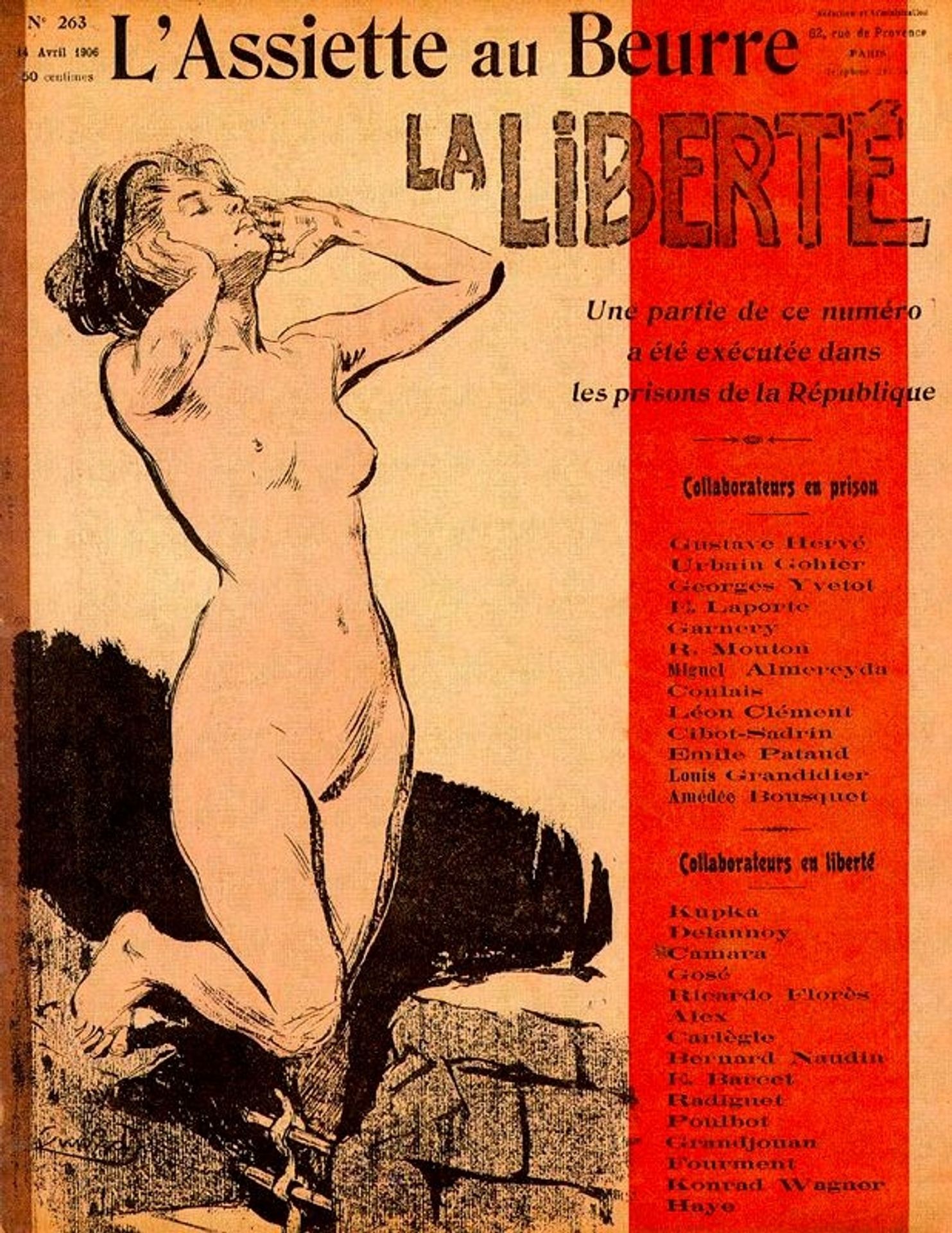
This is the front cover of a 1906 issue of the French satirical magazine 'L'Assiette au Beurre', designed by the Czech artist Frantisek Kupka. The image depicts a nude woman straining against shackles, bathed in light, a clear visual metaphor for the magazine's theme: 'Liberty'. But this is no simple celebration of freedom. A key detail is the inscription noting that part of this issue was produced in the prisons of the Republic. This adds layers of meaning, linking the abstract idea of liberty to the very real struggles of those incarcerated for their beliefs, perhaps even some of the magazine's own contributors, whose names appear on the right-hand side. Magazines like ‘L’Assiette au Beurre’ played a significant role in shaping public opinion in France at the turn of the century, engaging with issues of social justice and political reform. To understand this image fully, we might delve into the magazine’s archives, explore the biographies of its contributors, and research the political climate of the time. Only then can we truly appreciate the complex interplay of art, politics, and social commentary at play here.
Front cover of the 'La Liberté' issue, from 'L'Assiette au Beurre' 1906

Artwork details
- Medium
- painting, print
- Copyright
- Public domain US
Tags
art-nouveau
painting
symbolism
nude
Comments
No comments
About this artwork
This is the front cover of a 1906 issue of the French satirical magazine 'L'Assiette au Beurre', designed by the Czech artist Frantisek Kupka. The image depicts a nude woman straining against shackles, bathed in light, a clear visual metaphor for the magazine's theme: 'Liberty'. But this is no simple celebration of freedom. A key detail is the inscription noting that part of this issue was produced in the prisons of the Republic. This adds layers of meaning, linking the abstract idea of liberty to the very real struggles of those incarcerated for their beliefs, perhaps even some of the magazine's own contributors, whose names appear on the right-hand side. Magazines like ‘L’Assiette au Beurre’ played a significant role in shaping public opinion in France at the turn of the century, engaging with issues of social justice and political reform. To understand this image fully, we might delve into the magazine’s archives, explore the biographies of its contributors, and research the political climate of the time. Only then can we truly appreciate the complex interplay of art, politics, and social commentary at play here.
Comments
No comments