c. 1936
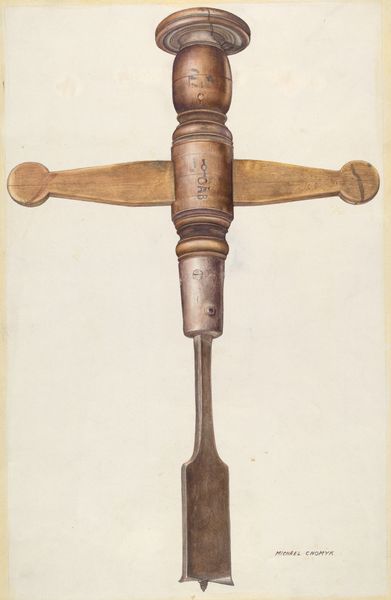
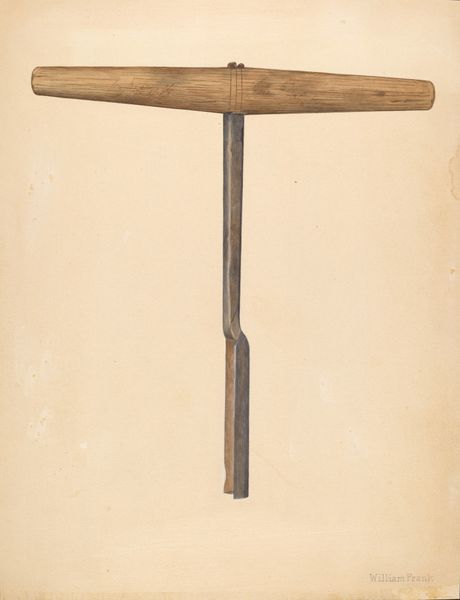
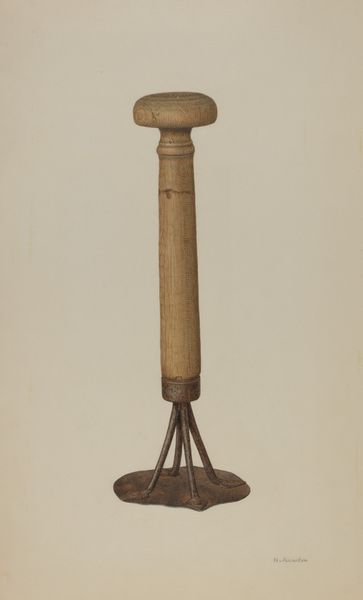
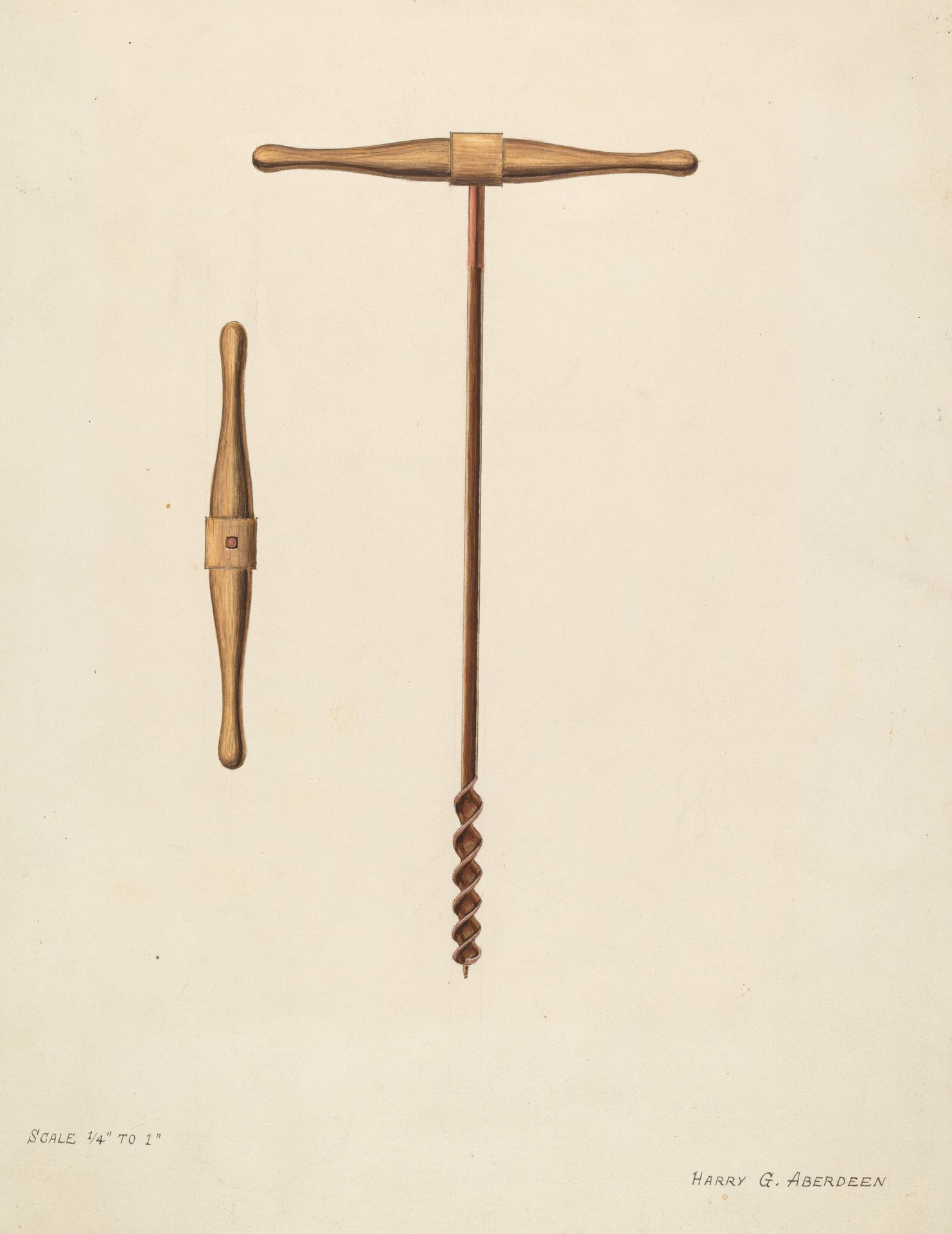
Bishop Hill: Auger


Listen to curator's interpretation
Curatorial notes
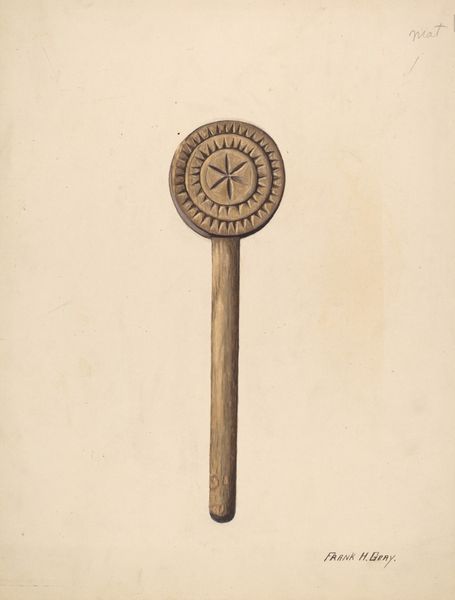
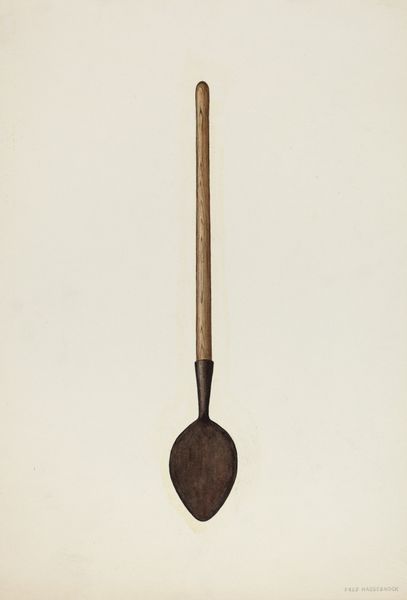
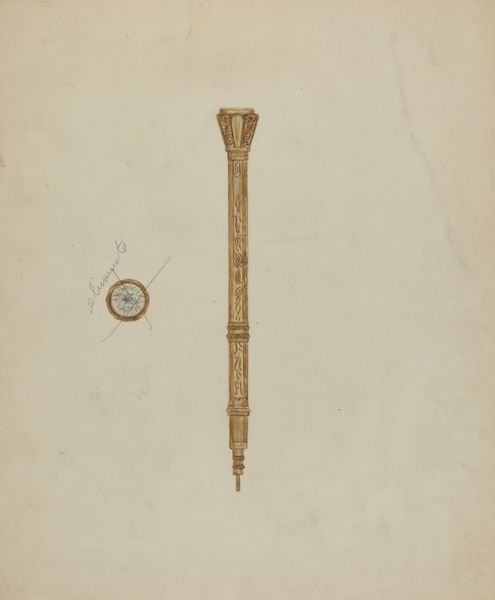
Editor: This is "Bishop Hill: Auger" by Harry G. Aberdeen, around 1936. It looks like watercolor and charcoal on paper. It's a really straightforward depiction of a woodworking tool... Almost like a technical drawing, but with a sensitive rendering of the materials. What strikes you when you look at this piece? Curator: For me, it's about labor and the tools that enable it. We have a highly detailed representation of an auger. Consider what the auger *does*: bores holes, preparing material for joining. Aberdeen focuses on a *thing*, foregrounding a common tool and giving it monumental significance. It elevates the everyday. Editor: Monumental, yes! Even though it's just watercolor and charcoal, there’s a kind of grandeur. But why choose this specific tool? Curator: Think about the Bishop Hill Colony itself. A Swedish religious community built on communal labor. An auger, in that context, isn't just a tool; it symbolizes the means by which the community literally constructs its world. Consider how humble material—wood—is transformed. It connects to questions of production and use. Editor: So the *representation* of the tool becomes almost as important as the tool itself. It’s a testament to labor and community, more than just a picture of an old tool. I didn’t think I could be this interested in a picture of an auger. Curator: Exactly! It demonstrates that art can be found in the most unexpected places if we investigate the relationship between an object, its production, and its use within a particular community. Editor: I'm seeing so much more now. The context really shapes how we understand it. Thanks for helping me look closer!