About this artwork
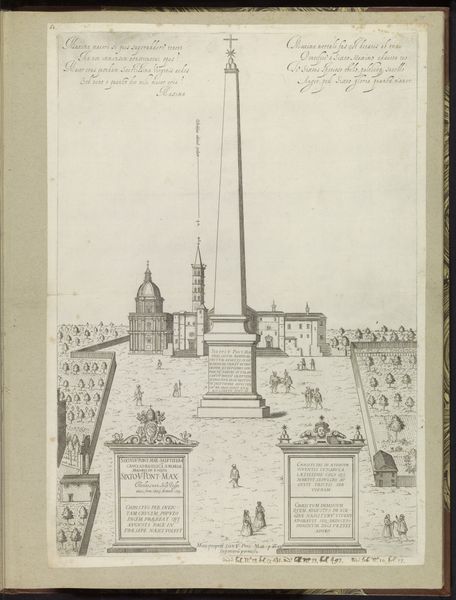
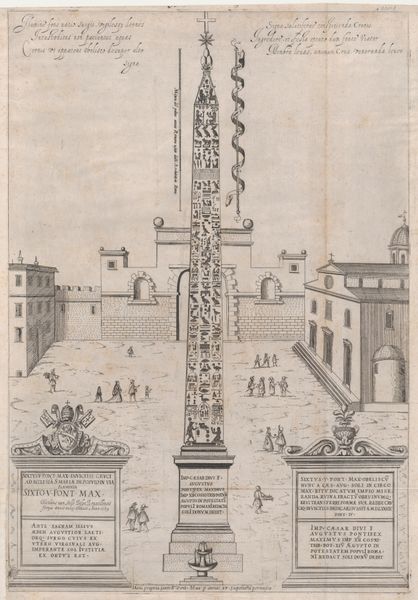
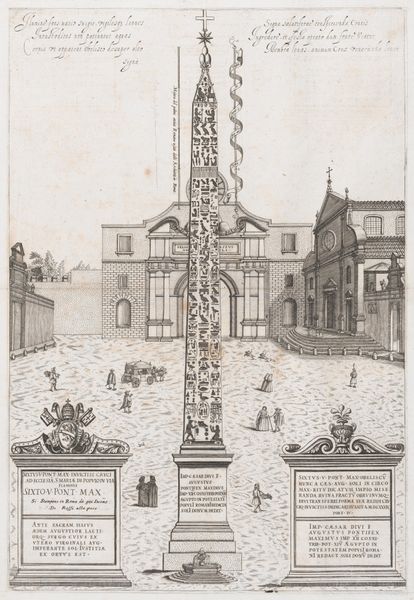
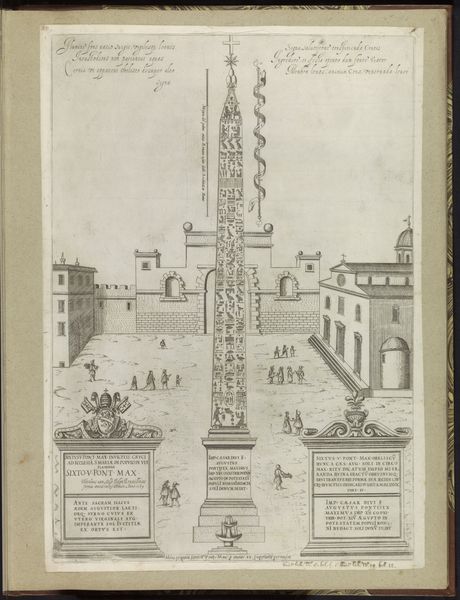
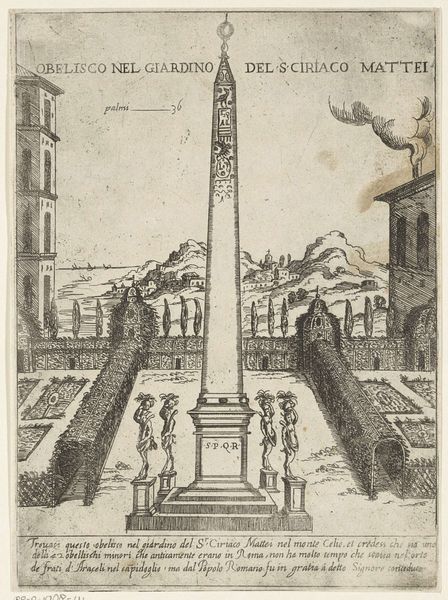
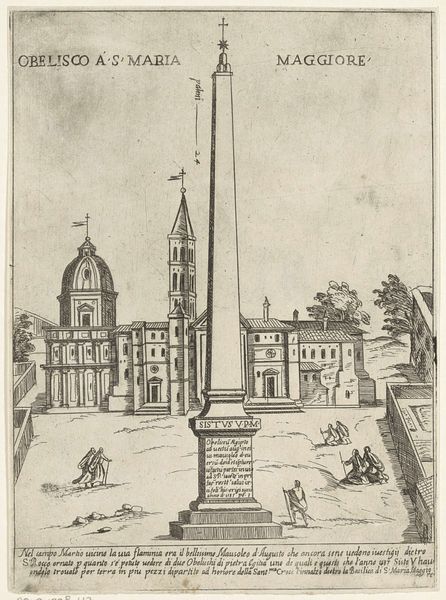
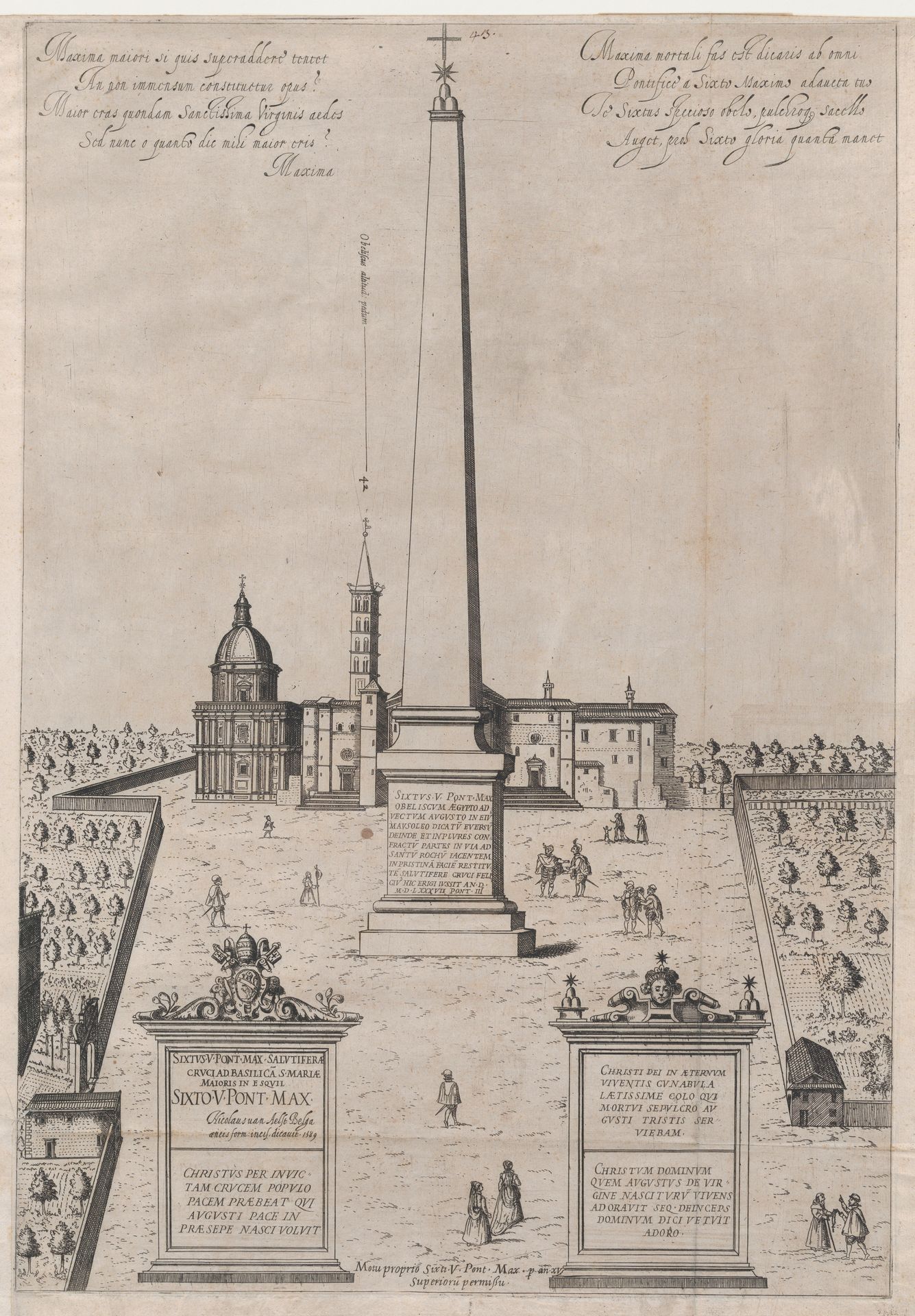
This engraving, titled Speculum Romanae Magnificentiae: The Egyptian Obelisk of Augustus, is a print of an ancient monument set within a highly structured landscape, likely made to document or commemorate its presence. The composition is dominated by the obelisk itself, a stark, vertical form that rises dramatically from its base. The lines are precise, giving the monument a sense of imposing stability, while the surrounding structures, rendered with meticulous detail, offer a sense of depth and scale. Note the inscriptions that are placed on plinths, like smaller monuments, framing the lower third of the composition. The work operates as a symbolic intersection of power, history, and religion. The obelisk, originally an Egyptian artifact, was re-contextualized within Roman imperial power. It's placement in front of religious buildings signifies the layering of religious and imperial authority. The clean lines and ordered space speak to a desire to organize and control both the physical and symbolic landscape. The image prompts us to consider how power is visually constructed and maintained through the control of space and the appropriation of historical symbols.
Speculum Romanae Magnificentiae: The Egyptian Obelisk of Augustus
1589


Artwork details
- Medium
- drawing, print, engraving, architecture
- Dimensions
- sheet: 20 7/8 x 14 7/16 in. (53 x 36.7 cm)
- Location
- Metropolitan Museum of Art, New York, NY
- Copyright
- Public Domain
Tags
drawing
perspective
form
11_renaissance
line
cityscape
italian-renaissance
engraving
architecture
Comments
Be the first to share your thoughts about this work.
About this artwork
This engraving, titled Speculum Romanae Magnificentiae: The Egyptian Obelisk of Augustus, is a print of an ancient monument set within a highly structured landscape, likely made to document or commemorate its presence. The composition is dominated by the obelisk itself, a stark, vertical form that rises dramatically from its base. The lines are precise, giving the monument a sense of imposing stability, while the surrounding structures, rendered with meticulous detail, offer a sense of depth and scale. Note the inscriptions that are placed on plinths, like smaller monuments, framing the lower third of the composition. The work operates as a symbolic intersection of power, history, and religion. The obelisk, originally an Egyptian artifact, was re-contextualized within Roman imperial power. It's placement in front of religious buildings signifies the layering of religious and imperial authority. The clean lines and ordered space speak to a desire to organize and control both the physical and symbolic landscape. The image prompts us to consider how power is visually constructed and maintained through the control of space and the appropriation of historical symbols.
Comments
Be the first to share your thoughts about this work.