About this artwork
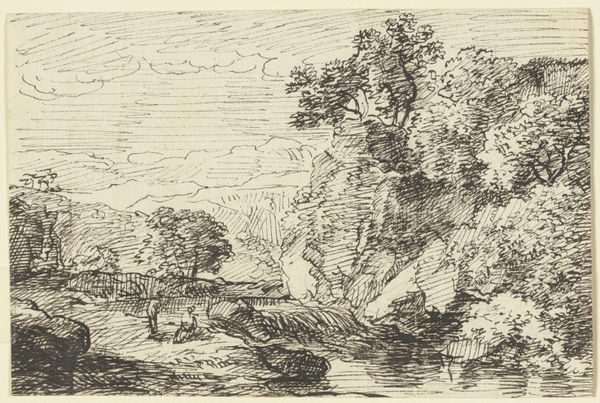
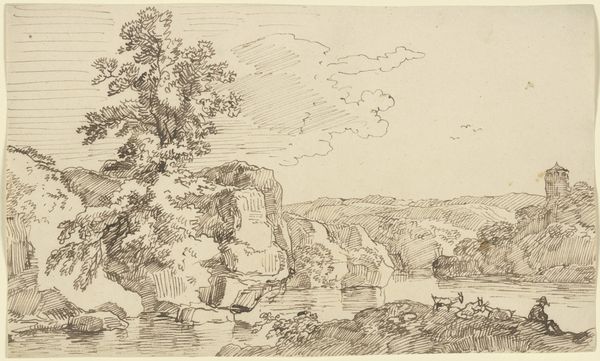
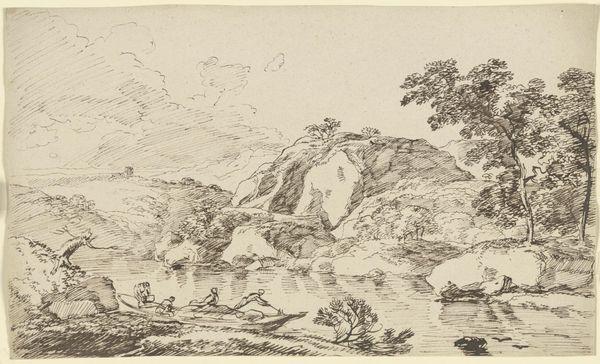
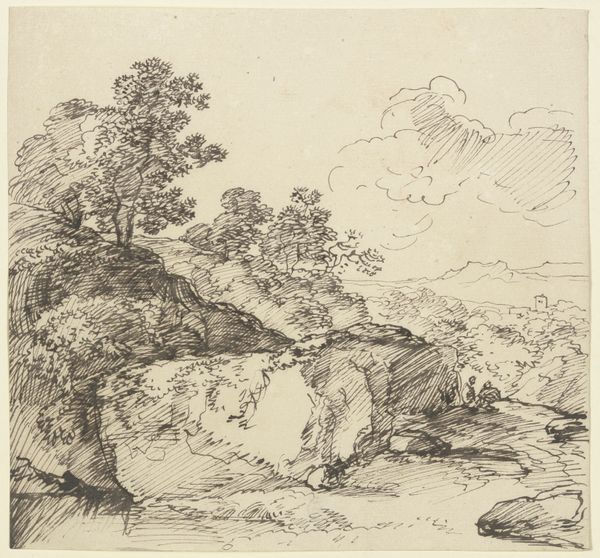
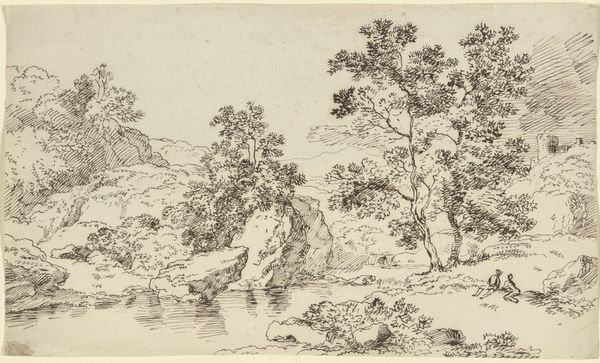
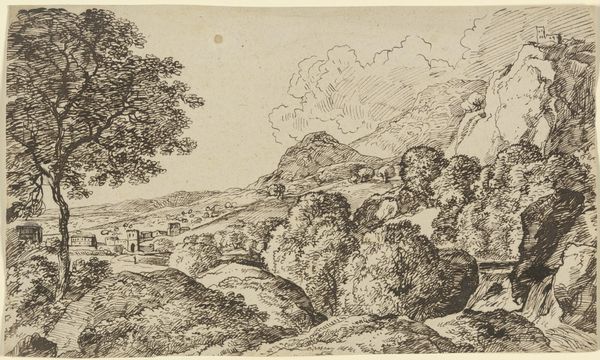
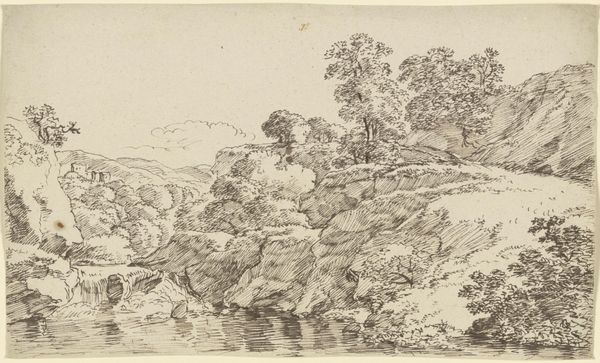
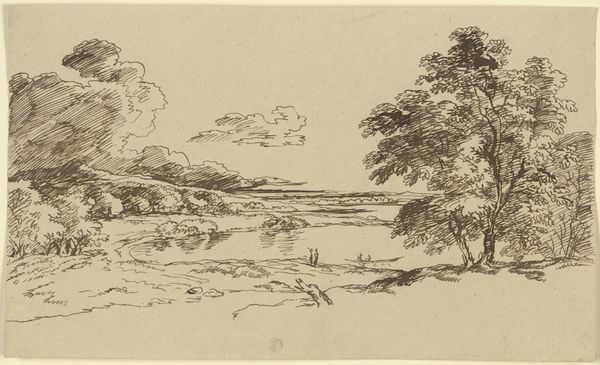
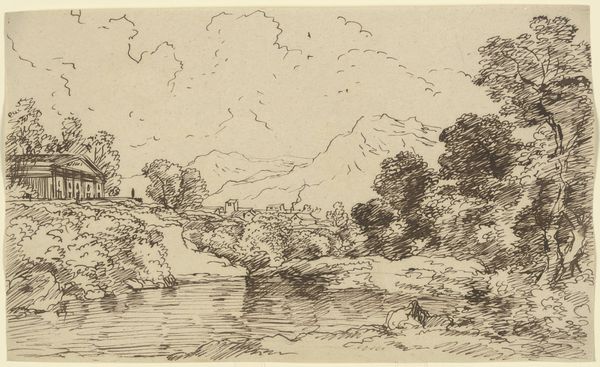
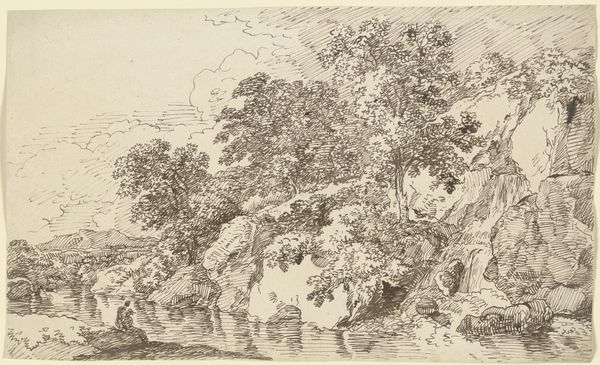
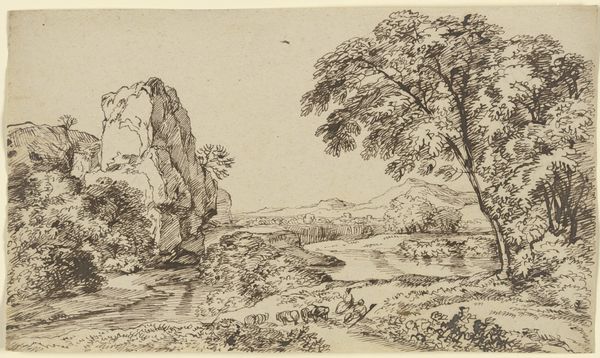
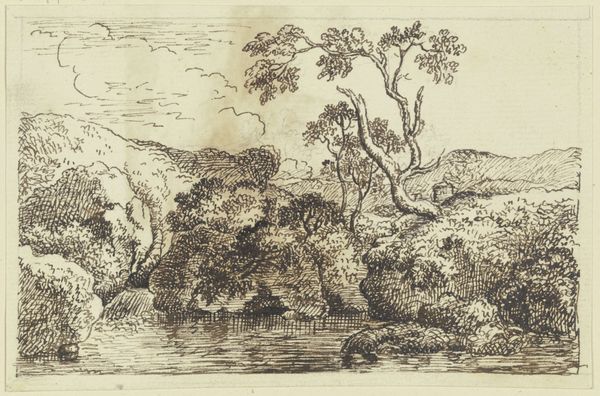
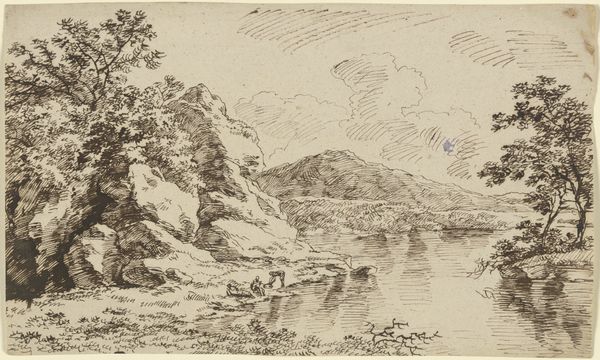
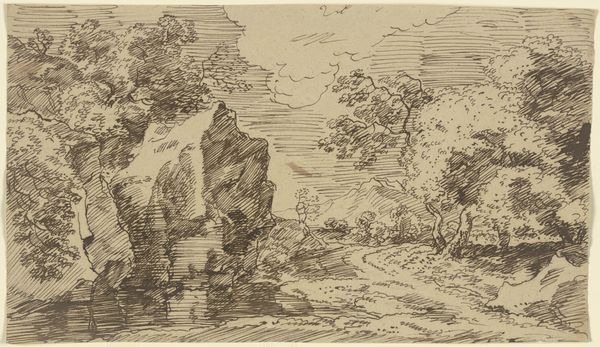
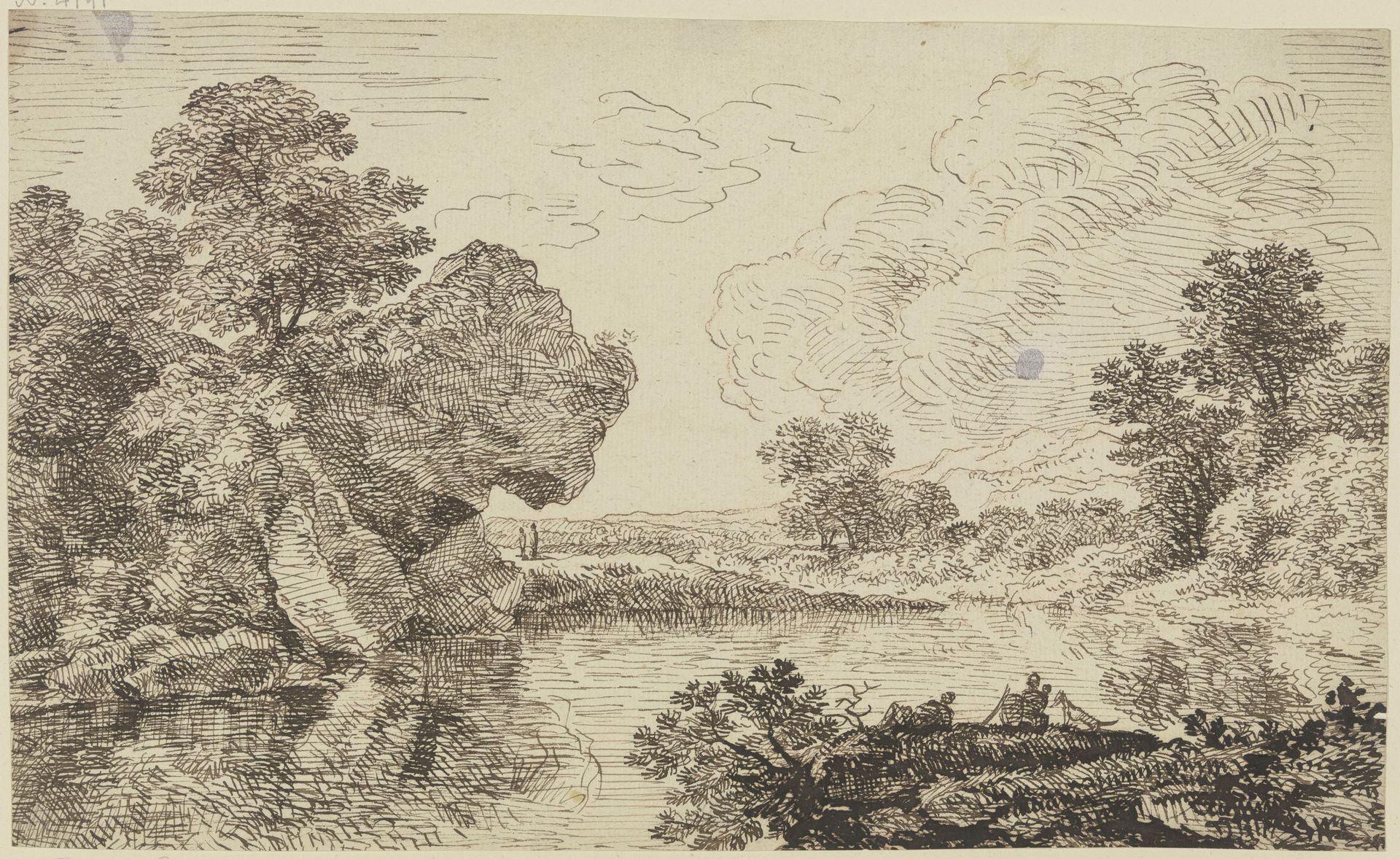
This landscape was etched by Franz Kobell in the late 18th century, presenting us with nature as both a serene vista and a stage for human contemplation. Consider the prominent rock formation, a motif echoing throughout art history, from the sacred mountains in Chinese landscape painting to the rugged cliffs romanticized by Caspar David Friedrich. Here, the rock is not merely a geological feature; it is a silent observer, a guardian of the landscape's secrets. Note the figures. Small. Insignificant almost, placed at the foot of the rock and in a boat on the river, accentuating the sublime, an emotional and psychological space. This echoes back to classical antiquity, where such natural features were often imbued with divine presence, a locus for nymphs and demigods. Over time, this reverence evolved, informing the Romantic era's fascination with nature's untamed power, a power that, though external, resonates deeply within the human psyche. The landscape, therefore, becomes a mirror reflecting our own inner wilderness, a reminder of the elemental forces shaping both the world around us and our very selves. The cycle continues.
Flußlandschaft mit großem Felsen und Staffagefiguren


Artwork details
- Medium
- drawing, red-chalk, print, etching, paper, ink
- Location
- Städel Museum
- Copyright
- Public Domain
Tags
Comments
Share your thoughts
About this artwork
This landscape was etched by Franz Kobell in the late 18th century, presenting us with nature as both a serene vista and a stage for human contemplation. Consider the prominent rock formation, a motif echoing throughout art history, from the sacred mountains in Chinese landscape painting to the rugged cliffs romanticized by Caspar David Friedrich. Here, the rock is not merely a geological feature; it is a silent observer, a guardian of the landscape's secrets. Note the figures. Small. Insignificant almost, placed at the foot of the rock and in a boat on the river, accentuating the sublime, an emotional and psychological space. This echoes back to classical antiquity, where such natural features were often imbued with divine presence, a locus for nymphs and demigods. Over time, this reverence evolved, informing the Romantic era's fascination with nature's untamed power, a power that, though external, resonates deeply within the human psyche. The landscape, therefore, becomes a mirror reflecting our own inner wilderness, a reminder of the elemental forces shaping both the world around us and our very selves. The cycle continues.
Comments
Share your thoughts