drawing, etching
#
drawing
#
animal
#
etching
#
realism
Dimensions: height 236 mm, width 192 mm
Copyright: Rijks Museum: Open Domain
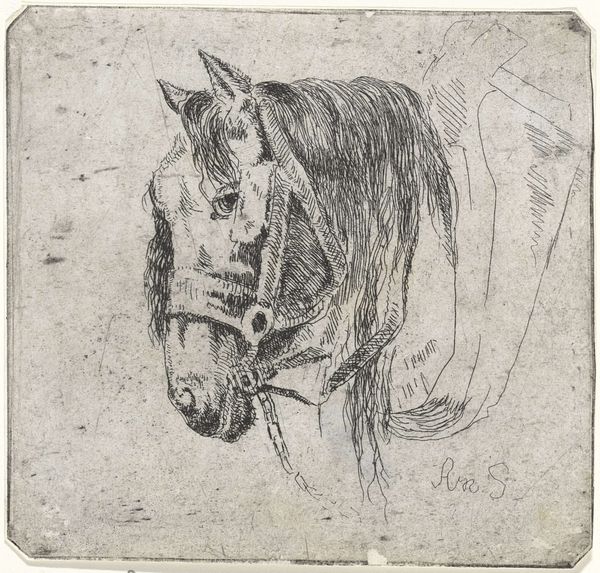
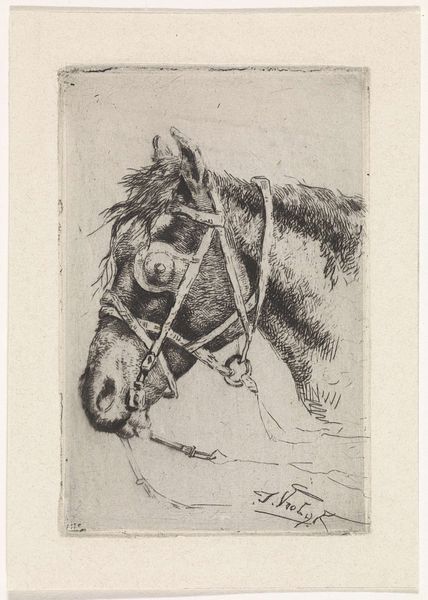
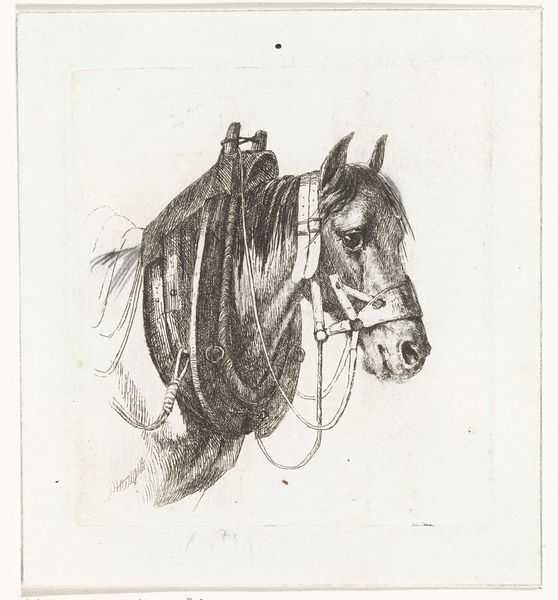
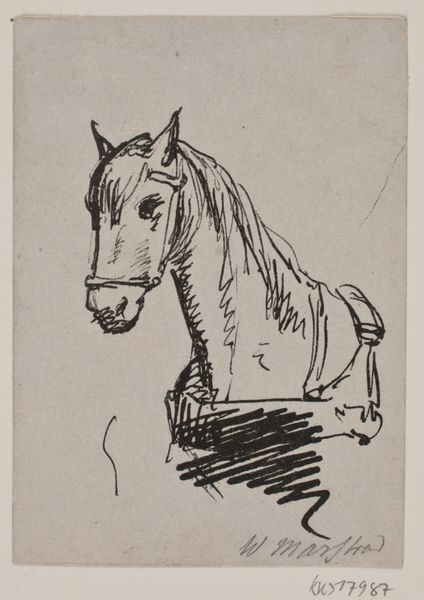
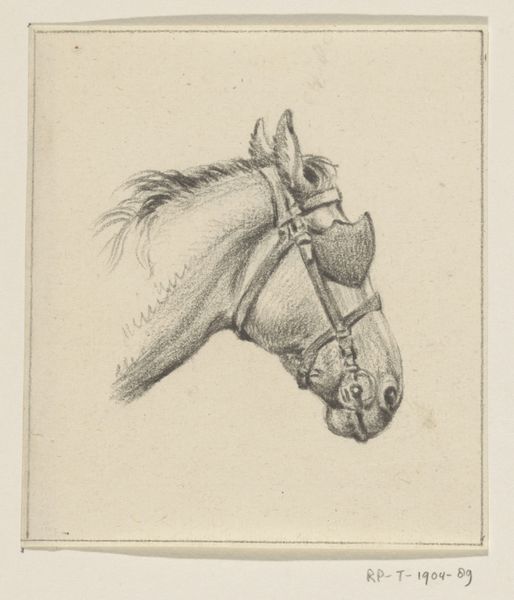
This is Charles Verlat's etching "Ezel en Zvijn". Notice first the distinct contrast between the darker foreground and the lighter background, immediately drawing your eye to the donkey's head. The detailed use of lines creates texture, particularly in the animal’s fur, adding depth to the image. Now, let's think about the donkey. The animal's depiction, in a somewhat unflattering light, appears to challenge conventional artistic representations. Is Verlat critiquing the romanticism often associated with animal portraiture? Furthermore, the inscription “Sobre Laboreux” and “C. Verlat” at the top left, serves as a textual signifier, prompting us to consider the relationship between the visual and linguistic elements within the composition. Consider the broader cultural context of 19th-century art, where traditional academic styles were being questioned. Verlat's work can be seen as engaging with these evolving ideas, pushing the boundaries of artistic expression through its formal qualities and conceptual underpinnings. Art invites ongoing dialogue; interpretations shift as cultural perspectives evolve.
Comments
No comments
Be the first to comment and join the conversation on the ultimate creative platform.
 Collect
 React
React Comment
More like this