About this artwork
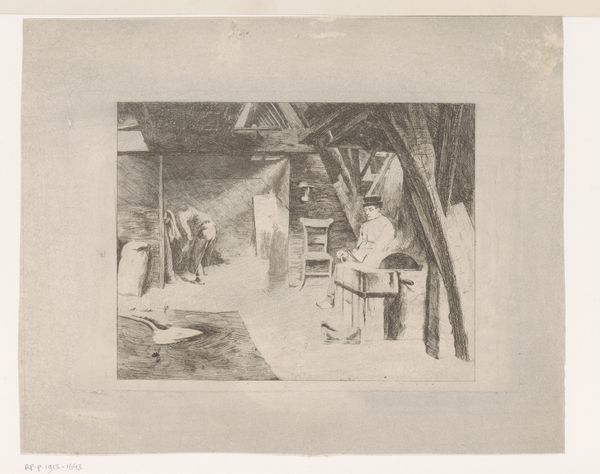
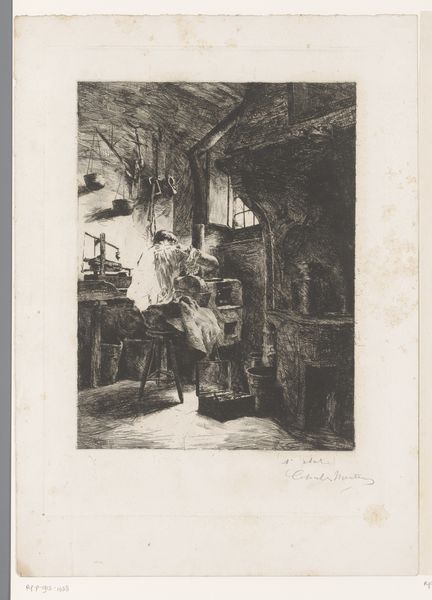
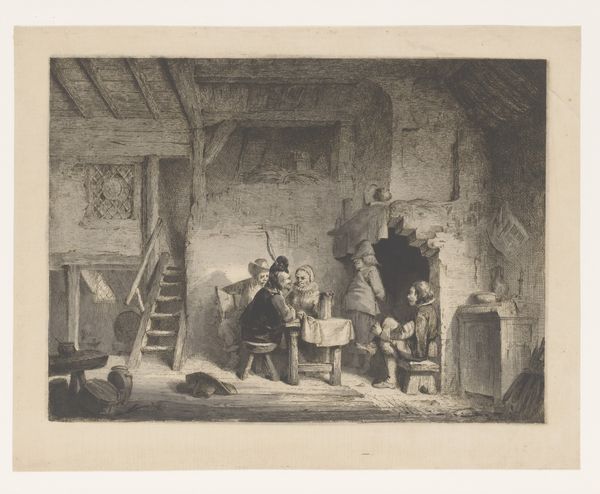
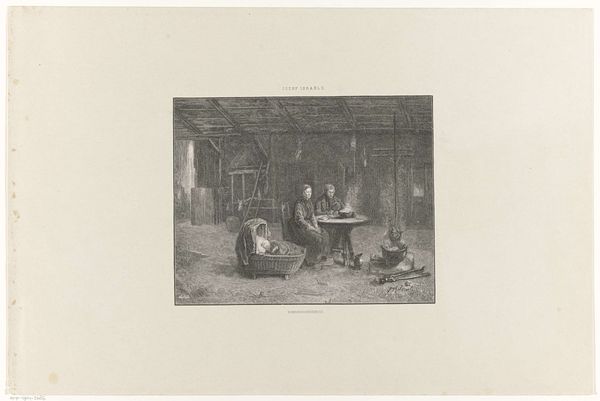
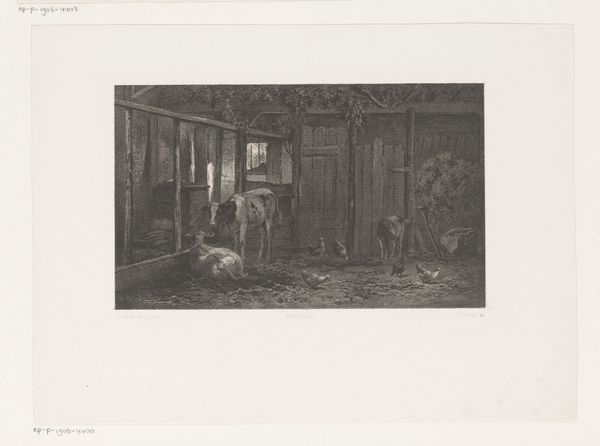
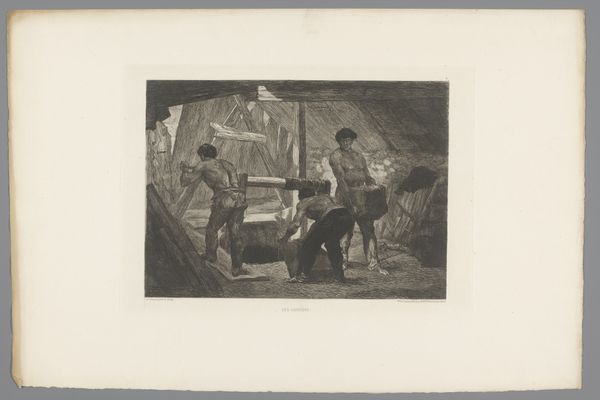
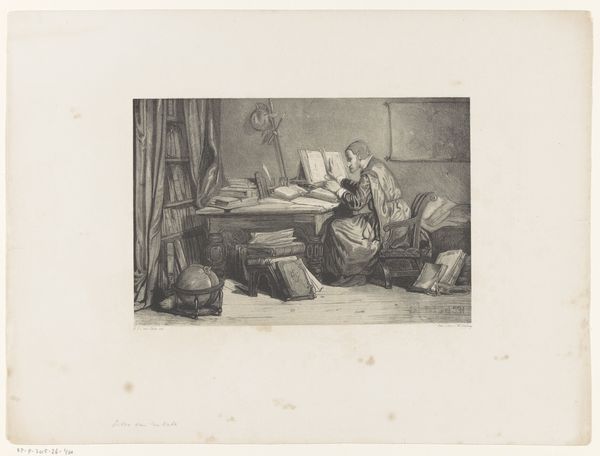
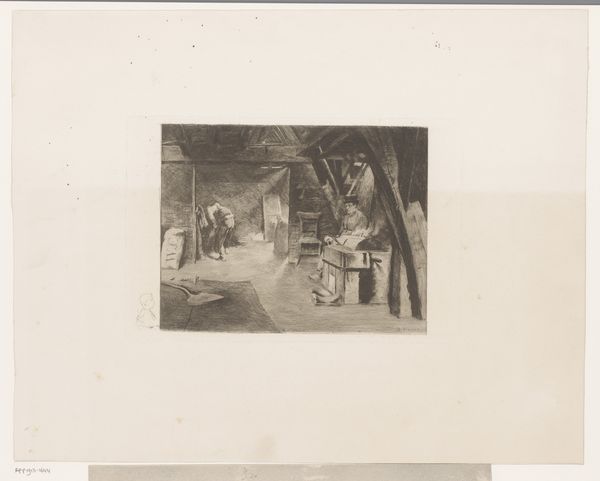
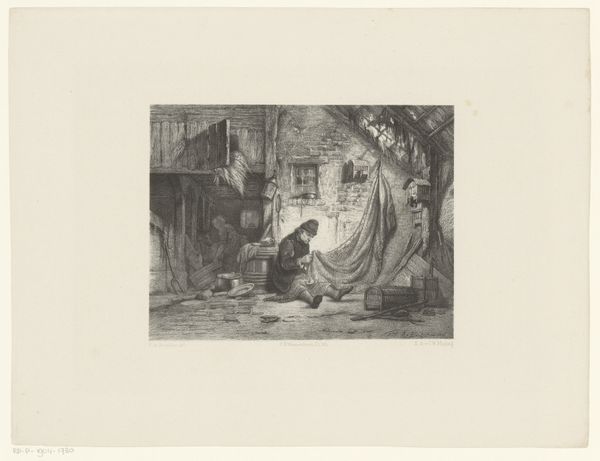
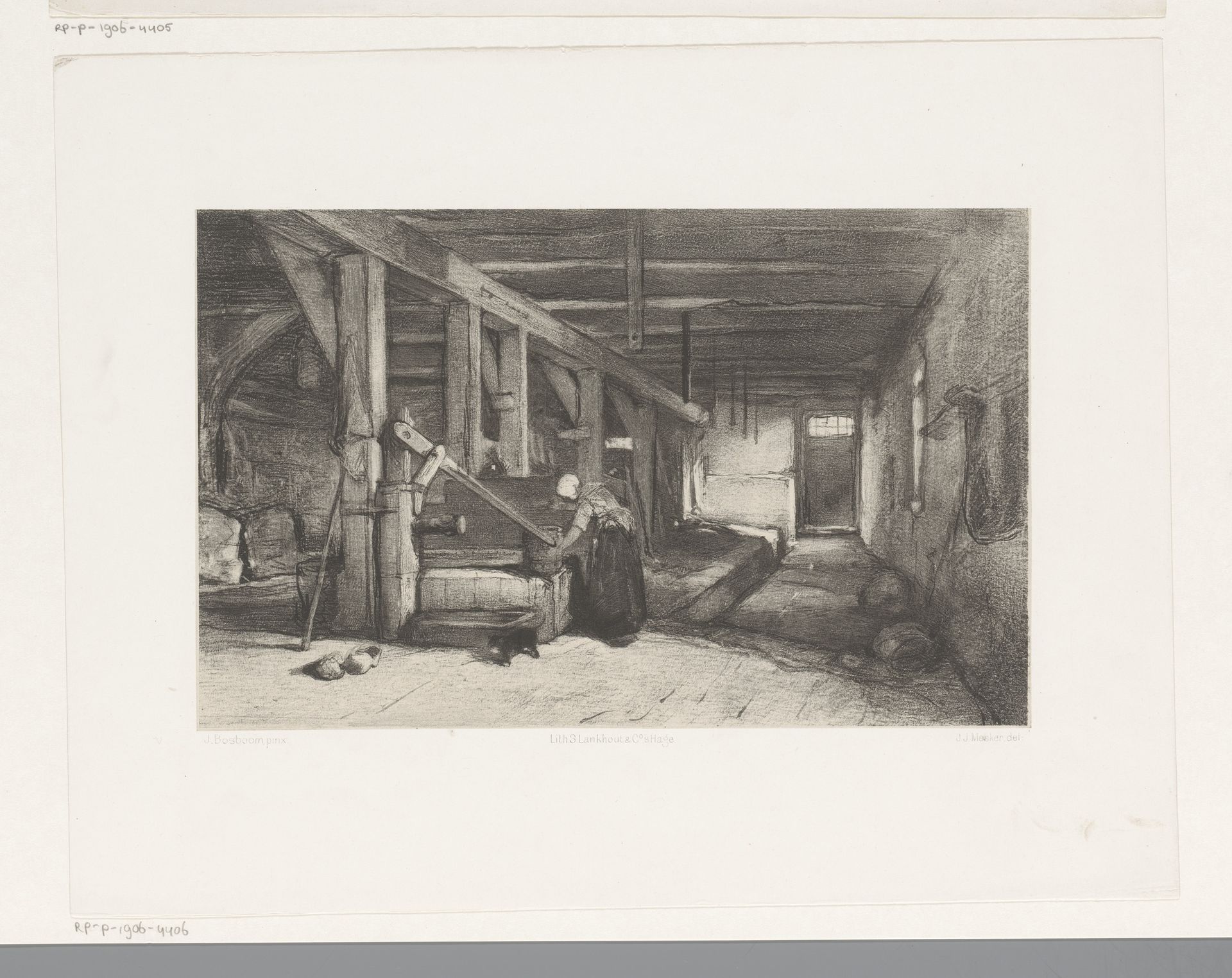
Jan Mesker made this print, Stalinterieur met vrouw bij waterpomp, using etching in the Netherlands. It depicts a woman drawing water inside what appears to be a barn or stable. Looking at the social context of 19th-century Netherlands, we see a society undergoing rapid industrialization and urbanization. The rural population often faced harsh living conditions, and artists like Mesker were part of a broader trend towards realism, seeking to portray everyday life as it was actually lived. The Rijksmuseum, where this print is housed, was founded in 1800, during a time when national museums were becoming important institutions for shaping cultural identity. A work like this would have helped to define a sense of national character rooted in the everyday lives of the working class. To understand this image fully, it is useful to consult historical records, social surveys, and local histories. These resources allow us to gain a more vivid picture of the cultural values that shaped the artist’s vision and the artwork’s reception.

Artwork details
- Medium
- drawing, paper, ink
- Dimensions
- height 272 mm, width 350 mm
- Location
- Rijksmuseum
- Copyright
- Rijks Museum: Open Domain
Tags
drawing
landscape
paper
ink
genre-painting
realism
Comments
Be the first to share your thoughts about this work.
About this artwork
Jan Mesker made this print, Stalinterieur met vrouw bij waterpomp, using etching in the Netherlands. It depicts a woman drawing water inside what appears to be a barn or stable. Looking at the social context of 19th-century Netherlands, we see a society undergoing rapid industrialization and urbanization. The rural population often faced harsh living conditions, and artists like Mesker were part of a broader trend towards realism, seeking to portray everyday life as it was actually lived. The Rijksmuseum, where this print is housed, was founded in 1800, during a time when national museums were becoming important institutions for shaping cultural identity. A work like this would have helped to define a sense of national character rooted in the everyday lives of the working class. To understand this image fully, it is useful to consult historical records, social surveys, and local histories. These resources allow us to gain a more vivid picture of the cultural values that shaped the artist’s vision and the artwork’s reception.
Comments
Be the first to share your thoughts about this work.