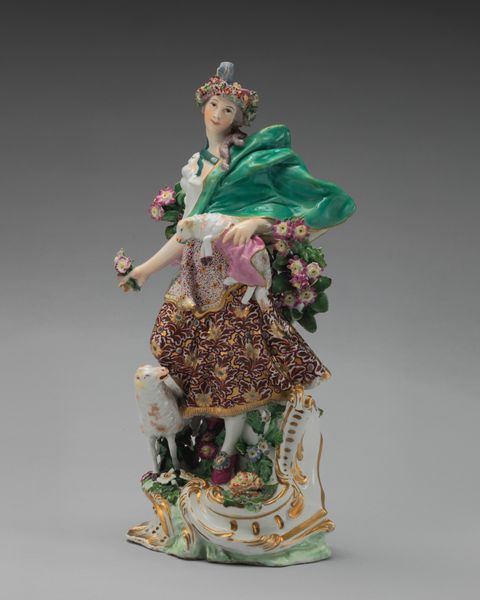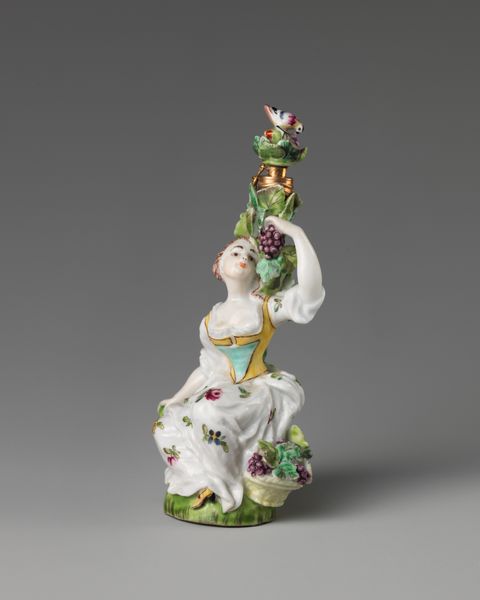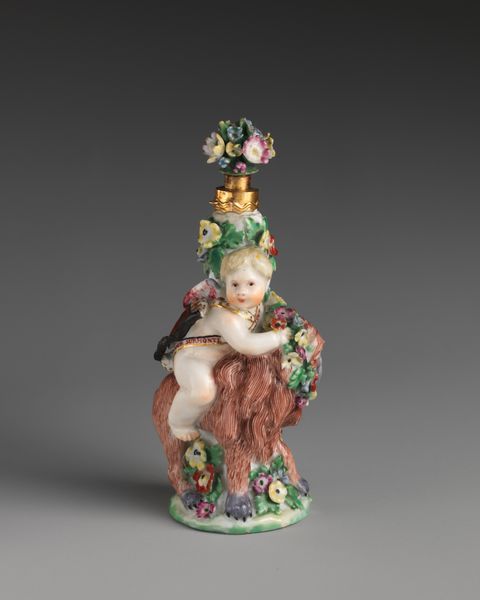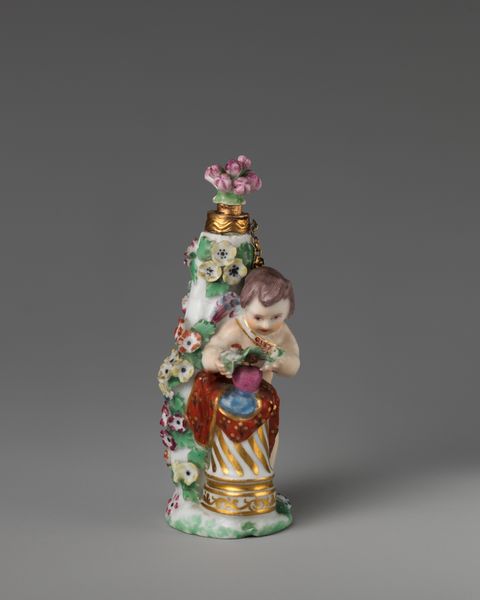
1760 - 1770
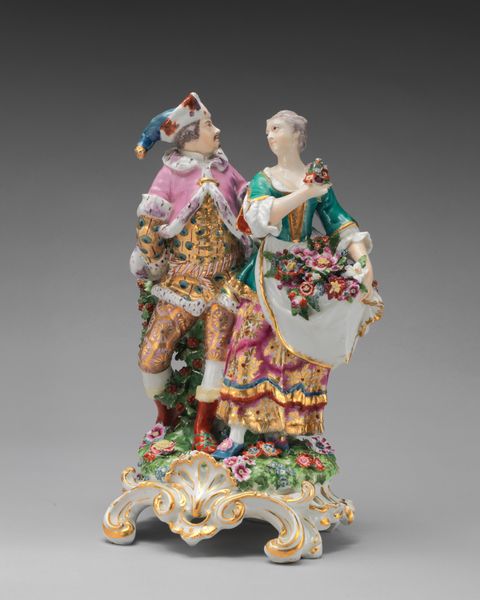
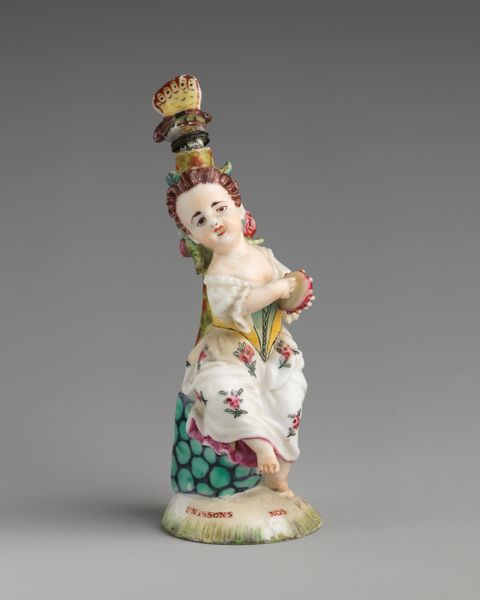
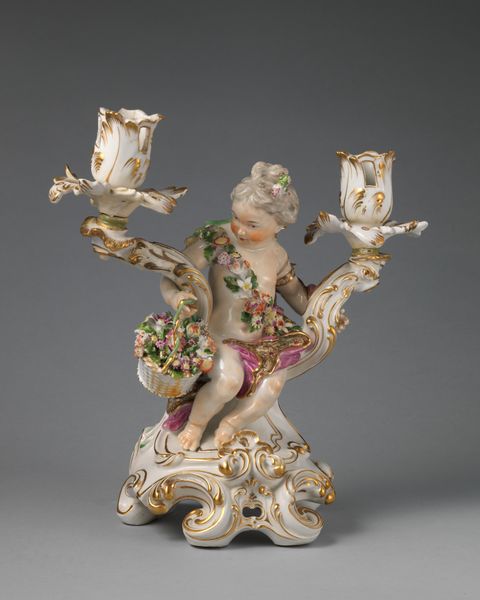
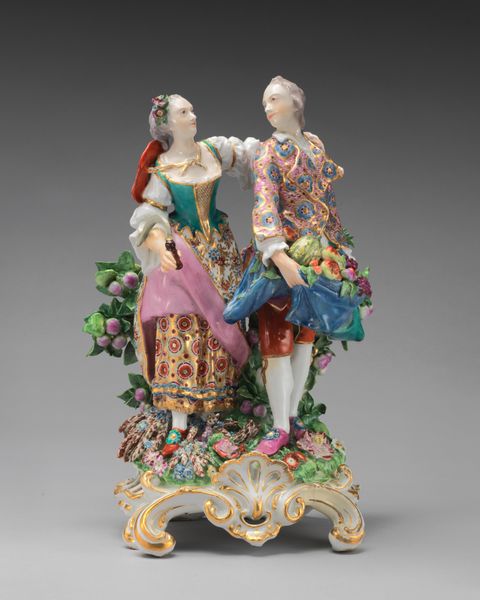
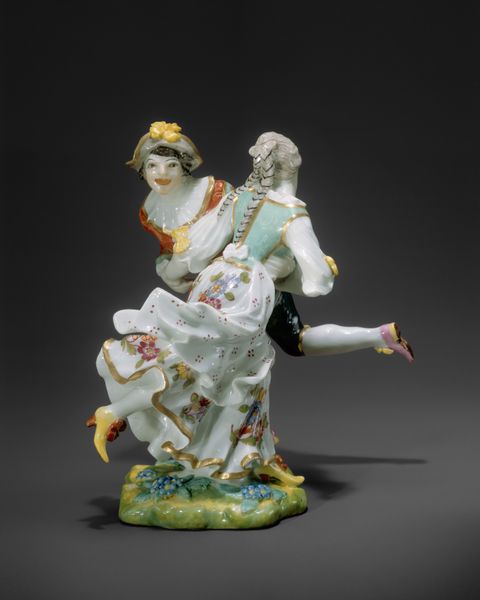
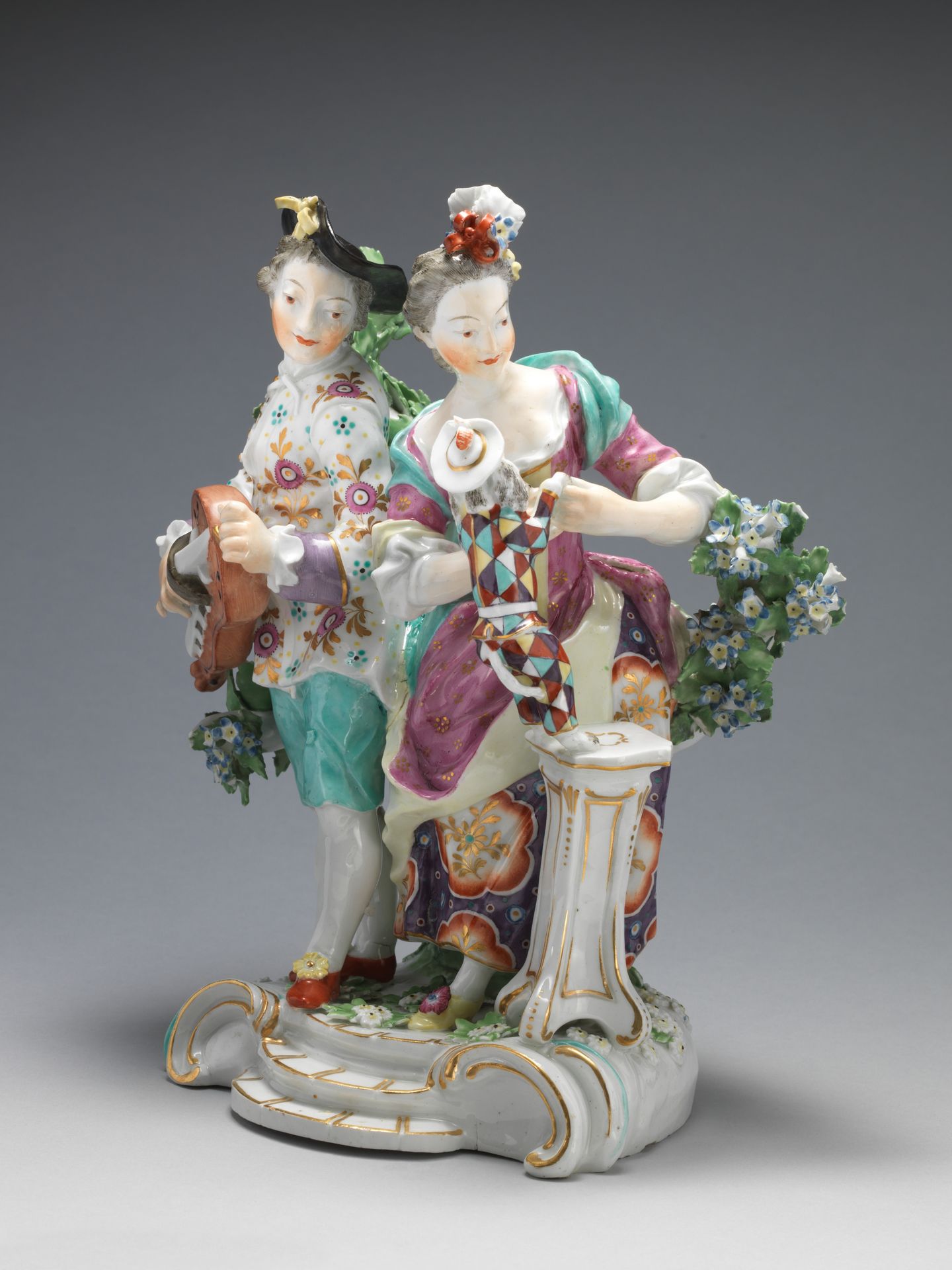
Youth playing hurdy-gurdy, girl teaching dog dressed as harlequin to dance

Derby Porcelain Manufactory
1751 - 1785
The Metropolitan Museum of Art
Metropolitan Museum of Art, New York, NYListen to curator's interpretation
Curatorial notes
Around 1770, the Derby Porcelain Manufactory created this porcelain tableau of youthful play. Note the dog dressed as a harlequin. This motif harkens back to the Commedia dell’Arte, where Harlequin was a mischievous, shape-shifting servant, a symbol of wit and agility. Consider how Harlequin, as a character, reappears across centuries. From the Italian Renaissance stage to Picasso’s melancholy figures, he embodies duality, existing between joy and sorrow. This duality touches upon the human psyche. Harlequin is a form of catharsis, a mask that allows us to confront the complexities of human nature through laughter. In this porcelain, the harlequin dog is a symbol of the topsy-turvy world of play. Here the animal is taught to dance, a parody of human artifice. The underlying emotional tone is powerful: the playful image is able to unleash subconscious forces in its viewers. Symbols like Harlequin do not progress linearly; they resurface, evolve, and take on new meanings, revealing the cyclical nature of cultural memory.