About this artwork
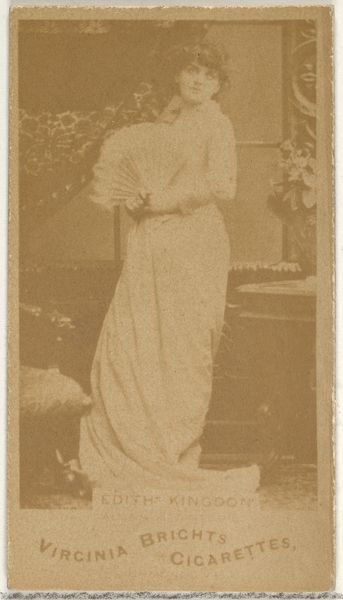
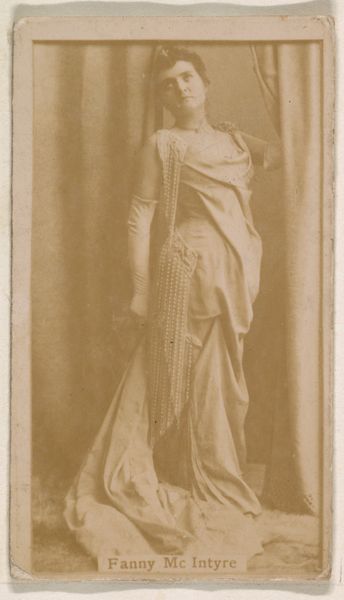
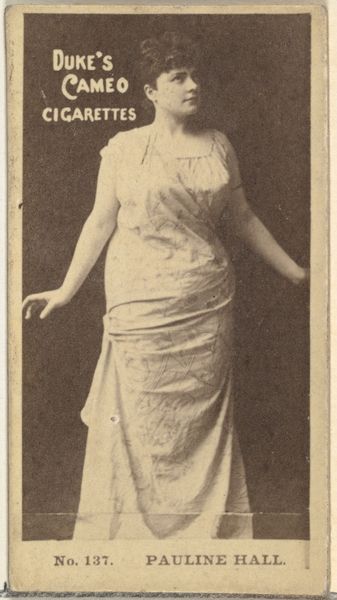
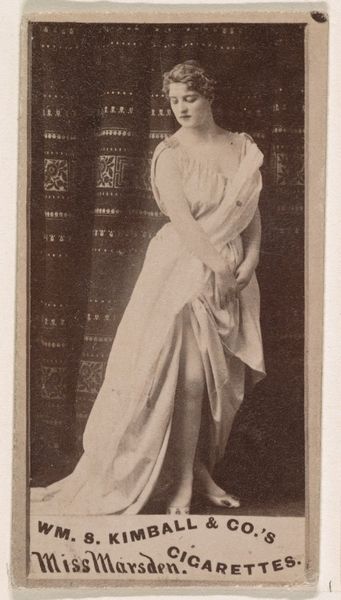
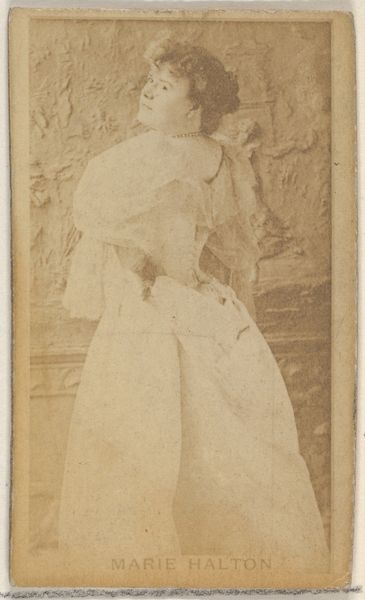
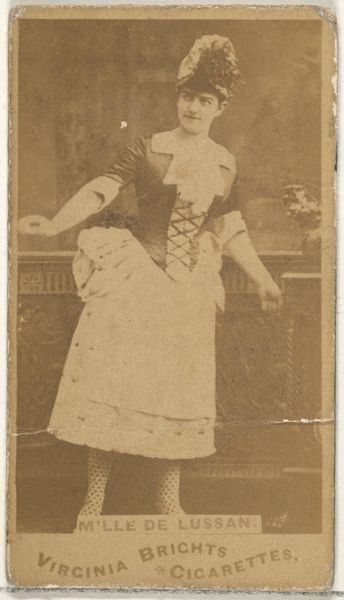
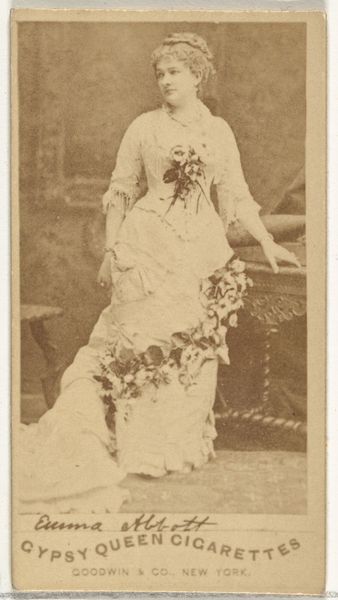
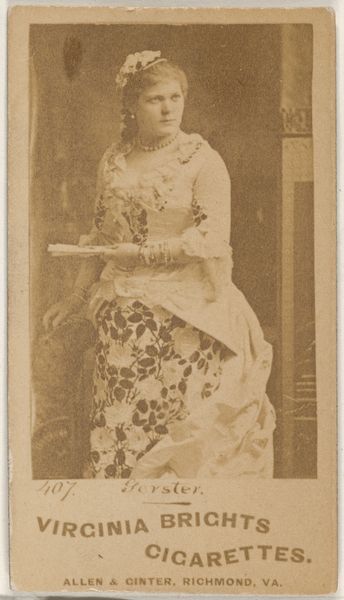
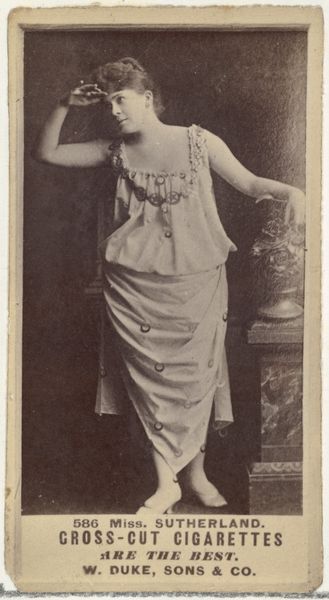
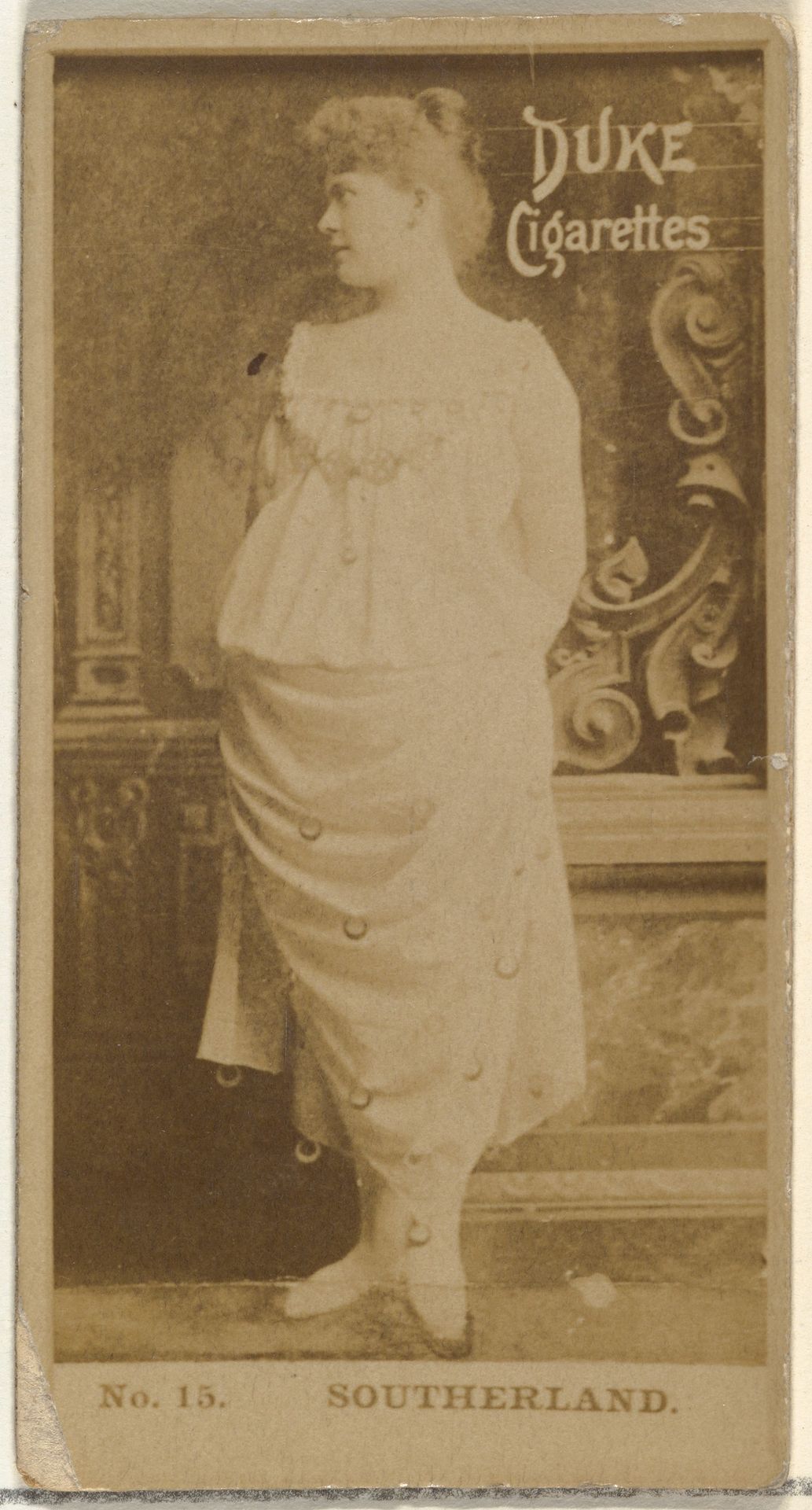
This card, "Miss Southerland," was printed by W. Duke, Sons & Co., sometime between 1870 and 1920, as a promotional item tucked into packs of Duke Cigarettes. It’s made of paper, a humble material made precious by the image printed on it. Consider the industrial processes involved in its production. Paper manufacture, printing, and distribution - all part of the burgeoning consumer culture of the late 19th century. The sepia tone, achieved through mass printing, gives the image a sense of nostalgia, despite its origins in advertising. The card's small size speaks to its intended use: a collectible item, easily pocketed and traded. The very act of mass-producing and distributing these cards alongside cigarettes reveals a shift in how art and commerce were intertwined. It raises questions about labor, consumption, and the blurring lines between fine art and everyday life. This little card isn't just a picture; it's a window into a world where art became a commodity, a means to sell a product, and a reflection of societal values.
Card Number 15, Miss Southerland, from the Actors and Actresses series (N145-6) issued by Duke Sons & Co. to promote Duke Cigarettes
1880s

W. Duke, Sons & Co.
1870 - 1920
The Metropolitan Museum of Art
Metropolitan Museum of Art, New York, NYArtwork details
- Medium
- albumen-print, print, photography, albumen-print
- Dimensions
- Sheet: 2 11/16 × 1 3/8 in. (6.8 × 3.5 cm)
- Location
- Metropolitan Museum of Art, New York, NY
- Copyright
- Public Domain
Tags
Comments
Share your thoughts
About this artwork
This card, "Miss Southerland," was printed by W. Duke, Sons & Co., sometime between 1870 and 1920, as a promotional item tucked into packs of Duke Cigarettes. It’s made of paper, a humble material made precious by the image printed on it. Consider the industrial processes involved in its production. Paper manufacture, printing, and distribution - all part of the burgeoning consumer culture of the late 19th century. The sepia tone, achieved through mass printing, gives the image a sense of nostalgia, despite its origins in advertising. The card's small size speaks to its intended use: a collectible item, easily pocketed and traded. The very act of mass-producing and distributing these cards alongside cigarettes reveals a shift in how art and commerce were intertwined. It raises questions about labor, consumption, and the blurring lines between fine art and everyday life. This little card isn't just a picture; it's a window into a world where art became a commodity, a means to sell a product, and a reflection of societal values.
Comments
Share your thoughts