About this artwork
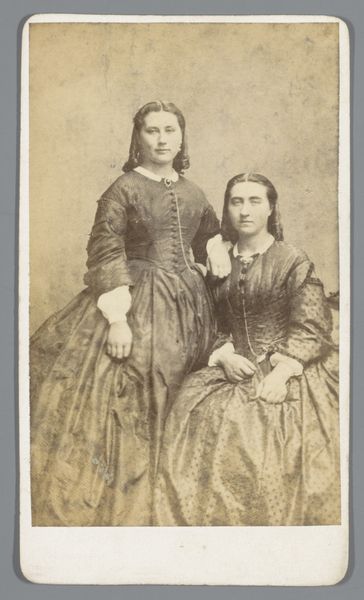
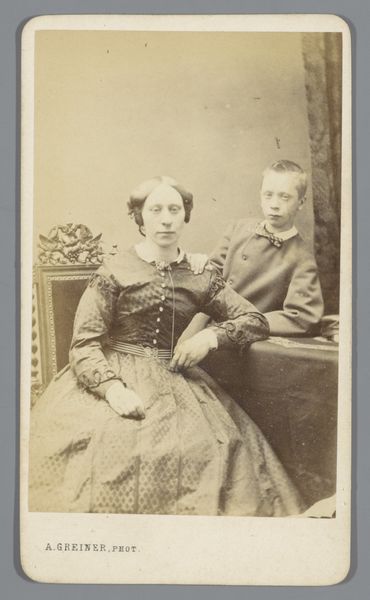
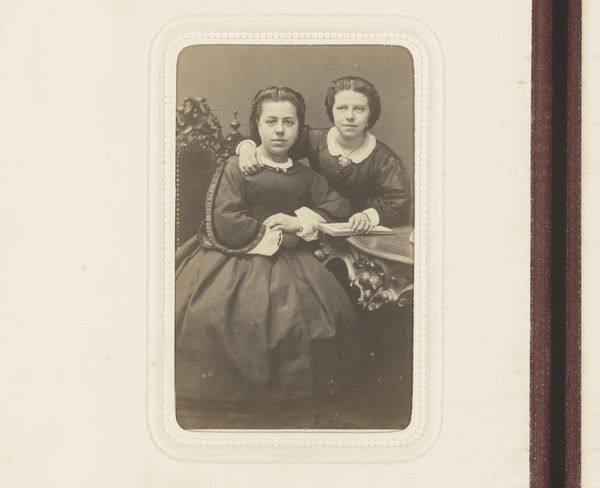
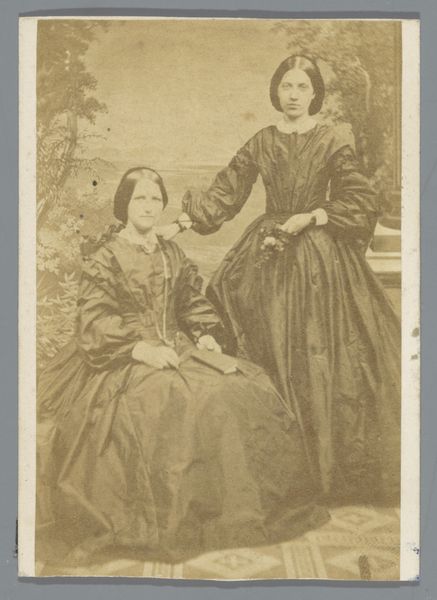
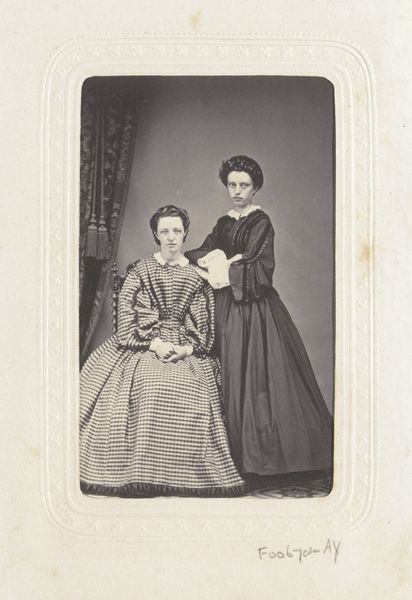
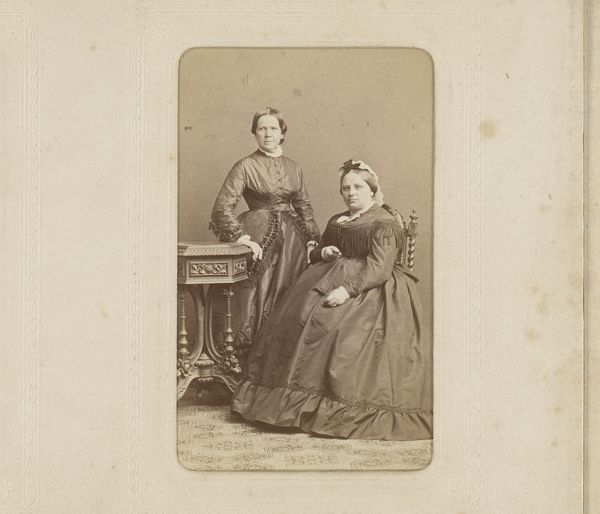
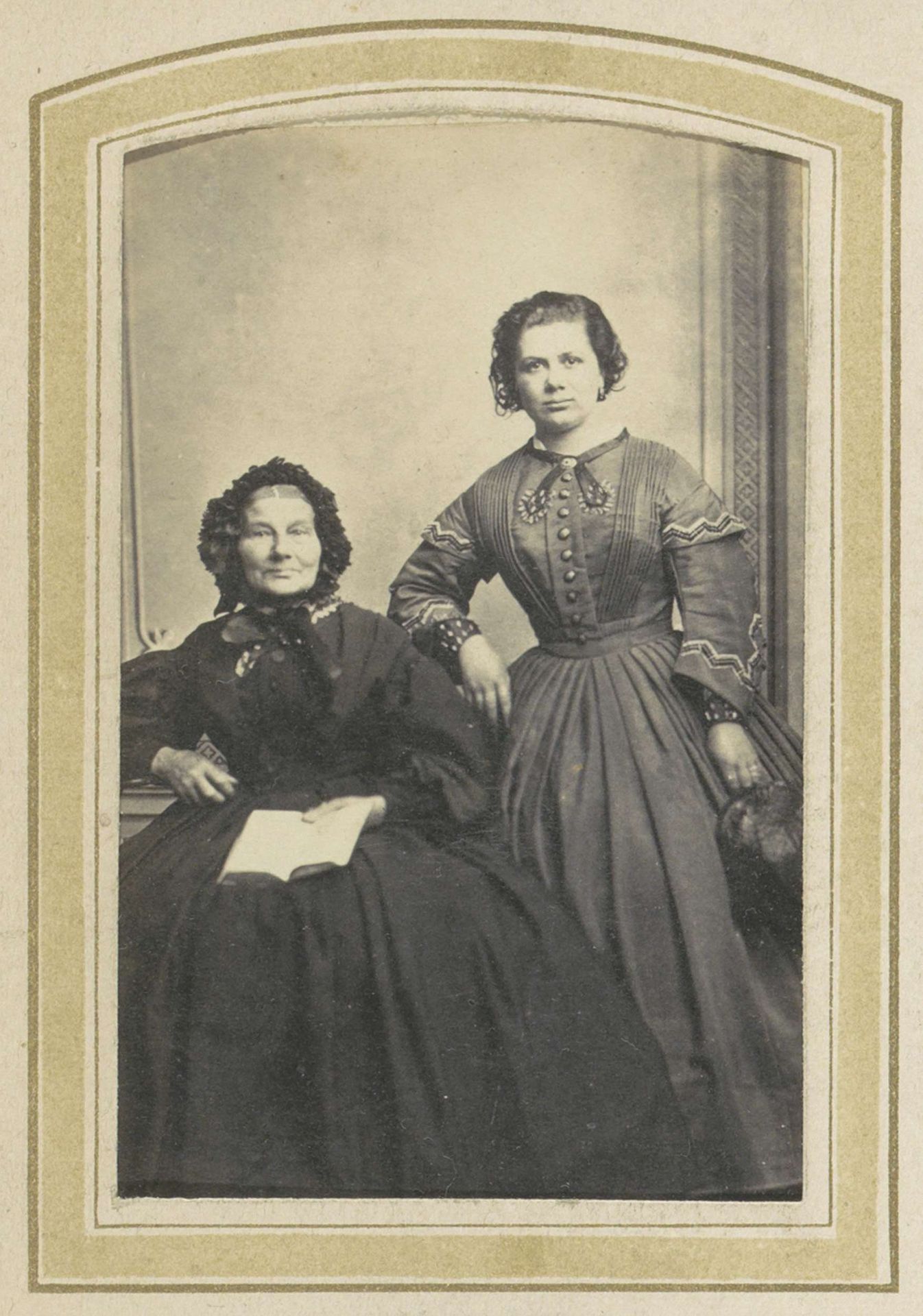
A. Böeseken created this portrait of two women in dresses with a book and a handbag at an unknown date. Böeseken lived in a time when photography was increasingly accessible, yet portraiture remained a carefully constructed performance of identity and status. Here, the two women, likely mother and daughter, present themselves with the accoutrements of middle-class respectability: modest yet fashionable dresses, a book suggesting literacy and learning, and the composed demeanor expected of women in that era. The materiality of photography is important here: this small, intimate image would have been kept as a memento, a physical reminder of connection. Consider the power dynamics at play. The elder woman, seated and holding the book, occupies a position of authority, while the younger woman stands beside her, hand resting gently on the chair. The photo offers a glimpse into the complex interplay of tradition, aspiration, and affection that shaped women's lives. How does this image resonate with our understanding of family, memory, and the enduring power of the photographic portrait?
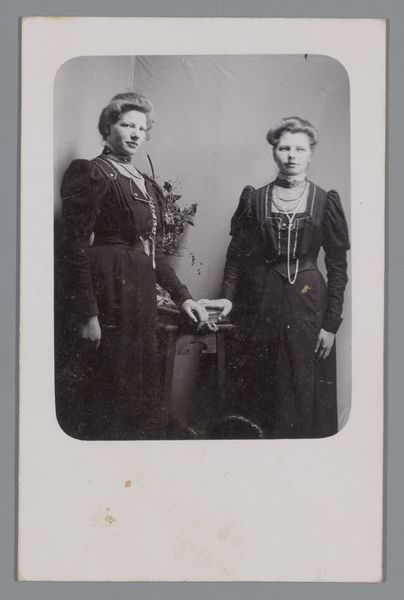
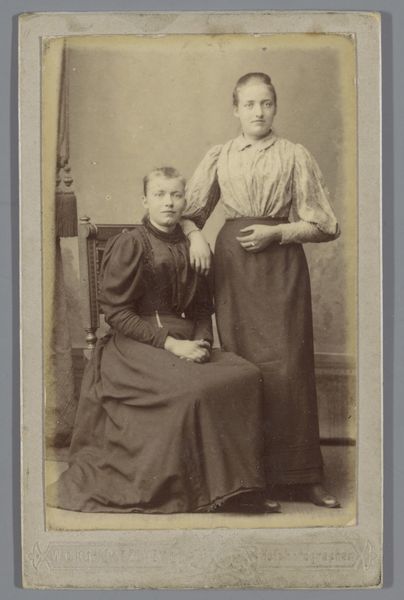
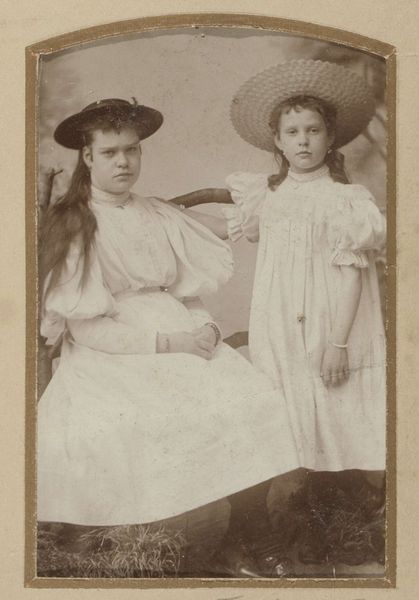
Portret van twee vrouwen in jurken met een boek en een handtas 1858 - 1890

Artwork details
- Medium
- paper, photography, albumen-print
- Dimensions
- height 88 mm, width 58 mm, height 95 mm, width 61 mm
- Copyright
- Rijks Museum: Open Domain
Tags
portrait
book
charcoal drawing
paper
photography
historical photography
group-portraits
19th century
dress
albumen-print
Comments
No comments
About this artwork
A. Böeseken created this portrait of two women in dresses with a book and a handbag at an unknown date. Böeseken lived in a time when photography was increasingly accessible, yet portraiture remained a carefully constructed performance of identity and status. Here, the two women, likely mother and daughter, present themselves with the accoutrements of middle-class respectability: modest yet fashionable dresses, a book suggesting literacy and learning, and the composed demeanor expected of women in that era. The materiality of photography is important here: this small, intimate image would have been kept as a memento, a physical reminder of connection. Consider the power dynamics at play. The elder woman, seated and holding the book, occupies a position of authority, while the younger woman stands beside her, hand resting gently on the chair. The photo offers a glimpse into the complex interplay of tradition, aspiration, and affection that shaped women's lives. How does this image resonate with our understanding of family, memory, and the enduring power of the photographic portrait?
Comments
No comments