About this artwork
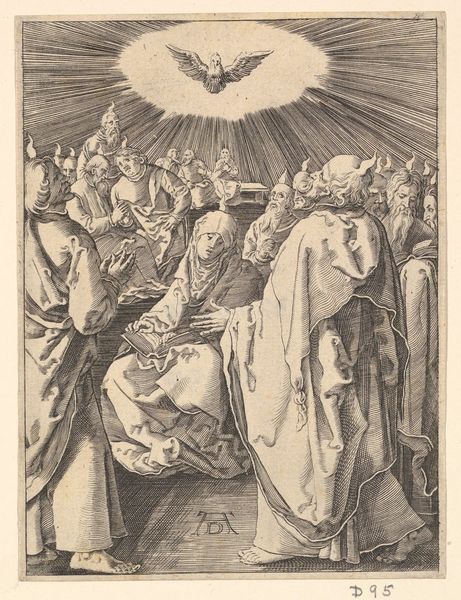
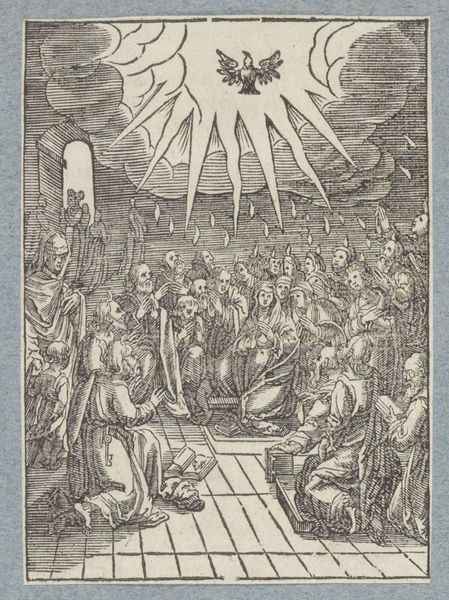
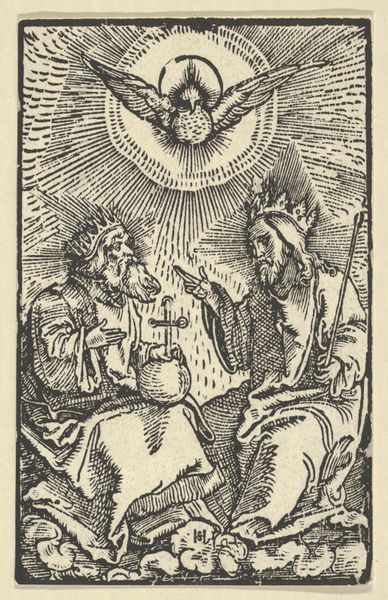
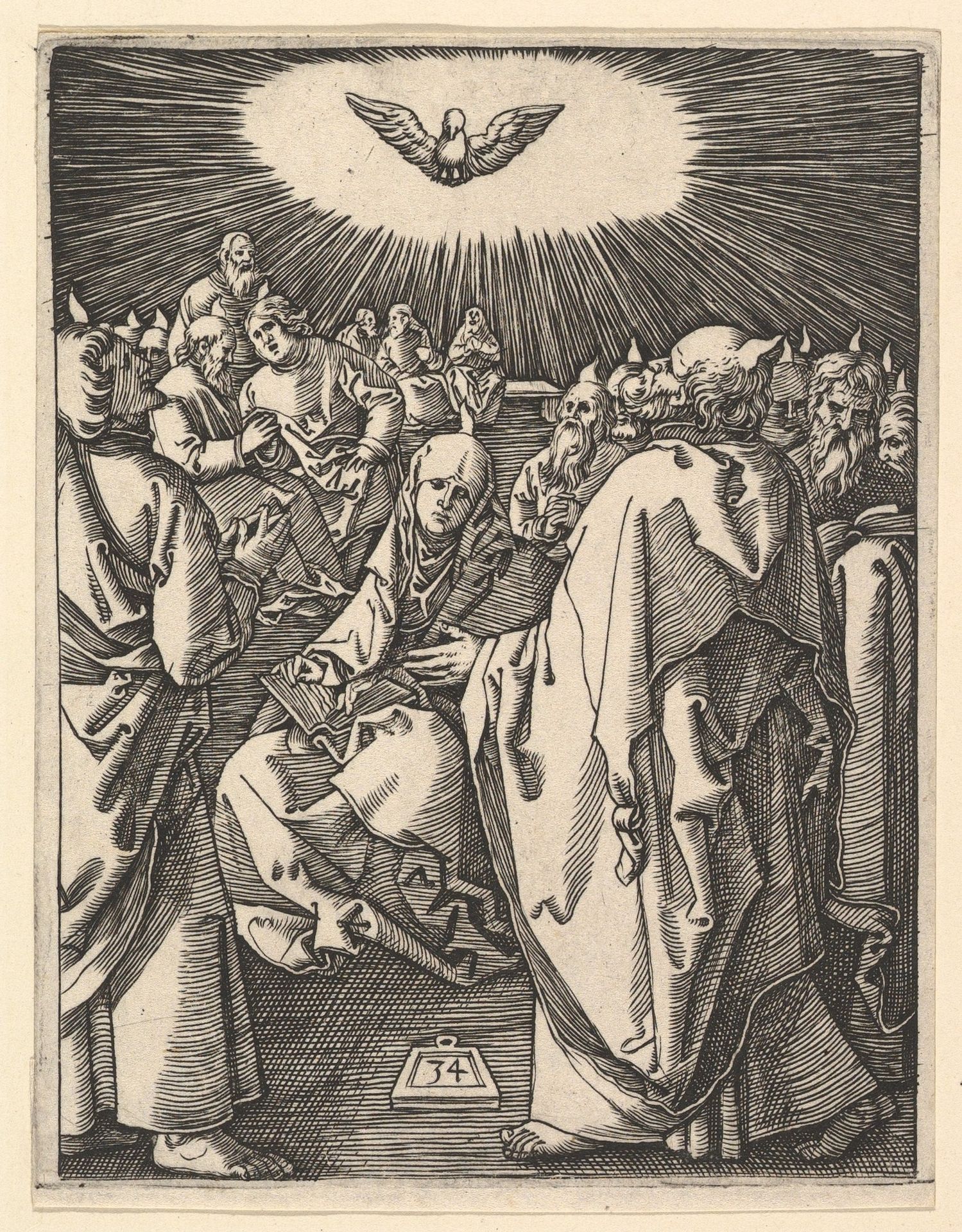
Marcantonio Raimondi made this engraving of "The Pentecost" after a design by the famous German artist Albrecht Dürer. Produced in Italy in the early 16th century, it depicts the moment when the Holy Spirit descended upon the Virgin Mary and the apostles. The image's visual codes, like the dove representing the Holy Spirit and the radiating lines suggesting divine light, draw heavily on established Christian iconography. But it's worth noting that printmaking at this time played a crucial role in disseminating religious ideas, especially during the Reformation. Raimondi’s work, made for the market, helped to spread the imagery of the northern Renaissance across Europe. Understanding this work fully requires us to examine the complex relationship between artists, printmakers, and the institutions of religion and commerce. We can consult period documents, religious texts, and art market records to further illuminate the social conditions that shaped its production and reception. By understanding the context, we can better understand how art reflects and influences cultural values.
The Pentecost; the Holy Dove appears above, below sits the Virgin surrounded by Apostles, after Dürer
1495 - 1539

Marcantonio Raimondi
1475 - 1534
The Metropolitan Museum of Art
Metropolitan Museum of Art, New York, NYArtwork details
- Medium
- drawing, print, engraving
- Dimensions
- Sheet: 5 3/16 × 3 15/16 in. (13.1 × 10 cm)
- Location
- Metropolitan Museum of Art, New York, NY
- Copyright
- Public Domain
Tags
Comments
Share your thoughts
About this artwork
Marcantonio Raimondi made this engraving of "The Pentecost" after a design by the famous German artist Albrecht Dürer. Produced in Italy in the early 16th century, it depicts the moment when the Holy Spirit descended upon the Virgin Mary and the apostles. The image's visual codes, like the dove representing the Holy Spirit and the radiating lines suggesting divine light, draw heavily on established Christian iconography. But it's worth noting that printmaking at this time played a crucial role in disseminating religious ideas, especially during the Reformation. Raimondi’s work, made for the market, helped to spread the imagery of the northern Renaissance across Europe. Understanding this work fully requires us to examine the complex relationship between artists, printmakers, and the institutions of religion and commerce. We can consult period documents, religious texts, and art market records to further illuminate the social conditions that shaped its production and reception. By understanding the context, we can better understand how art reflects and influences cultural values.
Comments
Share your thoughts