About this artwork
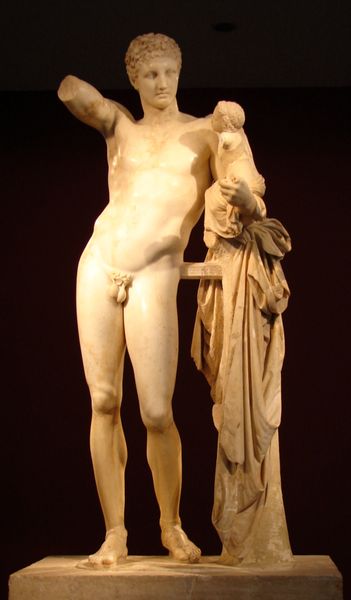
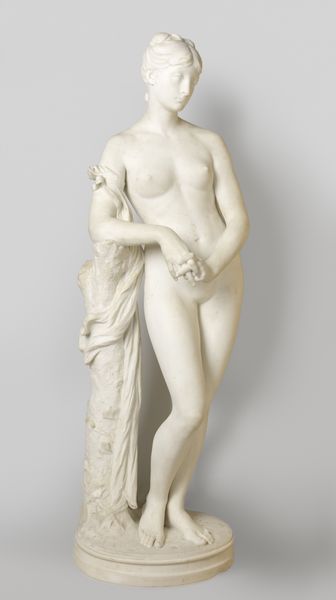
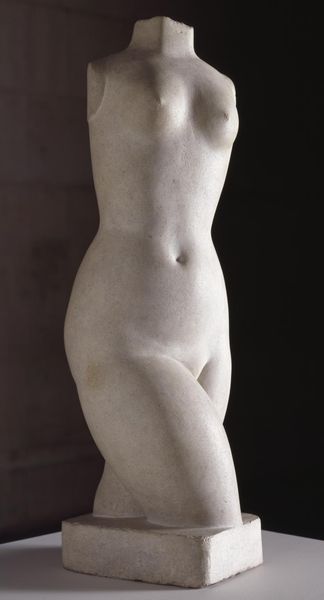
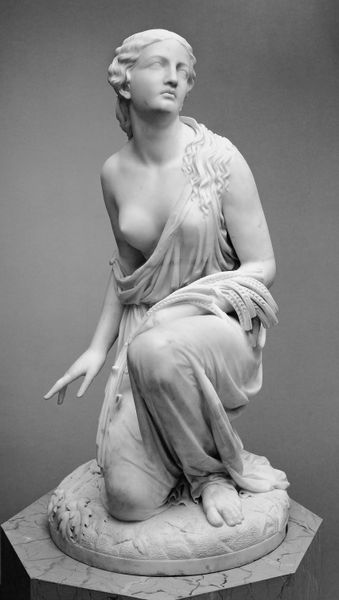
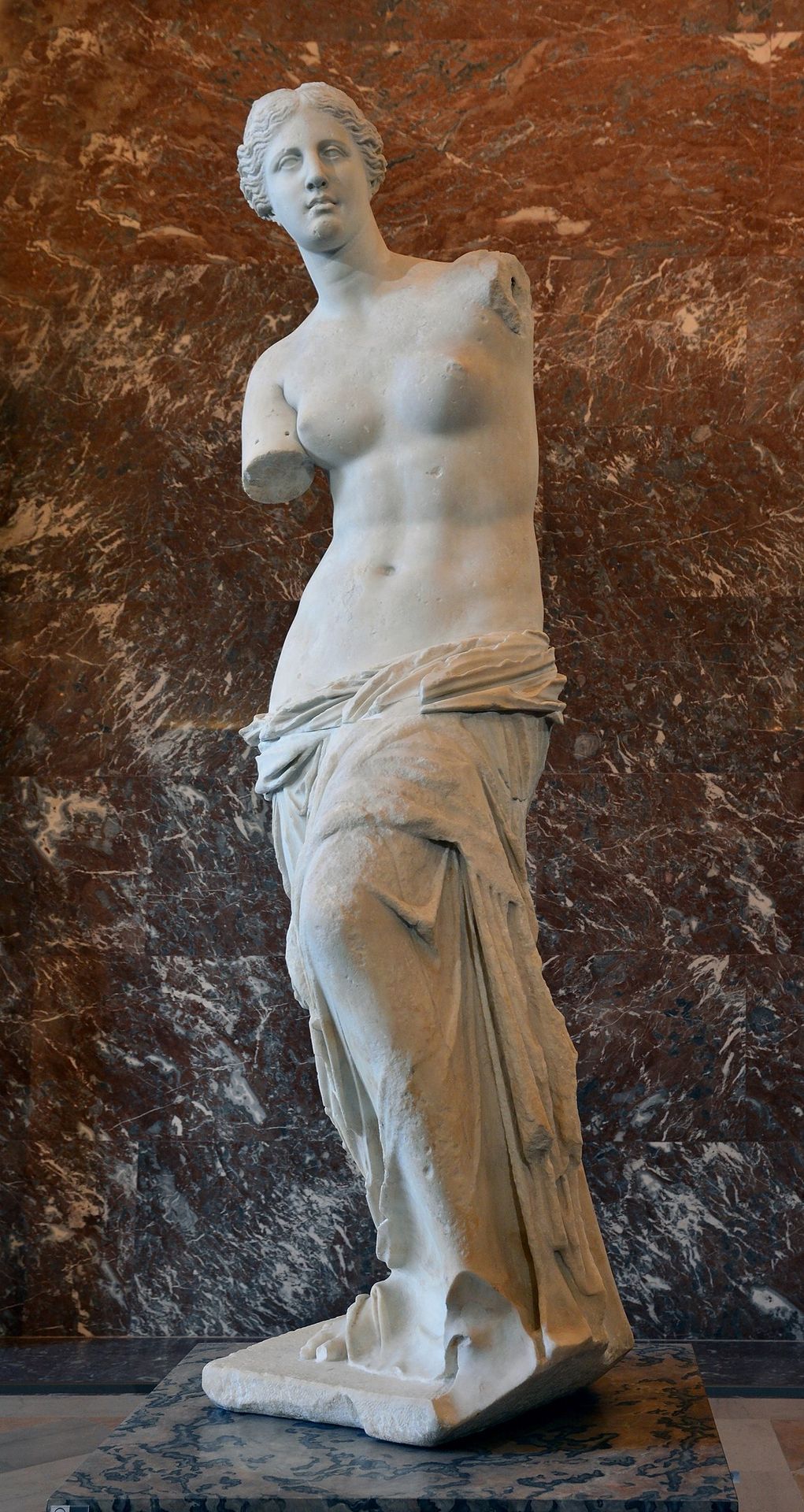
Editor: Here we have the Venus de Milo, a marble sculpture from around 110 BC, attributed to Alexander of Antioch. What strikes me most is the incredible poise and balance of the figure, despite the missing arms. How do you interpret this work? Curator: The Venus de Milo invites us to consider how deeply gender, power, and representation intersect. Here we have a classical depiction of feminine beauty, celebrated for centuries. Yet, we must also question the societal values that this idealized form embodies. Who decided this was beauty, and whose voices were silenced in the process? Editor: That’s a great point. It is easy to just accept the traditional interpretation without thinking critically. How does the context of ancient Greece shape our understanding? Curator: Ancient Greek society, though advanced in many ways, was deeply patriarchal. Female figures were often objectified or idealized. Viewing this sculpture through a contemporary lens, we can reflect on how these historical power dynamics continue to influence modern beauty standards and the representation of women in art and media. Think about the concept of the male gaze, for example. Editor: So, you're suggesting we can’t just admire the artistry; we also need to think about the historical and social framework that produced it. Curator: Exactly! By critically engaging with artworks like the Venus de Milo, we can promote a more inclusive and equitable dialogue around art history, recognizing that what we celebrate as "classic" can be both beautiful and politically charged. Editor: I’ve never thought about it quite that way before. I’ll definitely be viewing this piece – and other classical works – with fresh eyes moving forward!
Venus Of Milo, by Alexander of Antioch 110 BC

Artwork details
- Medium
- sculpture, marble
- Copyright
- Public domain
Tags
portrait
sculpture
greek-and-roman-art
classical-realism
figuration
ancient-mediterranean
sculpture
marble
nude
Comments
No comments
About this artwork
Editor: Here we have the Venus de Milo, a marble sculpture from around 110 BC, attributed to Alexander of Antioch. What strikes me most is the incredible poise and balance of the figure, despite the missing arms. How do you interpret this work? Curator: The Venus de Milo invites us to consider how deeply gender, power, and representation intersect. Here we have a classical depiction of feminine beauty, celebrated for centuries. Yet, we must also question the societal values that this idealized form embodies. Who decided this was beauty, and whose voices were silenced in the process? Editor: That’s a great point. It is easy to just accept the traditional interpretation without thinking critically. How does the context of ancient Greece shape our understanding? Curator: Ancient Greek society, though advanced in many ways, was deeply patriarchal. Female figures were often objectified or idealized. Viewing this sculpture through a contemporary lens, we can reflect on how these historical power dynamics continue to influence modern beauty standards and the representation of women in art and media. Think about the concept of the male gaze, for example. Editor: So, you're suggesting we can’t just admire the artistry; we also need to think about the historical and social framework that produced it. Curator: Exactly! By critically engaging with artworks like the Venus de Milo, we can promote a more inclusive and equitable dialogue around art history, recognizing that what we celebrate as "classic" can be both beautiful and politically charged. Editor: I’ve never thought about it quite that way before. I’ll definitely be viewing this piece – and other classical works – with fresh eyes moving forward!
Comments
No comments