About this artwork
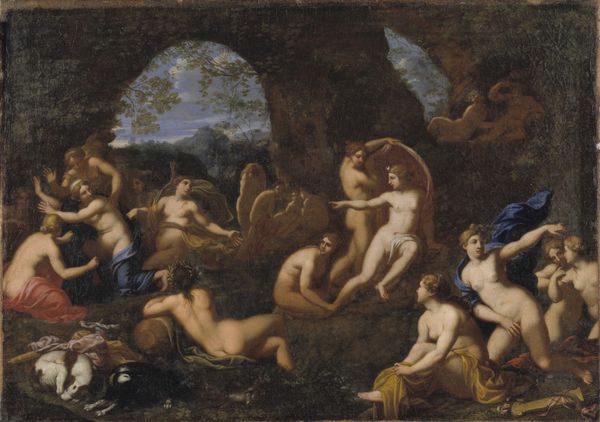
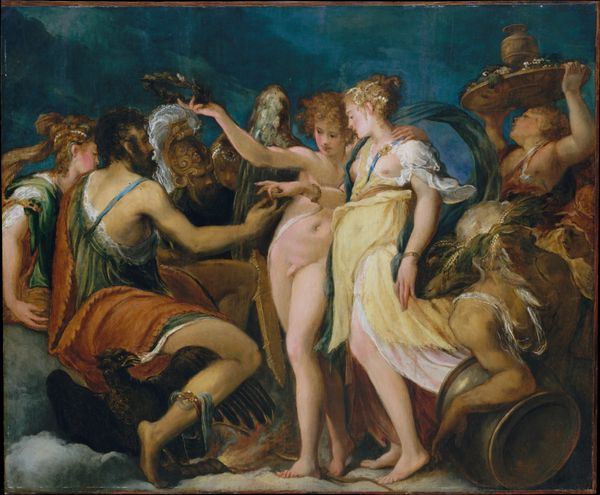
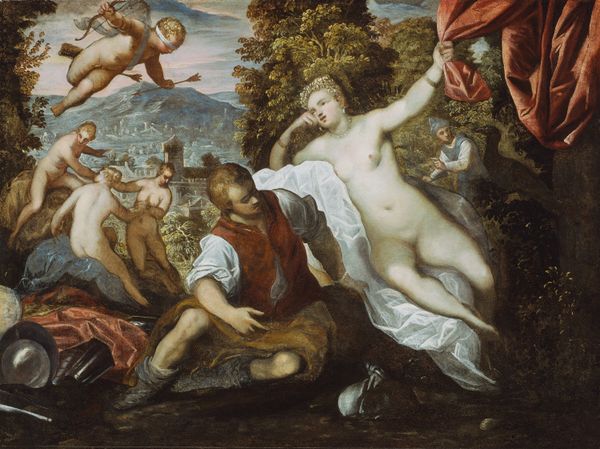
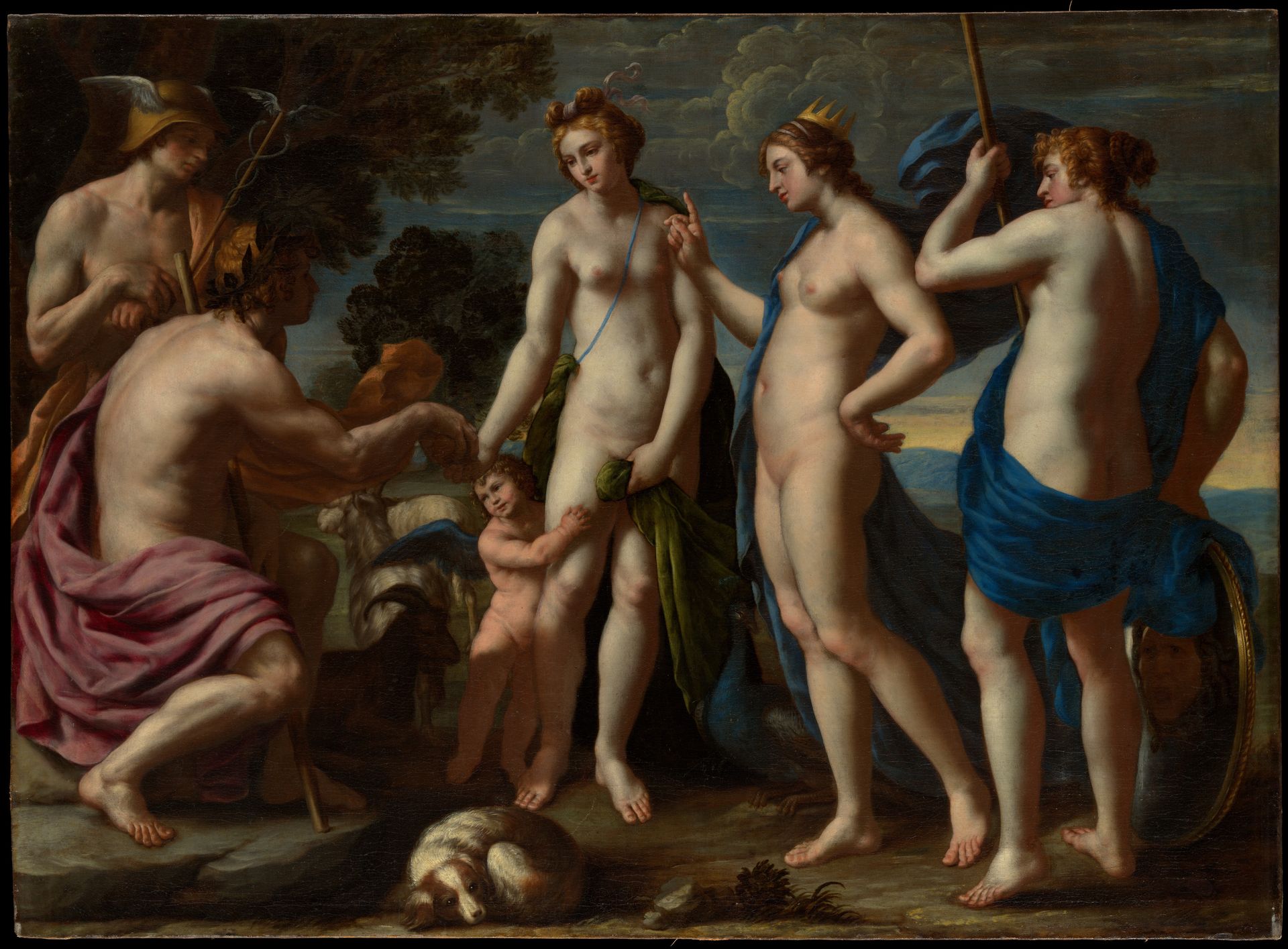
Alessandro Turchi painted ‘The Judgement of Paris’ in oil on canvas, most likely in the first half of the 17th century. The painting depicts a scene from Greek mythology, in which Paris, a Trojan prince, must judge which of the three goddesses, Hera, Athena, or Venus, is the fairest. Turchi was working in Italy at a time when artists were trying to revive classical ideals. These ideals permeated every level of society, from politics to art. Mythology provided artists with a way of dealing with sensitive subjects, such as female nudity, while also subtly commenting on social institutions. By painting mythological scenes, artists like Turchi could explore themes of power, beauty, and desire in a way that was both entertaining and thought-provoking. To fully understand this painting, we need to consider the social and institutional context in which it was made. By studying the history of art academies, the patronage system, and the social status of artists, we can gain a deeper appreciation for the complex interplay between art and society in 17th-century Italy.
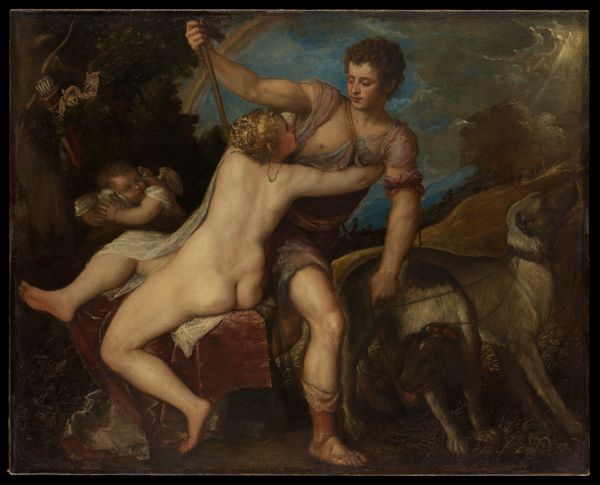
Judgment of Paris 1635 - 1645


Artwork details
- Dimensions
- 38 1/8 × 53 in. (96.8 × 134.6 cm)
- Location
- Metropolitan Museum of Art, New York, NY
- Copyright
- Public Domain
Tags
dog
possibly oil pastel
female-nude
underpainting
animal portrait
facial painting
painting painterly
animal drawing portrait
facial portrait
portrait art
male-nude
fine art portrait
expressionist
Comments
No comments
About this artwork
Alessandro Turchi painted ‘The Judgement of Paris’ in oil on canvas, most likely in the first half of the 17th century. The painting depicts a scene from Greek mythology, in which Paris, a Trojan prince, must judge which of the three goddesses, Hera, Athena, or Venus, is the fairest. Turchi was working in Italy at a time when artists were trying to revive classical ideals. These ideals permeated every level of society, from politics to art. Mythology provided artists with a way of dealing with sensitive subjects, such as female nudity, while also subtly commenting on social institutions. By painting mythological scenes, artists like Turchi could explore themes of power, beauty, and desire in a way that was both entertaining and thought-provoking. To fully understand this painting, we need to consider the social and institutional context in which it was made. By studying the history of art academies, the patronage system, and the social status of artists, we can gain a deeper appreciation for the complex interplay between art and society in 17th-century Italy.
Comments
No comments